
About The Rennsport Report
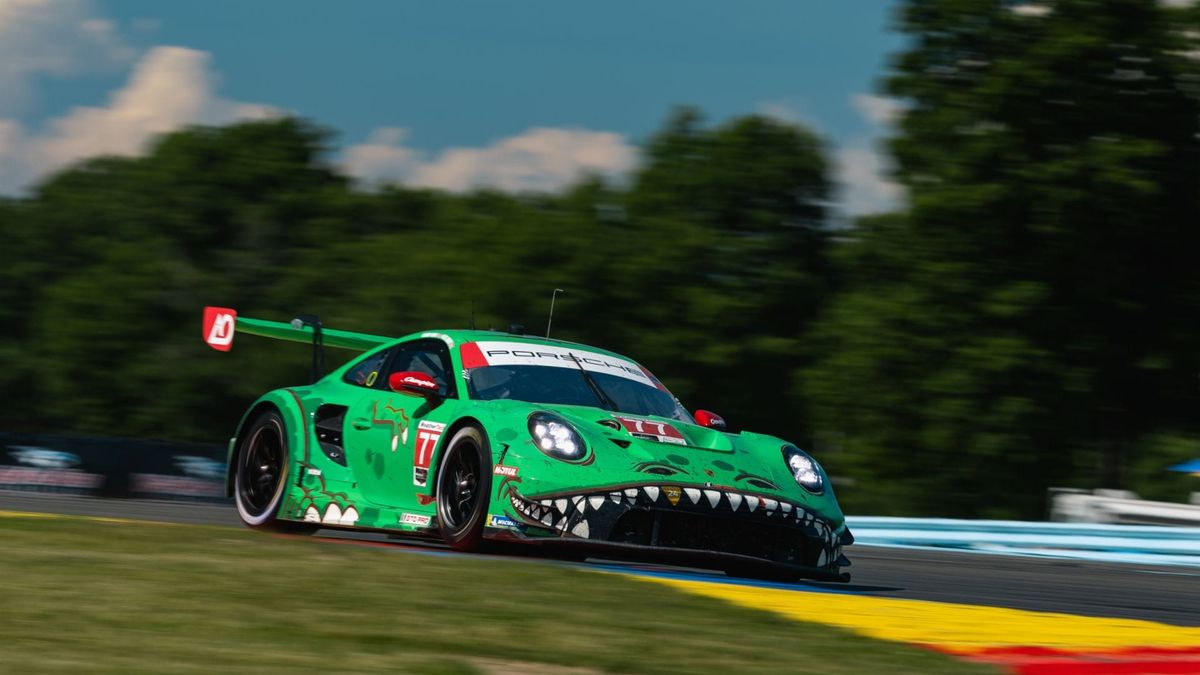
The Rennsport Report is an independent specialist publication analysing Porsche, BMW and Mercedes-AMG in global GT3 racing.
GT3 is the organising subject. Championships are evidence environments. Porsche, BMW and Mercedes-AMG sit at the centre of the editorial focus, while other manufacturers appear only where comparison sharpens the analysis.
We publish for readers who already have the results. Our work begins where race reports end.
RSR is not interested in every race, announcement or development. We are interested in the decisions, patterns and consequences that still matter after the noise has moved on. A result is raw material. What it reveals about programme health, manufacturer intent and regulatory consequence is the story.
We publish selectively around the events and structural decisions that expose those questions. We do not publish reactions for their own sake. We publish verdicts when the evidence supports one and diagnoses when it does not.
What we cover and why
Primary evidence environments are FIA WEC LMGT3; IMSA GTD Pro and GTD; GT World Challenge Europe; the Intercontinental GT Challenge; and NLS and the Nürburgring 24.
ELMS LMGT3, Asian Le Mans Series GT3 and DTM provide secondary evidence. Other significant GT3 championships are signal environments.
Within those environments, RSR examines how manufacturer strategy, customer racing, engineering, regulation, programme competence and programme economics combine to convert GT3 performance into results.
Race wins and championships matter, but not in isolation. The deeper questions are whether performance can be repeated, whether a programme converts resources into results and what its choices reveal about long-term intent.
Prototype racing, Formula 1, Formula E, GT4 and other non-GT3 subjects appear only where they have a direct and material consequence for the GT3 ecosystem or for a Porsche, BMW or Mercedes-AMG GT3 programme. Reading those signals across championships and seasons is the core of what we do.
How we work
RSR usually works in two phases. A shorter Signal Note may follow a significant GT3 development when the evidence is clear. A longer Deep Interpretation may then follow, placing it inside wider manufacturer, regulatory or programme arcs.
Other formats are used when the material demands them, including briefings, reference pieces and explanatory work. The format follows the evidence rather than the publishing calendar.
Authority Before Scale is the governing principle. Not every event qualifies for coverage, and the Publication Gate exists because volume is the enemy of judgement.
Early in each season, RSR establishes analytical reference points for each primary manufacturer’s GT3 programme. Those baselines are revisited explicitly mid-season and post-season to assess what has changed, what has not and whether our earlier interpretation still holds. Where it does not, we say so.
RSR does not trade access for tone. Observed behaviour takes precedence over stated intent. Press releases inform our analysis; they do not constitute it.
We distinguish between what the evidence establishes, what we infer from it and what remains uncertain. Confidence should follow the quality of the evidence, not the strength of the narrative.
The Rennsport Report is human-led, AI-assisted and editor-accountable. AI tools may support source discovery, research organisation, source synthesis, counter-thesis testing, structural drafting, editing and review.
AI output is treated as unverified working material. It is never used as a source or as a substitute for source consultation, factual verification or editorial judgement.
JP Hackett consults the underlying sources, verifies material factual claims, determines the interpretation and accepts final publication responsibility. Where AI use materially affects what a reasonable reader needs to understand about the origin, authenticity, evidence, authorship or reliability of published material, RSR discloses that use. Routine editorial assistance does not, by itself, trigger an article-level disclosure.
Independence in practice
The Rennsport Report is independently published. We do not accept payment from teams, manufacturers, championships, agencies or commercial partners in exchange for coverage, tone or editorial placement.
We do not publish promotional material. Supplied statements, press releases and media materials may form part of the evidence considered, but they are assessed in the same way as any other interested source.
All photography and documentary imagery published by RSR depicts real subjects and events. We do not use AI-generated or synthetic imagery to represent races, cars, drivers, teams, venues or historical events.
Images are used only where RSR owns them, has permission to publish them, receives them from an official source or has otherwise established an appropriate right of use. Supplied photography is credited to its source.
Images may undergo normal editorial processing, such as cropping, resizing, exposure correction, or colour adjustment. They are not altered in ways that change their documentary meaning.
Gaps between articles are intentional. Silence is part of the discipline.
About the editor
The Rennsport Report is edited and published by Jean-Paul Hackett, an Associate Member of the Sports Journalists’ Association.
His work focuses on global GT3 racing, manufacturer programmes and the organisational and economic realities behind modern customer racing. RSR is written for readers who want interpretation rather than live reporting, manufactured controversy or paddock gossip.
Contact and corrections
For editorial enquiries, corrections or rights matters, please contact:
RSR aims to correct factual errors promptly and transparently. Analysis and opinion may also be revised where later evidence changes the original interpretation.
Where a correction affects a material claim or conclusion, the published article will be updated to make that change clear.
The January 2026 page here records RSR's former endurance-wide framework and remains available in the published record.