Bathurst’s entry list confirms homologation stability
Bathurst’s 2026 entry list is not impressive because it is big, but because it looks settled. Twelve manufacturers confirm the race’s role as a GT benchmark.
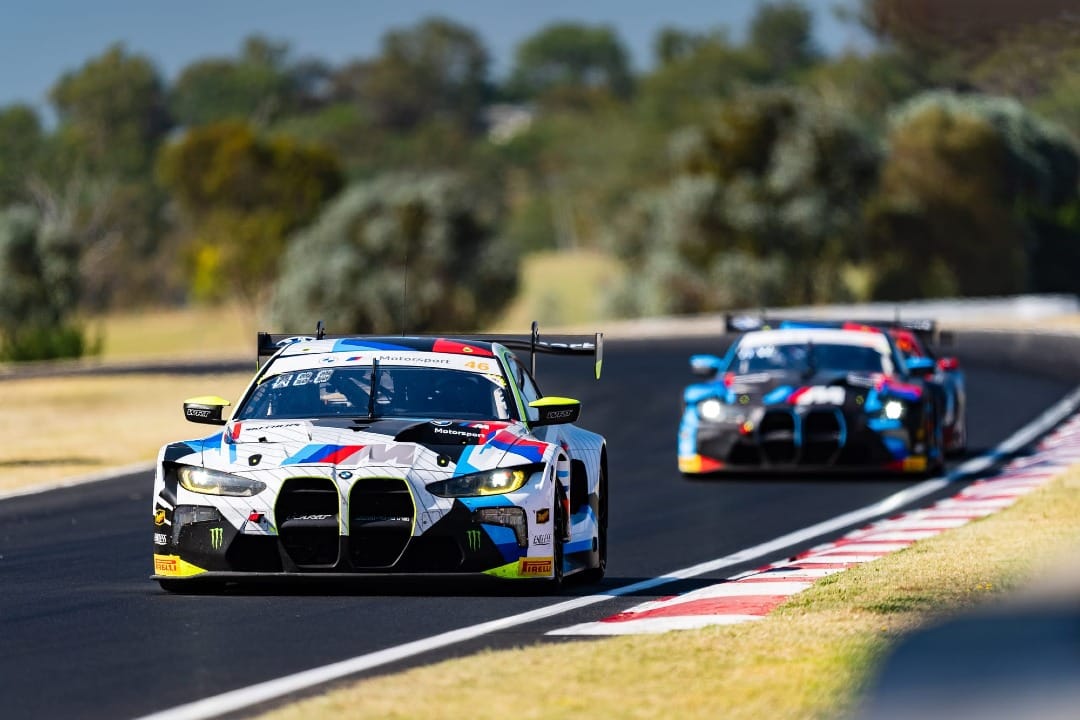
The provisional entry list for the 2026 Meguiar's Bathurst 12 Hour isn't impressive. It’s stabilised.
Thirty-six chassis from twelve manufacturers. No inflated numbers. No marketing bloat. Just the ruthless arithmetic of a category that has finally matured. Bathurst is no longer a "special case" on the global GT calendar; it now serves as a standard operational stress test, alongside Spa and the Nürburgring, as a known variable in the engineering cycle. Manufacturers no longer accommodate this race. They plan for it.
From Outlier to Operational Standard
Once treated as an early-season curiosity, a high-risk outlier that broke suspension components and budgets, Bathurst has hardened into a fixed reference point for GT3 programmes. Its position as the Intercontinental GT Challenge opener is irrelevant. What matters is the readiness of the assets arriving in the pit lane.
There is no experimental tone here. No tentative factory "exploratory" entries. The grid reflects stable customer racing structures deployed with intent. We aren't seeing one-off marketing exercises; we are seeing the calculated deployment of amortised assets.
That is how mature categories behave.
Manufacturer Equilibrium
Twelve brands on the list suggest a grid that has reached mechanical equilibrium.
No single manufacturer arrives with overwhelming numerical force. No programme looks "bolted on" to satisfy a PR mandate. Porsche, Mercedes-AMG, BMW, Ferrari, Audi, Ford, and Corvette appear as expected variables.
This balance is critical at Mount Panorama. The circuit strips away excess and immediately exposes weaknesses in the homologation package. It rewards organisations that understand restraint, preparation, and system reliability over raw BOP (Balance of Performance) exploitation.
Pro-Am: The Structural Differentiator
The real data isn't at the front of the grid. It’s in the Pro-Am spine.
Bathurst remains one of the few global endurance events where amateur drivers are structurally decisive, not just tolerated financial necessities. The operational constraints—long stints, minimal run-off, night running—make consistency a more valuable metric than peak qualifying pace.
Manufacturers support this model because the economics work. The entry list confirms there is no appetite to change it.
The Hard Reality
Ignore the narrative about "drama." The 2026 Bathurst 12 Hour will deliver variance; accidents, safety cars, weather, but that is standard operational friction.
The grid confirms something colder: GT3 has become infrastructure. It no longer relies on "spectacle" to justify its existence to board members. Bathurst is no longer an exotic outlier. It is simply part of the framework.
Metrics to Watch
When the final compliance list lands, ignore the headline drivers. Watch for:
- Factory Driver Allocations: Are they spread to protect customer cars, or concentrated to win?
- Repeat Customer Teams: The return rate of privateer operations is the only metric of category health that matters.
- Stint Averages: Pro-Am consistency will decide the race, not the pole lap.
Bathurst punishes ambition. It rewards systems integration. Most of this field now knows that.