Where DTM sits on the GT3 cost ladder and why it matters
DTM’s move to GT3 machinery was meant to stabilise costs. Instead, it has exposed the upper limit of GT3 as a customer racing platform.
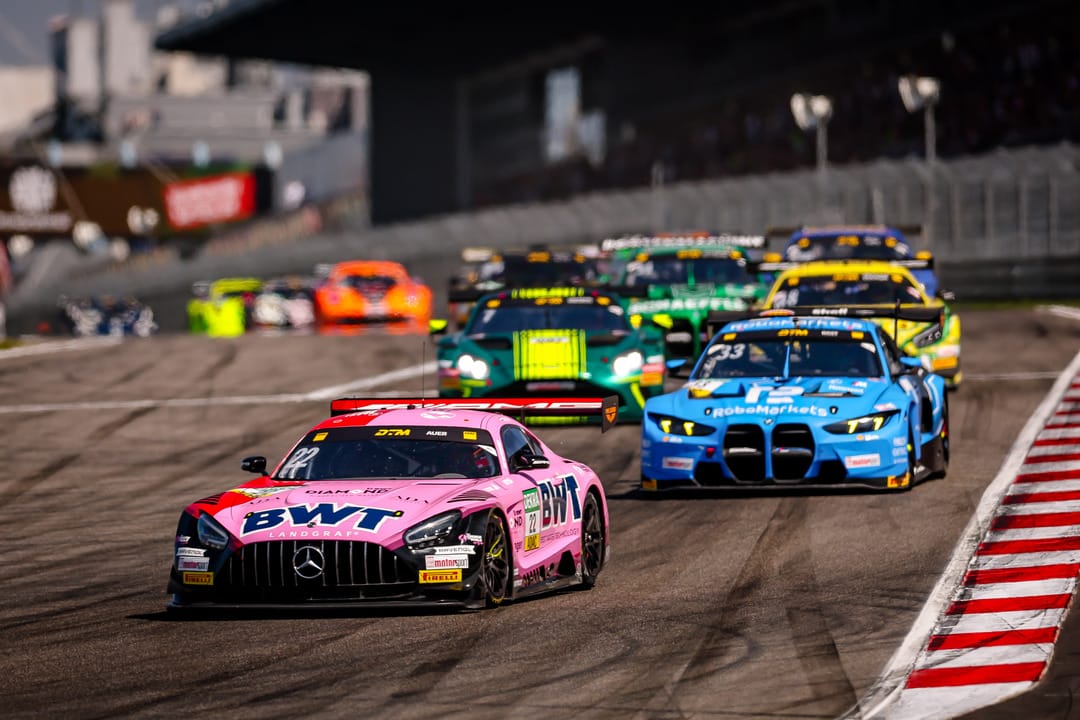
GT3 was designed to be flexible. That flexibility supports everything from club racing to top-level endurance. It also creates visible stratification within the class.DTM represents the most pronounced example of this stratification. It does not use different cars, but it requires GT3 to perform in ways beyond its original design. That tension defines the current landscape.
Why DTM moved to GT3
DTM moved to GT3 in 2021 after Class One collapsed. The logic was clear.
- reduce costs
- widen manufacturer access
- anchor the series to a global technical platform
On paper, the move made sense. GT3 brought homologated cars, established customer teams, and a proven supply chain. What it did not change was DTM’s core identity. DTM is still a sprint championship. Short races, high demands, little room for gradual development. The cars have changed. The operating philosophy has not. That distinction matters more than the badge on the car.
The GT3 cost ladder
GT3 is called a single category. In reality, it is now a tiered system. At the base are national and regional series. Cars run for years, drivers develop, and sustainability outweighs results. Endurance championships sit above. Cost control comes from spreading ambition over time. Reliability, stint management, and organisational depth matter more than outright speed. At the top are sprint series. Here, GT3 is pushed to its limits.DTM lives there. It is not unique, but it is the reference point.
Why DTM sits at the ceiling
DTM’s format creates its own cost pressure. Sprint racing compresses the cycle. Preparation, performance, and error converge. There is no room to absorb mistakes over long races. Every session is critical. That leads to predictable consequences:
- Reliance on entirely professional driver line-ups
- Higher spending on testing and simulation to find marginal gains
- Reduced ability to amortise cars and components
- Stronger gravitational pull from manufacturers without full works backing
This is not mismanagement. The format is working as designed. DTM is not expensive because GT3 has failed. It is expensive because it asks GT3 to act like a factory sprint formula while still presenting as customer racing.
The endurance contrast
Endurance-led GT3 tells a different story. In the World Endurance Championship, GT3 runs as LMGT3 with clear cost and performance controls. Consistency is rewarded. Programmes mature over seasons. In IMSA, GTD entries benefit from long races, shared data, and a structure that values repeat participation over short-term spikes. The Nürburgring Endurance Series goes further. GT3 is a long-term system. Cars, teams, and drivers evolve together. In each case, GT3 works as intended. Ambition is scaled without forcing budgets to chase immediacy. DTM is the exception.
What this says about manufacturer strategy
German manufacturers have noticed.DTM still matters symbolically. Real investment is moving elsewhere. Endurance platforms offer:
- Clearer technical relevance
- Longer programme lifecycles
- More substantial return on operational learning
- Global visibility without sprint-driven volatility
DTM, by contrast, offers intensity and prestige. It does not offer structural forgiveness. That makes it harder to justify as a long-term pillar, given the range of situations in which GT3 makes sense.
The consequence
GT3 is not breaking. It is splitting. At one end, GT3 thrives as a durable, customer-focused endurance platform. At the other, it is stretched toward a factory sprint formula, with the costs to match.DTM sits at that edge.DTM is not the future of GT3. It is the stress test. And stress tests, by definition, tell you where the limits are.