Calendar management is not a contingency plan
Two FIA championships face the same regional crisis. Their responses expose very different operating limits.
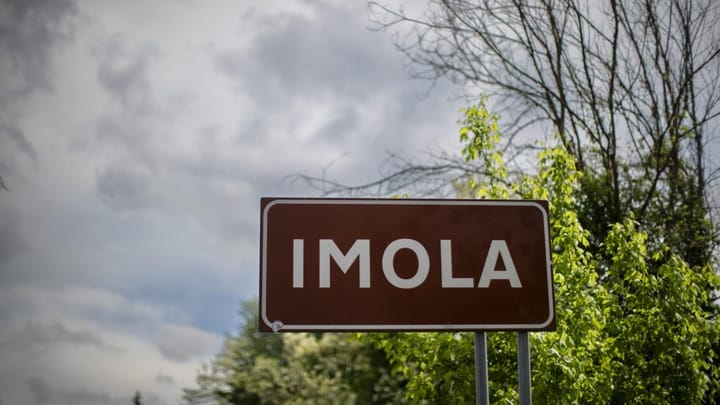
The FIA World Endurance Championship has already moved. The Qatar 1812km, originally scheduled to open the 2026 season on 26 to 28 March at the Lusail International Circuit, now sits on 22 to 24 October as the penultimate round. Imola takes over as the season opener from 17 to 19 April.
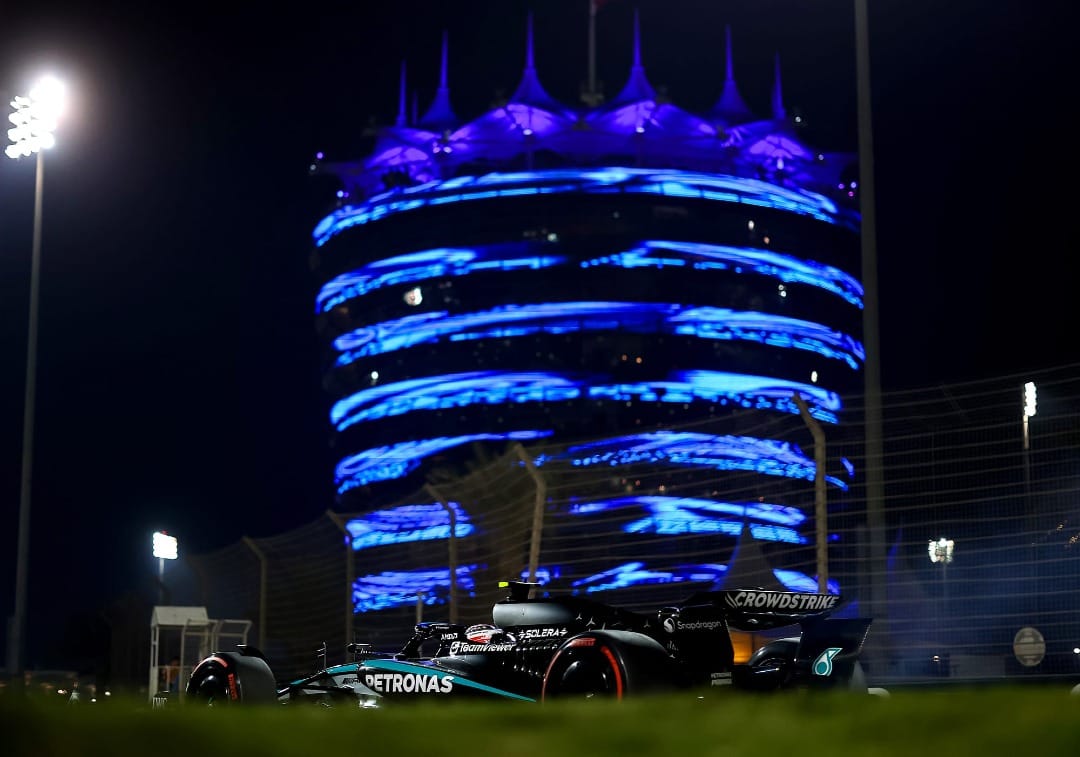
Formula 1, by contrast, has not yet acted formally, but the direction is clear. Multiple tier-one outlets report that the Bahrain Grand Prix (12 April) and the Saudi Arabian Grand Prix (19 April) will be cancelled, with an official announcement expected before the end of the Chinese Grand Prix weekend. F1's own fan-synced calendar already shows both rounds as 'called off.' No replacements are planned. If confirmed, the 2026 season drops from 24 to 22 races, with a five-week gap between the Japanese Grand Prix on 29 March and the Miami Grand Prix on 3 May.
Two FIA-linked championships confronted the same regional instability. One preserved its round count by displacing risk. The other absorbed loss. That difference is not a reflection of character. It is a structural exposure.
What each championship did, and why it could
WEC acted on 3 March. The Qatar round moved to a confirmed October date within ten days, and the Prologue pre-season test relocated from Lusail to Imola on 14 April. The championship preserved its eight-round season without altering a single non-Gulf event.
The mechanism was straightforward. WEC operates an eight-round calendar with wide spacing between events. Moving one round into the second half of the year required cooperation from the Qatar Motor and Motorcycle Federation (QMMF) and the circuit, but it did not disrupt the rest of the schedule. The freight cycle for endurance racing is less compressed than in Formula 1, and the championship had enough calendar real estate in October to absorb a displaced event.
Formula 1 had none of those options. Its 24-race calendar leaves almost no unoccupied weekends between March and December. The freight logistics for a double-header in the Gulf required equipment to begin moving immediately after the Chinese Grand Prix in Shanghai. When that deadline passed without a viable security assessment, the races became unrecoverable.
Replacing Bahrain and Saudi Arabia with European alternatives was considered. Reports identified Portimao and Imola as potential stand-ins. Both were rejected on logistical and commercial grounds: the lead time for marshalling, ticketing, local authority approvals, and broadcast preparation made a credible replacement unachievable at short notice. The estimated loss in hosting fees alone exceeds 100 million euros.
This is not a morality tale about one series being smarter than the other. WEC had room in its calendar because it runs fewer events. Formula 1 did not because it runs more. The lesson is architectural, not managerial.
The back end is exposed too
While WEC's rescheduling preserved round count, it also created concentration. The championship now closes its 2026 season with two consecutive Gulf rounds: Qatar on 22 to 24 October, followed by the 8 Hours of Bahrain on 5 to 7 November. Both events sit in the same region that forced the original postponement.
Formula 1 carries the same late-season exposure. The 2026 calendar still lists the Qatar Grand Prix on 27 to 29 November and the Abu Dhabi Grand Prix on 4 to 6 December. The championship ends its year with back-to-back Gulf rounds, preceded by the Las Vegas Grand Prix the previous weekend.
So the Middle East calendar question is not confined to spring. It runs across the final phase of both championships. The current conflict, which escalated on 28 February with US and Israeli strikes on Iran and has since produced retaliatory missile and drone attacks on Bahrain, Qatar, the UAE, and Saudi Arabia, shows no visible trajectory toward resolution. If conditions do not change, late-season decisions will follow.
The evidence supports a narrow claim: both championships feature a visible Gulf concentration in their final rounds, and the same instability that forced spring cancellations remains unresolved. It does not support a broader prediction that those rounds will fail. That depends on a conflict timeline no one can responsibly forecast.
Safety rules are not the same as continuity planning
The FIA has a formal framework for late circuit changes. Appendix H of the International Sporting Code explicitly addresses the possibility of championship rounds being moved to a different circuit. It requires medical and safety feasibility checks before approval. That framework exists and functions.
What the current evidence does not show is a visible cross-series contingency model for calendar disruption. WEC and Formula 1 handled their Gulf exposure on separate timelines, through separate negotiations, and arrived at different outcomes. Formula 2, which was scheduled to race at Bahrain and Saudi Arabia, now faces the possibility of not racing again until Monaco in June. MotoGP is separately assessing its Qatar round on 10 to 12 April.
The FIA's safety rules appear adequate for individual circuit changes. What is less visible is a coordinated structure for managing calendar loss across multiple championships when a single region becomes unavailable. The current pattern looks like championship-by-championship improvisation, not a system.
That may be sufficient. It may also be the only realistic model, given the different commercial, logistical, and contractual structures of each series. But it is worth stating plainly: the evidence shows safety rules for individual events, not a published cross-series continuity framework.
What this exposes
The issue revealed by the spring disruptions is not Middle East dependency in isolation. It is uneven resilience across championships that share a governing body and, in many cases, the same regional calendar infrastructure.
WEC displaced risk. It moved a March round to October and preserved its season. The cost is a Gulf-heavy final quarter.
Formula 1 is absorbing loss. It is set to drop two rounds and accept a shorter season. The cost is financial and structural: fewer races, a gap in the calendar, and an unchanged late-season Gulf commitment, all subject to the same uncertainty.
Both responses are rational within the constraints each championship operates under. Neither solves the underlying exposure. A world championship calendar is not only a list of races. It is an operating structure, and operating structures reveal their limits under stress.
The lesson is not that the Middle East should disappear from the calendar. The revenue those rounds generate is real, and so is the institutional investment from host nations. The lesson is that calendar concentration carries a cost, and that cost falls unevenly when disruption arrives. WEC had the structural room to bend. Formula 1 did not. The FIA governs both, but the resilience of each depends on architecture, not governance alone.
What happens next depends on conditions no one controls. If the conflict de-escalates before October, the rescheduled rounds proceed, and this analysis becomes a footnote. If it does not, the late-season calendar faces the same questions the spring calendar has already answered.