German muscle at the centre of the 2026 FIA World Endurance Championship
German manufacturers anchor the 2026 WEC grid, with Porsche, BMW and Mercedes-AMG shaping competition across Hypercar and LMGT3 through depth, structure and continuity.
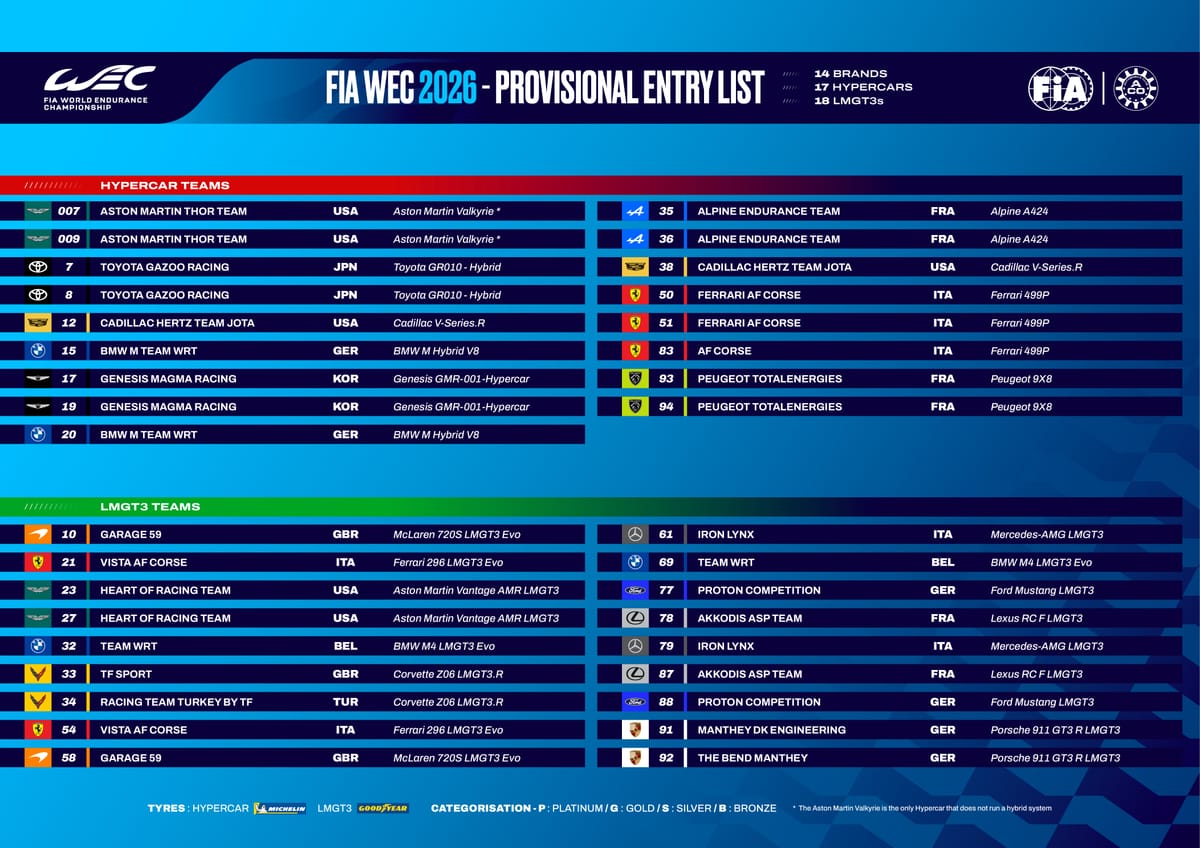
The 2026 FIA World Endurance Championship entry list confirms what has been clear for several seasons now. German manufacturers are no longer simply part of the Hypercar and LMGT3 grids. They are shaping the competitive spine of the championship.
With Porsche and BMW anchoring the Hypercar class, and Porsche, BMW and Mercedes-AMG forming a heavyweight presence in LMGT3, Germany’s influence runs through the grid technically, organisationally and competitively. The entry list does not just underline scale. It points to intent.
Hypercar: Porsche and BMW define the benchmark
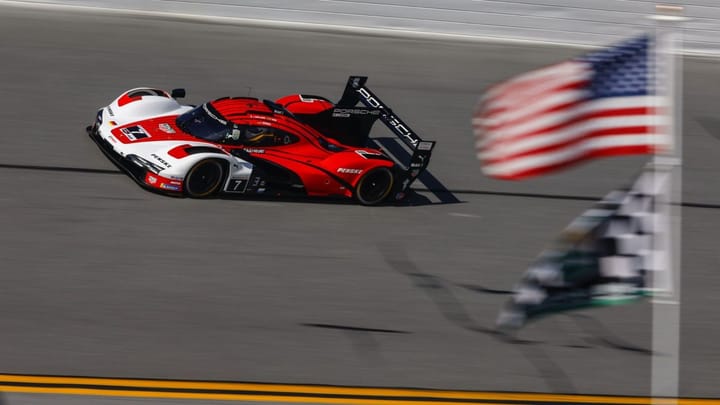
Porsche enters 2026 with continuity and depth through Porsche Penske Motorsport, again fielding a pair of factory Porsche 963 Hypercars. After seasons of refinement rather than reinvention, Porsche’s approach now feels fully mature. The 963 is no longer evolving in public. Instead, it has become the reference point for operational execution in WEC.
Driver strength remains a defining feature. Kévin Estre, Laurens Vanthoor, André Lotterer, Michael Christensen and Julien Andlauer form a pool of experience that spans GT, prototypes and Le Mans victories. This is not a line-up built around stars. It is built around reliability under pressure, which remains Porsche’s sharpest weapon across an eight-round calendar.
BMW continues its Hypercar ascent with BMW M Team WRT, running the BMW M Hybrid V8. The partnership with Team WRT has quietly transformed BMW’s WEC prospects. Operational mistakes that blunted early campaigns have largely disappeared, replaced by discipline and consistency.
BMW’s driver group blends prototype experience with long-term brand loyalty, including René Rast, Robin Frijns, Sheldon van der Linde and Dries Vanthoor. The M Hybrid V8 may still lack Porsche’s breadth of endurance silverware, but BMW now looks structurally equipped to fight across full seasons rather than individual races.
LMGT3: German brands dominate depth and volume
The LMGT3 class is where German manufacturers exert numerical and strategic control.
Porsche remains the most deeply embedded marque, with multiple customer Porsche 911 GT3 R entries across teams such as Manthey, Proton Competition and allied operations. Manthey’s continued WEC presence, following its LMGT3 title success, reinforces Porsche’s long-held philosophy. Customer racing is not a support act. It is a competitive pillar.
Drivers like Richard Lietz, Klaus Bachler, Ayhancan Güven and Joel Sturm give Porsche an enviable blend of factory guidance and customer execution. Few manufacturers can seed the grid with this level of institutional knowledge.
BMW matches Porsche for seriousness, if not raw volume. Team WRT continues to operate BMW’s LMGT3 programme alongside its Hypercar effort, giving the BMW M4 GT3 a level of integration few rivals can match. Drivers such as Augusto Farfus, Maxime Martin and Ugo de Wilde ensure BMW remains a constant podium threat rather than a situational one.
Mercedes-AMG is the newest German pillar in WEC but arrives with unmistakable weight. Its LMGT3 entry marks a full return to the championship and to Le Mans, with the Mercedes-AMG GT3 entrusted to Iron Lynx. The car itself is proven globally. The significance lies in Mercedes committing fully to WEC’s endurance ecosystem rather than treating it as a cameo.
Mercedes-AMG’s driver line-up mixes GT specialists and endurance regulars, signalling that this is a long-term programme rather than an exploratory exercise.
German drivers everywhere you look
Beyond factory affiliations, German drivers remain embedded across the grid. Nico Müller, Pascal Wehrlein and André Lotterer continue to blur the lines between single-seaters, prototypes and GT racing, while veterans such as Richard Lietz remain competitive deep into multi-class careers.
This matters. WEC’s complexity rewards drivers who understand traffic, energy management and strategic restraint. Germany continues to produce exactly that profile.
What this means for 2026
The 2026 WEC entry list does not suggest upheaval. It suggests consolidation. German manufacturers are not chasing novelty. They are reinforcing systems that already work.
Porsche’s strength lies in continuity. BMW’s lies in structure. Mercedes-AMG’s lies in global GT credibility now applied to endurance racing’s highest stage. Combined, they ensure that German engineering and execution remain central to how the championship functions and how it is won.
The result is a grid where German cars are not merely present at the front. They define the standards others are measured against.