German precision in the fog: what the 2026 Rolex 24 actually tested
A fog-interrupted Rolex 24 turned Daytona into a compressed systems test. Porsche, BMW, and Mercedes-AMG passed it through preparation, restraint, and operational clarity.
The 2026 Rolex 24 at Daytona was not a test of endurance. It was a test of readiness. A six-hour, 33-minute caution period for dense fog removed attrition, rhythm, and fatigue from the equation. What remained was a cold restart, a condensed green-flag window, and a requirement to execute without hesitation. In that environment, German programmes did not improvise. They reverted to structure.
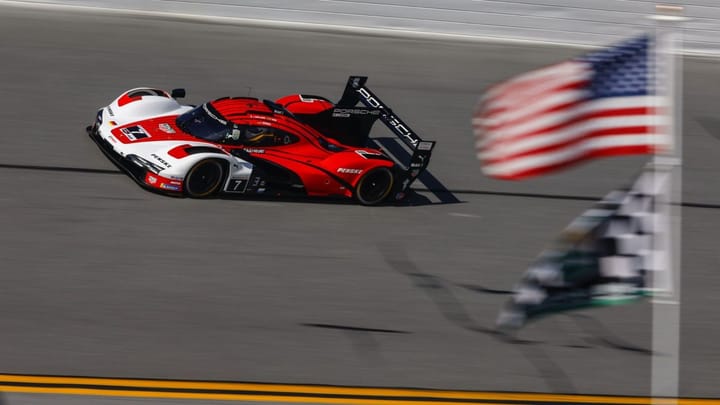
Porsche won overall. BMW recovered from self-inflicted damage to win GTD Pro and reach the GTP podium. Mercedes-AMG secured GTD and placed two cars on the GTD Pro podium. The common thread was not pace. It was the ability to change operating mode without friction.
Daytona stopped being a 24-hour race. Germany treated it as two races and won the second.
Porsche Penske Motorsport and the maturity of the 963
For Porsche Penske Motorsport, the question was never whether the Porsche 963 could win again. It was whether the programme could manage disruption without destabilising itself. The answer was yes.
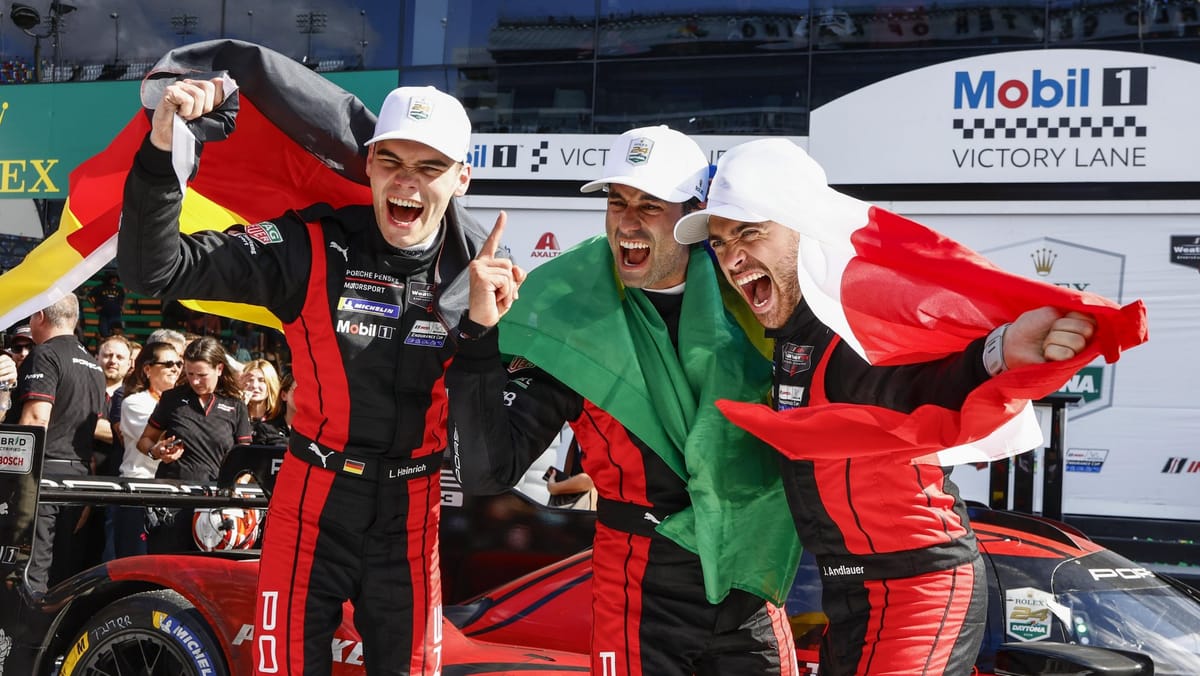
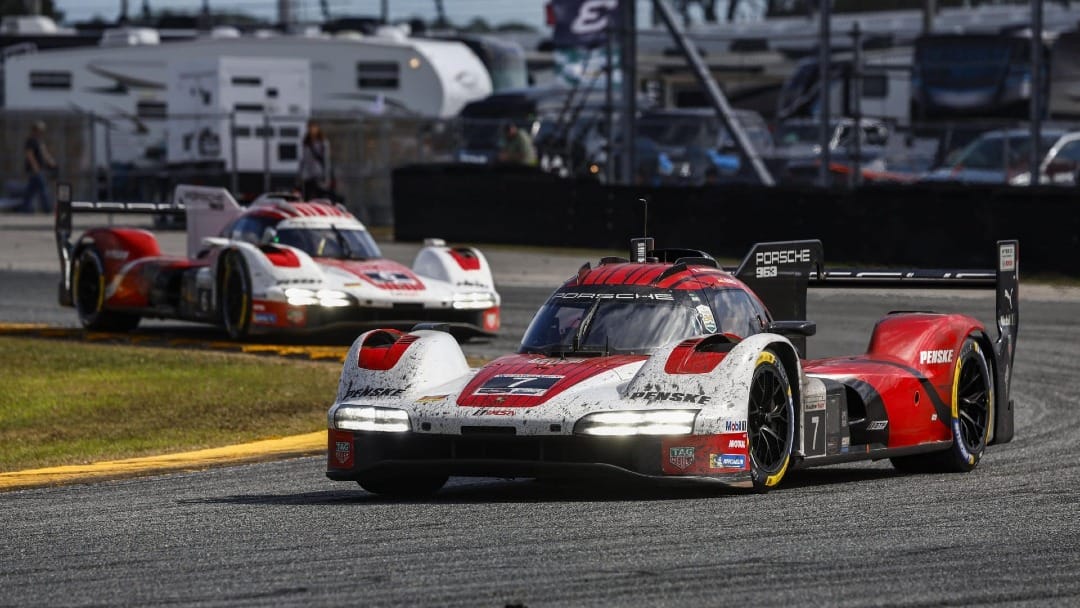
The No. 7 car of Nasr, Andlauer, and Heinrich won because it never needed to chase the race. The No. 6 car absorbed early floor damage and continued without deviation. Neither car incurred penalties. Neither required recovery driving. The operation stayed inside its envelope.
That mattered when the fog arrived. During the extended caution, Porsche did not treat the stoppage as dead time. Software maps were reviewed. Component checks were methodical. Driver rotation was deliberate. When the green flag returned, the team behaved as though the race had been restarted from new, not resumed from memory.
The final hour was a reference in defensive execution. Nasr did not attempt to break the Cadillac on pace. He managed exits, closed lines early, and controlled the banking. The margin at the flag reflected restraint, not risk. This was Porsche’s third consecutive Daytona overall win. More importantly, it confirmed that the 963 platform has moved beyond development sensitivity. It now tolerates damage, delay, and disruption without losing coherence. That is the trait that travels.

BMW’s two different answers to the same problem
BMW arrived at Daytona with two programmes in different states of maturity. Both were tested by the same interruption. Both responded differently. Both succeeded.
GTP: learning without noise
The debut of Team WRT as BMW’s North American GTP partner carried both expectation and risk. The BMW M Hybrid V8 remains sensitive to window management, and Daytona is not a forgiving place to learn. The fog simplified the task. WRT split its two cars' strategy and treated the final restart as a six-hour evaluation run. One approach failed. The other did not. The No. 24 car of Vanthoor, van der Linde, Rast, and Frijns stayed on base strategy, avoided unnecessary fuel gambles, and finished third overall.
The result matters less for the trophy cabinet than for what it confirms. BMW now has a partner capable of absorbing IMSA procedure without emotional response. That was the open question. Daytona answered it quietly.
GTD Pro: recovery as a system, not a story
The GTD Pro win for Paul Miller Racing was not dramatic in execution, even if the narrative suggests otherwise. The No. 1 BMW M4 GT3 EVO was sent to the back of the grid for a camber infringement. The response was not aggressive. It was a calculation. Stint lengths were balanced. Traffic was managed without risk.
The fog reset eliminated the deficit and compressed the field back into procedural execution. When radio communication failed late in the race, Harper drove from the pit board on his own judgment. That is not luck. It is a rehearsal. BMW left Daytona with a class win and a GTP podium. The wider signal is consistency across programmes that previously operated in isolation. That convergence is new.
Mercedes-AMG and the value of depth
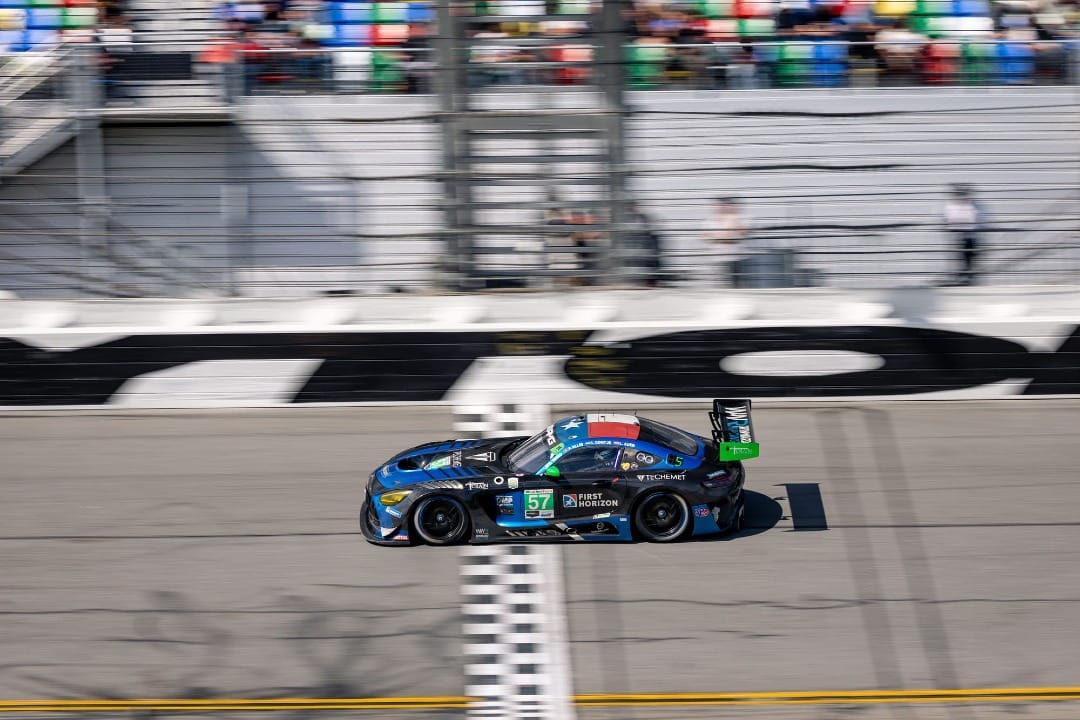
Mercedes-AMG did not win the headline class. It may have delivered the strongest weekend overall. All five Mercedes-AMG GT3 entries finished. None failed. Two stood on the GTD Pro podium. One won GTD in the closest fight of the race.
The GTD victory for Winward Racing came through contact, pressure, and decision-making at speed. Ellis kept the car in contention through the tri-oval clash with the Aston Martin and exited Turn 1 ahead by committing earlier, not harder.
Mercedes-AMG did not need the race to break open. It needed it to stabilise.
In GTD Pro, the No. 75 entry absorbed a severe penalty and still returned to the podium. That only happens when tyre life, balance, and pit execution are repeatable. Mercedes-AMG’s programme strength is repeatability. Daytona rewarded that once the race stopped behaving unpredictably.
The fog and what it removed
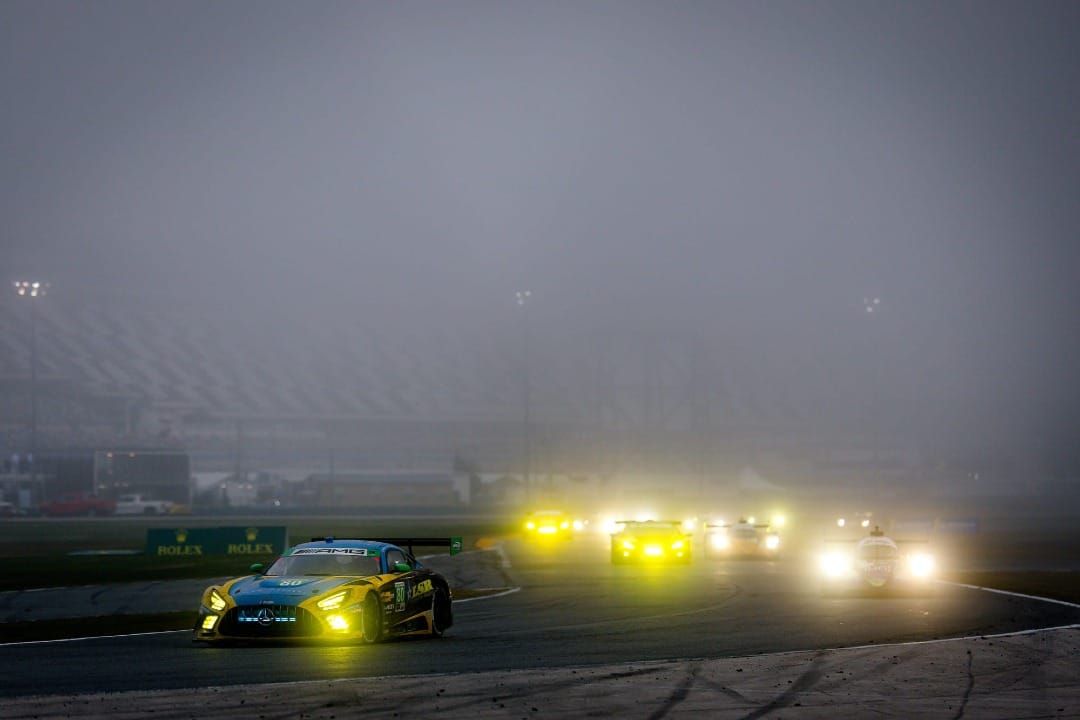
The defining factor of the 2026 race was not visibility. It was duration. By keeping the cars circulating under yellow rather than stopping the clock, IMSA preserved hybrid operating temperature and avoided restart risk. It also compressed strategic variance.
When the green flag returned, fuel offset strategies disappeared. Attrition probability collapsed. Driver fatigue reset. What remained was execution quality. German teams were ready for that scenario because they had implicitly planned for it. Their programmes are built around restart competence rather than recovery. The fog did not give them an advantage. It exposed it.
What Daytona actually told us
Daytona should not be over-interpreted as a performance hierarchy. It should be read as a systems audit. Porsche passed it by behaving as though nothing unusual had happened. BMW passed it by recovering without emotion.
Mercedes-AMG passed it by finishing everywhere it started.
Sebring will reintroduce punishment. Le Mans will reintroduce consequence. The Nürburgring will reintroduce chaos. Daytona has already shown which programmes will remain intact when that happens. Germany set the baseline. The rest of the season will show who can live with it.