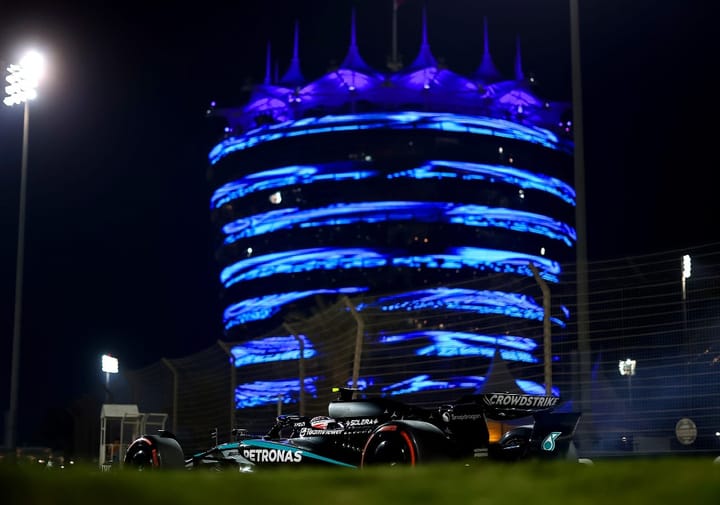
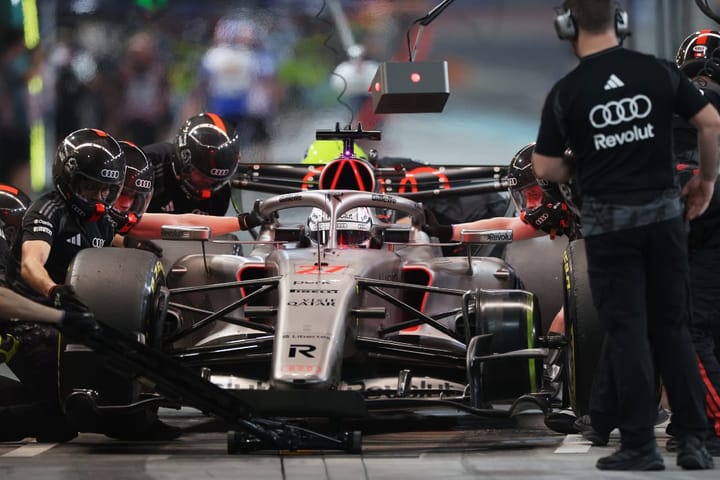
Interim analysis: German works culture explains why the 2026 Formula 1 shakedowns mislead
German works programmes treat 2026 Formula 1 shakedowns as compliance exercises, not performance signals. Early calm reflects control, not competitive order.
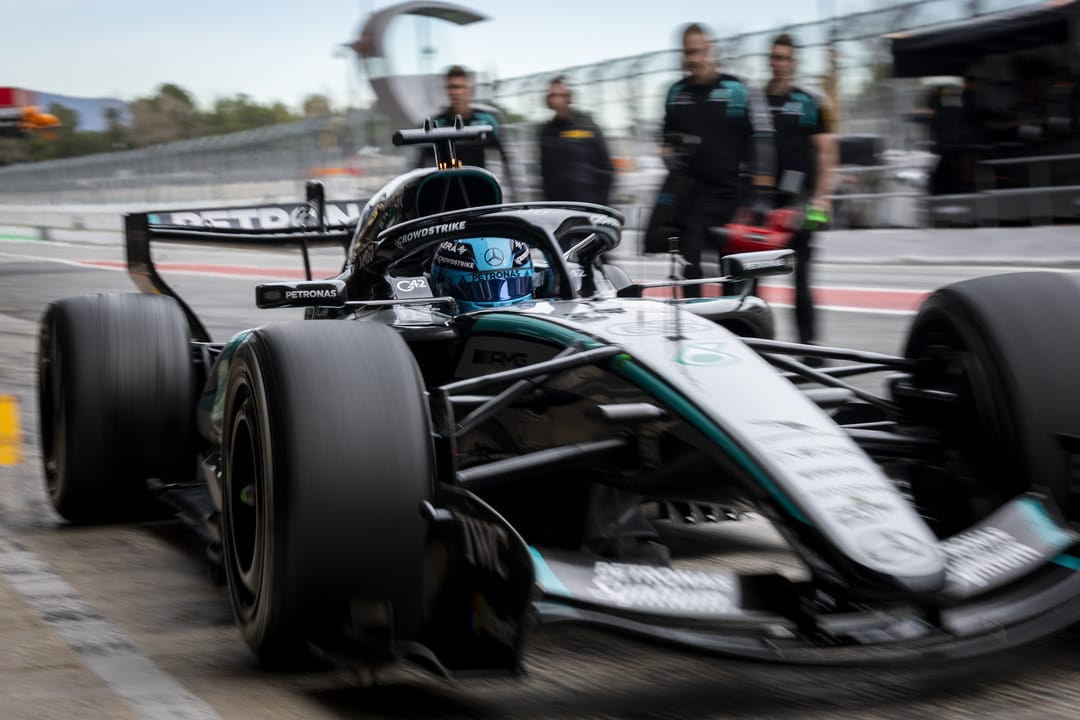
The shakedowns are being misread.
Not because observers lack data, but because they are applying a results-driven interpretive model to organisations that do not operate that way, particularly when governed by German works culture and compliance-led development logic.
German programmes do not reveal themselves early.
They stabilise first, then expand, because in a compliance-heavy environment, the cost of premature optimisation exceeds the benefit of early visibility, especially once homologation, energy governance, and financial limits close the loop.
This is not caution.
It is doctrine.
Under the 2026 regulations, the competitive problem is not speed extraction. It is rule absorption. German manufacturers approach that problem by treating the rulebook as a fixed volume to be internalised, not a surface to be tested through provocation.
Compliance is the battlefield.
The defining feature of the 2026 cycle is not the technical novelty of hybrid redistribution or aerodynamic reduction, but the way those elements are enforced simultaneously, forcing programmes to operate inside a narrow compliance corridor where deviation is punished financially, procedurally, and politically.
German works efforts are built for this.
Porsche has spent two decades treating regulatory boxes as operating spaces rather than obstacles. Mercedes has lived inside hybrid compliance since 2014. BMW is still learning where interpretation ends, and exposure begins. Audi is building that muscle now.
Shakedowns do not stress compliance.
They validate it.
At this stage, energy deployment is conservative because German organisations treat early legality as non-negotiable. Cooling margins are generous because thermal non-compliance carries cascading consequences later in the homologation cycle. Software logic prioritises predictability over expression because unpredictability is expensive once auditors, stewards, and cost accountants become involved.
The car is not incomplete.
It is deliberately constrained.
German works culture values repeatability over spectacle.
A system that behaves the same way twice is worth more than a system that behaves impressively once, because repeatability survives regulatory tightening, BoP recalibration, and homologation freeze points.
This is why early visual calm is meaningless.
It reflects an organisation operating within a known compliance envelope, not one that has reached a performance ceiling. Early Hypercar programmes from German manufacturers demonstrated this repeatedly, where conservative opening stints concealed long-term strength once BoP windows stabilised and operational clarity began to compound.
Failure is processed, not dramatised.
When German programmes fail, they fail quietly and then recover methodically because failure is treated as a data event rather than a narrative event. Recovery speed matters more than the initial error, and recovery requires stable reference points that shakedowns are designed to protect.
Shakedowns protect reference points.
They suppress interference effects because interference creates ambiguity, and ambiguity delays convergence, which is fatal once development tokens, cost ceilings, and homologation locks are in place.
This is where non-German cultures struggle.
Programmes that seek early validation through visible performance often burn architectural flexibility too soon, locking themselves into compliance positions they do not yet fully understand, which later manifests as degraded stint averages, thermal compromise under drag pressure, or operational fragility once energy deployment windows tighten.
German works culture avoids that trap.
It accepts short-term opacity in exchange for long-term control.
The endurance racing parallel is exact.
Porsche’s success within BoP frameworks did not come from exploiting loopholes, but from understanding the rules well enough to operate at their edges without triggering a corrective response. Mercedes-AMG’s GT programmes follow the same pattern. BMW is still inconsistent. Audi has the knowledge base, but not yet the institutional reflex.
Formula 1 2026 rewards the same behaviour.
Not brilliance. Not aggression. Control.
The shakedowns are not the moment where that control becomes visible, because visibility itself is managed, and German organisations are structurally allergic to unnecessary disclosure.
This is not the evaluation phase.
It is the compliance alignment phase.
The meaningful signal will appear later, when recovery paths diverge, when some organisations burn through development capacity correcting early assumptions, while others continue to accumulate marginal gains because their baseline was stable.
Watch who needs to explain themselves.
That is where the truth sits.
Editor’s note
This interim report frames the 2026 Formula 1 regulation cycle through the lens of German works culture and compliance-led development. A manufacturer-specific systems assessment will follow once official pre-season testing introduces sustained operational interference.