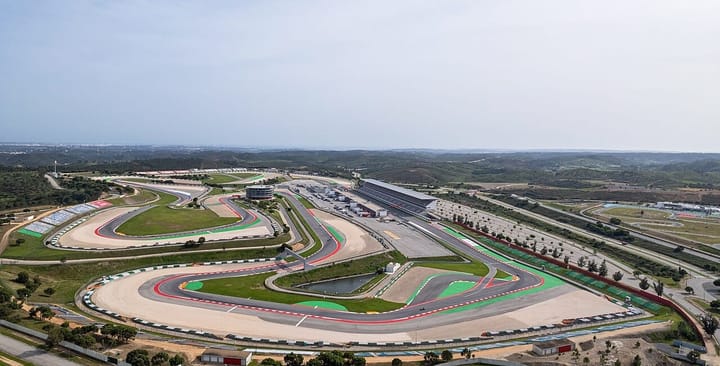
Programme depth on trial at Paul Ricard
The 2026 Evo cycle and Paul Ricard's six-hour format test whether programme depth or customer breadth defines the GTWC Europe season.
Preview: 2026 GTWC Europe Endurance Cup, Paul Ricard
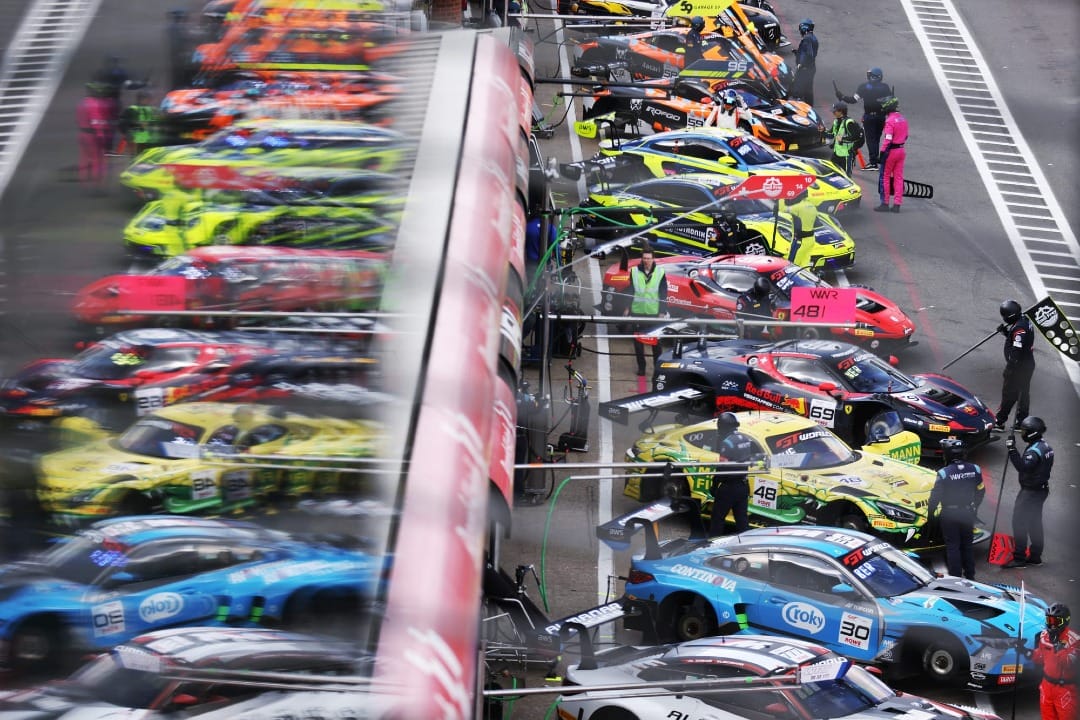
The 2026 GT World Challenge Europe Endurance Cup opens at Circuit Paul Ricard on 11 April with 59 cars, 18 of them in Pro, and a question the entry list alone cannot answer: does this grid reward manufacturers who concentrate their programme investment in a single elite team, or those who spread operational risk across multiple customer operations?
The Evo homologation cycle sharpens the question. Porsche, BMW, Ferrari, and Ford all introduce updated GT3 machinery this year. Every Evo kit chases the same narrow engineering objective. With SRO Motorsports Group's Balance of Performance (BoP) algorithm capping peak speed and absolute downforce, the development battlefield has moved to suspension kinematics, pitch sensitivity, and tyre preservation. The Evo kits are not designed to produce faster cars. They are designed to produce cars that degrade more slowly.
That makes operational execution the variable that separates teams running similar hardware. And Paul Ricard's format change, from three hours to six, amplifies the advantage held by whichever programme model handles sustained operational pressure best.
RSR's position entering the weekend: the first manufacturer to demonstrate consistent performance from multiple crews across the opening endurance rounds holds the structural advantage for the season. Speed from a single car proves the driver lineup. Speed from a programme proves the platform.
Why six hours changes the competitive equation
SRO's decision to double the length of the Paul Ricard race is not cosmetic. A three-hour endurance race compresses the pit cycle. A six-hour race stretches it. The longer format demands a full driver rotation, exposes fuel consumption patterns under the TotalEnergies Excellium Racing 100 sustainable fuel mandate, and multiplies the number of pit stops required. Slow pit work that costs five seconds once at a three-hour race costs five seconds four or five times across six hours. The deficit compounds.
The format rewards the team with the deepest engineering and operational resources per car. A single crew error at hour two can be absorbed by clean execution over the remaining four. A systemic pit stop deficit or tyre management weakness cannot hide across a race of this length. For a manufacturer evaluating its programme model, Paul Ricard at six hours produces data that a shorter race never could: it separates the teams that execute consistently from those that produce one competitive stint and fade.
That distinction is the lens through which the German manufacturer positions should be read.
Porsche: breadth without its strongest operator
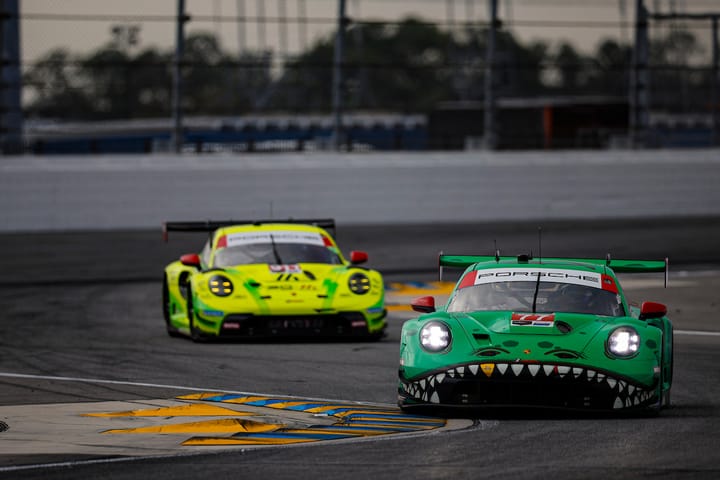
Porsche Motorsport enters the season with the 911 GT3 R (992.2), the Evo update to the 992-generation customer platform. The technical focus is aerodynamic pitch control. Upper front wheel arch louvres manage high-pressure air under braking. A swan-neck rear wing carries a 4mm Gurney flap. A revised multi-link rear axle increases anti-squat geometry. Independent liquid cooling for the steering system and NACA duct airflow to ceramic wheel bearings complete the package. The update kit costs customers approximately 41,500 euros.
The engineering intent reduces the car's sensitivity to pitch angle variation during trail braking, keeping the aero platform stable across a wider range of ride heights. Under BoP constraints, that stability protects the Pirelli control tyre over a long stint more reliably than any outright downforce gain.
Porsche arrives at Paul Ricard with the widest customer deployment of any German manufacturer. Boutsen VDS, which ran Mercedes-AMG machinery for the past two seasons, has switched to Porsche and fields a Pro-class entry with Dorian Boccolacci and Alessio Picariello. They join Dinamic GT, Razoon, and Ziggo Tempesta Racing in a growing European customer network.
The cost of that breadth is the loss of depth. Rutronik Racing, the defending 2025 Endurance Cup champion and Porsche's most operationally proven European endurance team, has left to campaign the new Lamborghini Temerario GT3 in Pro. Porsche now fields more cars across more teams, but none of those teams carries Rutronik's competitive record. In a six-hour race that rewards sustained operational execution, the question is whether distributed breadth compensates for the absence of a proven frontrunner.
BMW: concentrated depth without redundancy
BMW M Motorsport takes the opposite structural approach. The entire European GT programme runs through Team WRT, which enters 2026 with the M4 GT3 EVO. The technical update prioritises weight reduction and tyre management. A cathodic dip coating process replaces traditional paint, lowering the centre of gravity without compromising structural rigidity. Revised anti-roll bars, a finer differential adjustment mechanism, and larger rear brake discs isolate the rear tyre from abrupt load transfers during long stints.
The competitive case on paper is formidable. Defending champions Kelvin van der Linde and Charles Weerts return in the number 32 Pro car, joined by Jordan Pepper for the Endurance Cup. Valentino Rossi commits to a full season alongside Max Hesse in the number 46 car, having contested only Spa and Misano in 2025. The Rossi entry competes outside the Pro class, but it still runs through the same WRT engineering infrastructure, feeding tyre data, setup iterations, and operational learning back into the team's shared pool.
WRT's concentration model gives BMW maximum engineering depth per car. Setup changes, debrief insights, and strategy calls flow through a single operation with no inter-team communication barriers. In a six-hour race, that internal feedback loop should accelerate mid-race adjustments. If the number 32 crew identifies a setup correction at hour two, WRT can apply it across the garage without the politics or latency of a multi-team manufacturer programme.
The fragility is equally plain. If WRT encounters a systemic reliability problem with the M4 EVO or a strategic miscalculation in the opening pit cycle, there is no second factory-supported team to generate independent data or salvage points. Porsche's model absorbs a single team's bad day. BMW does not.
Mercedes-AMG: holding a transitional position
Mercedes-AMG enters 2026 racing a GT3 car derived from a road car that the manufacturer no longer produces. The first-generation AMG GT has ceased production, and the Mercedes-AMG GT3 continues on a grandfathered homologation. This is not unusual in GT3 racing. But Mercedes-AMG is simultaneously developing a successor through the newly formed Affalterbach Racing GmbH subsidiary, having shown the Concept Track Sport as the design direction. The current car is competitive. The question is how long that competitiveness holds as rival Evo kits push the kinematic development boundary forward.
The grid deployment reflects a mixed strategy. Verstappen Racing, operating through 2 Seas Motorsport with full factory support, enters its second GTWC Europe season. Chris Lulham, the 2025 Gold Cup champion, steps up to contest the overall championship alongside factory drivers Dani Juncadella and Jules Gounon. Winward Racing returns the number 48 car with Lucas Auer and Maro Engel for a third consecutive year. GetSpeed fields entries in Silver and Bronze.
The Boutsen VDS departure to Porsche carries directional weight. A customer team chose to move to a platform entering its Evo cycle rather than one running on inherited homologation. That is a rational procurement decision. It does not condemn the current AMG GT3, but it signals that the next 18 months of competitive life from this chassis may depend on how aggressively SRO's BoP protects a platform without a fresh development path.
Paul Ricard measures something specific for Mercedes-AMG: whether the Verstappen Racing programme performs at the Pro standard that the factory investment implies. If it does, the transitional period has cover. If it does not, the manufacturer's Pro-class representation narrows to Winward alone.
Audi: testing whether the programme survives contraction
Audi Sport customer racing has scaled back its European GT3 support infrastructure over the past two seasons, and the 2026 entry list reflects that contraction without ambiguity. Eastalent Racing carries the primary Pro-class responsibility with the Audi R8 LMS GT3 EVO II. Tresor Attempto Racing fields entries in Gold and Bronze.
Sainteloc Racing, a fixture in GTWC Europe since 2012 and a former 24 Hours of Spa winner, does not appear on the entry list. Whether this reflects a financial constraint, a manufacturer support gap, or a strategic pivot is unconfirmed. Regardless of the cause, it leaves Audi's European GT3 programme thinner than at any point in its modern history.
The Lamborghini separation amplifies the signal. The Temerario GT3 is built around a 4.0-litre twin-turbo V8 on a flat-plane crankshaft, replacing the naturally aspirated 5.2-litre V10 that shared engineering DNA with the R8. Lamborghini Squadra Corse developed the car on a sovereign aluminium spaceframe, independent of Audi Group architecture. Rutronik Racing's decision to campaign the Temerario in Pro confirms that the competitive capital is migrating away from Ingolstadt, not toward it.
At Paul Ricard, the question for Eastalent is not whether it can win. It is whether it can demonstrate the independent engineering bandwidth to extract a consistent six-hour pace from the R8 without the factory network that once surrounded the platform. A mid-pack Pro finish with clean operational execution would represent a credible baseline. Anything less raises a structural question about the programme's viability in European endurance racing.
What RSR tracks from here
RSR enters the Paul Ricard weekend tracking one structural thesis: programme depth, not single-car speed, determines the 2026 competitive hierarchy.
The first test is whether BMW's concentrated WRT operation outperforms Porsche's distributed customer network over six hours. If the WRT cars finish with a clear concentration dividend, that model is vindicated. If two or three Porsche customer entries finish in the top eight with competitive consistency, the breadth model holds. The answer will not be definitive from a single round. But the pattern it establishes will frame every BoP adjustment and programme evaluation that follows.
Three specific signals will shape our post-race reading. First, the performance gap between the fastest and slowest Porsche 992.2 in Pro over the final two hours, when operational fatigue separates prepared teams from optimistic ones. Second, whether the Verstappen Racing Mercedes-AMG holds Pro-class pace through the full driver rotation or fades after the factory driver stints. Third, whether Eastalent's Audi completes the six hours without a reliability or operational failure that exposes a resource deficit.
Monza on 30 May, seven weeks later, offers the second Endurance Cup data point at three hours. If the same programme model produces the same competitive pattern at both circuits, the thesis upgrades from observation to structural position. If it does not, the BoP contamination is too severe to read through, and the competitive picture will not resolve until Spa in late June.