Signal Note: Porsche Consolidates 963 Factory Programme Into One Series
Porsche folds its WEC and IMSA rosters into a single two-car 963 programme, concentrating factory talent and revealing an end-of-cycle strategy for GTP.
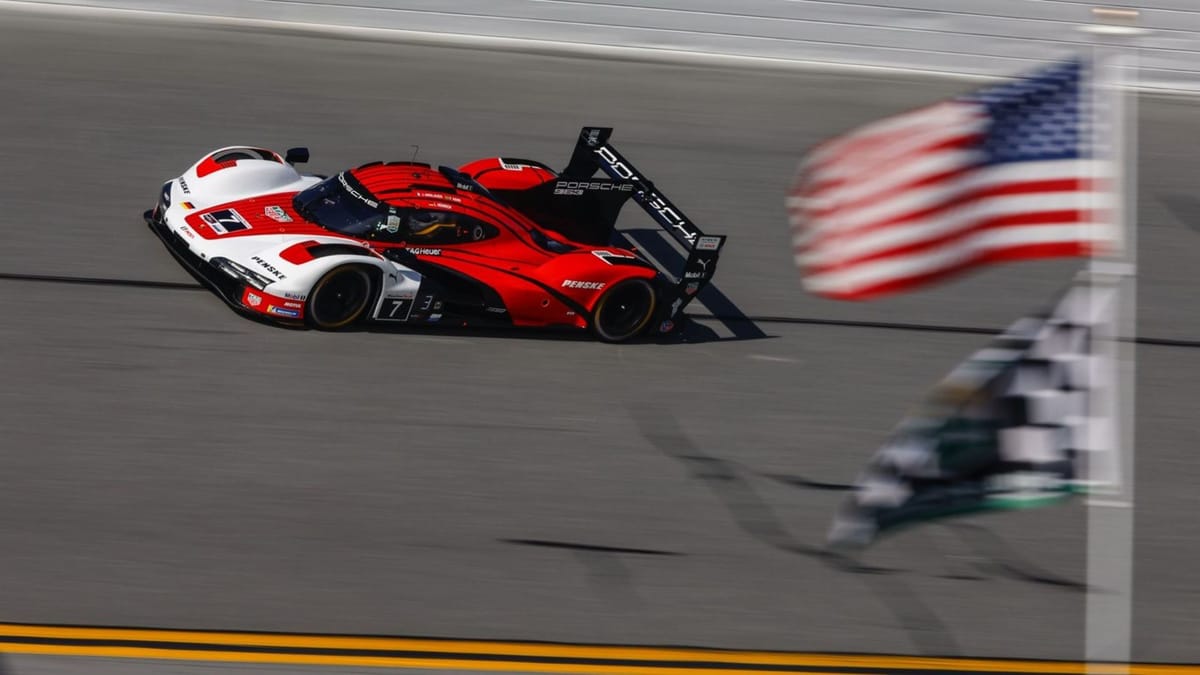
Porsche Penske Motorsport withdrew from the FIA World Endurance Championship (WEC) for the 2026 season. The decision ended three consecutive years of dual-championship operation across WEC and the IMSA WeatherTech SportsCar Championship (IMSA).
This is not a cost-reduction story. It is a programme architecture story.
Porsche chose to collapse two parallel GTP operations into a single two-car IMSA entry. In doing so, it concentrated its entire factory prototype talent pool into a single controllable series rather than spreading risk and visibility across two.
The driver movements tell the structural story more clearly than any press release could.
The roster compression
Three of the four full-season 2025 IMSA GTP drivers vacated primary seats. Mathieu Jaminet, Matt Campbell, and Nick Tandy all left the programme. Felipe Nasr stayed in the No. 7 Porsche 963, the sole point of continuity from the previous IMSA roster.
Into the No. 6 car came Kevin Estre and Laurens Vanthoor. Both drove every one of the 23 WEC rounds across the programme's three seasons. Together, they claimed the 2024 Hypercar title. Their transfer to IMSA was not a sideways move or a consolation. Porsche relocated its two most-decorated GTP drivers to the championship it chose to keep.
Laurin Heinrich, the 2024 IMSA GTD PRO champion, received a promotion to factory Porsche status. Porsche confirmed this at the Night of Champions event in Stuttgart in November 2025. Heinrich joined the No. 7 crew for Michelin Endurance Cup rounds, filling the role that factory endurance programmes use to develop the next wave of long-distance specialists.
The net effect: Porsche now fields a deeper talent pool in IMSA than it deployed in either individual championship during 2025. Two Hypercar title holders sit in the No. 6. A continuity driver and a recently promoted factory talent anchor the No. 7. No dead wood. No transition crew. Every seat carries intent.
Hardware commitment at Flacht
The two factory 963 cars entered 2026 carrying additional aerodynamic revisions applied at Porsche Motorsport's development facility in Flacht. The modifications confirm that Porsche is not running a care-and-maintenance programme. The engineering group continues to extract performance from the existing platform.
The revisions sit within the framework of what regulations allow for a homologated car. That boundary matters. Porsche cannot redesign the 963, but it can develop within the permitted envelope. The willingness to invest engineering hours at Flacht for a single-championship deployment indicates the programme still has internal priority within the motorsport division.
Daytona and the limits of reading results
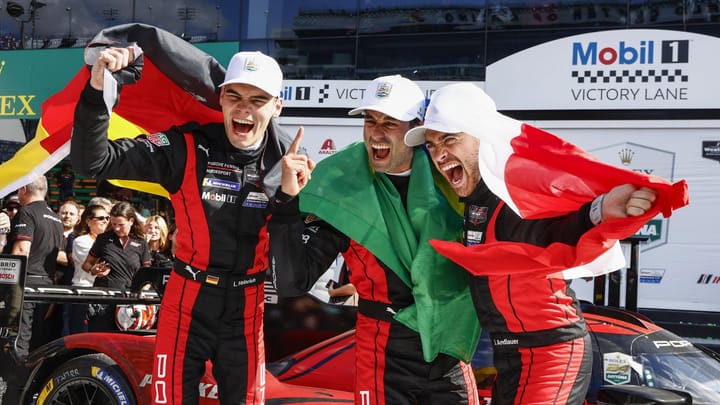
The No. 7 crew of Nasr, Julien Andlauer, and Heinrich took overall victory at the 2026 Rolex 24 at Daytona. That result gives the team three consecutive wins at the event.
The race itself featured a 6.5-hour full-course yellow period, the longest in the event's history. That single variable distorts any performance reading. Extended caution periods compress the field, reduce tyre degradation differentials, and reward pit-stop timing over outright pace. Any analysis that treats the result as a clean measurement of pace relative to the competition would be unreliable.
The No. 6 car repaired bodywork damage sustained early in the race and finished fourth overall. A recovery drive through the field after physical contact tells you about team resilience and pit-crew capability. It tells you nothing about where the car sits on raw pace.
What matters here is not the finishing order. What matters is that both cars finished, both ran at the front or near it, and the consolidated roster produced the kind of result that justifies the programme's existence to internal stakeholders at Porsche.
The structural consequence
Porsche now carries its full factory GTP talent pool in one series. That concentration removes the redundancy that a dual-championship model provided. When the programme spanned WEC and IMSA, a poor result or a political setback in one series still left the other as a reputational backstop. That backstop no longer exists.
The calculation appears to be that the 963's remaining competitive window is finite and that spreading resources across two championships no longer serves the platform's position in its lifecycle. This reads as end-of-cycle harvesting. Porsche is extracting the maximum competitive return from the 963 in a single theatre where it controls variables more tightly than it could across the global WEC calendar.
The open question is what follows. The IMSA-only footprint could be a transitional position before a successor platform arrives under the next generation of GTP or Hypercar regulations. Or it could signal that Porsche intends to narrow its commitment to top-class prototypes after the current rules expire. The 2026 season will not answer that question. But the shape of this programme, and the seniority of the drivers Porsche chose to place inside it, suggests the organisation is not yet preparing to leave. It is preparing to finish what it started, on its own terms, in the championship it picked.