The hidden cost behind Porsche’s IMSA concentration
Sebring did more than confirm Porsche’s pace. It exposed how evo joker spending and customer budget limits are beginning to shape the 963 programme’s centre of gravity.
Sebring did not tell us that Porsche is quick.
We knew that already.
What it clarified was something more useful. Porsche’s post-WEC prototype future is not simply a sporting preference. It looks increasingly like a rational response to the cost and distribution limits built into the modern LMDh cycle.
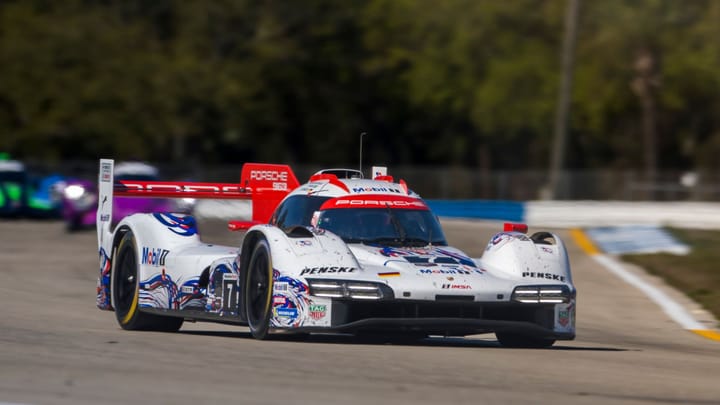
The result matters because it removes one easy objection. Porsche Penske Motorsport did not steal Sebring through caution timing or late disorder. The two factory Porsche 963 entries finished first and second after 343 laps, separated by 1.515 seconds, and did so even though the winning #7 absorbed an early drive-through penalty for contact with the JDC-Miller MotorSports #5 and still recovered to win, making 16 pit stops to the #6’s 13, including the drive-through penalty.
Sebring matters because it reduces the protective value of tidy execution. Daytona rewards discipline over a long, interrupted race. Sebring asks whether the car can stay mechanically settled on a surface that punishes it lap after lap.
This time, the answer was yes.
Porsche repeated last year’s one-two overall, reached a 20th outright Sebring win, and also locked out GTD Pro with customer Manthey and AO Racing entries. The useful point is not that Porsche had a strong weekend. It is that the company now appears able to carry factory prototype control and customer GT strength without blurring the hierarchy between them.
That breadth is where the story stops being about pace.
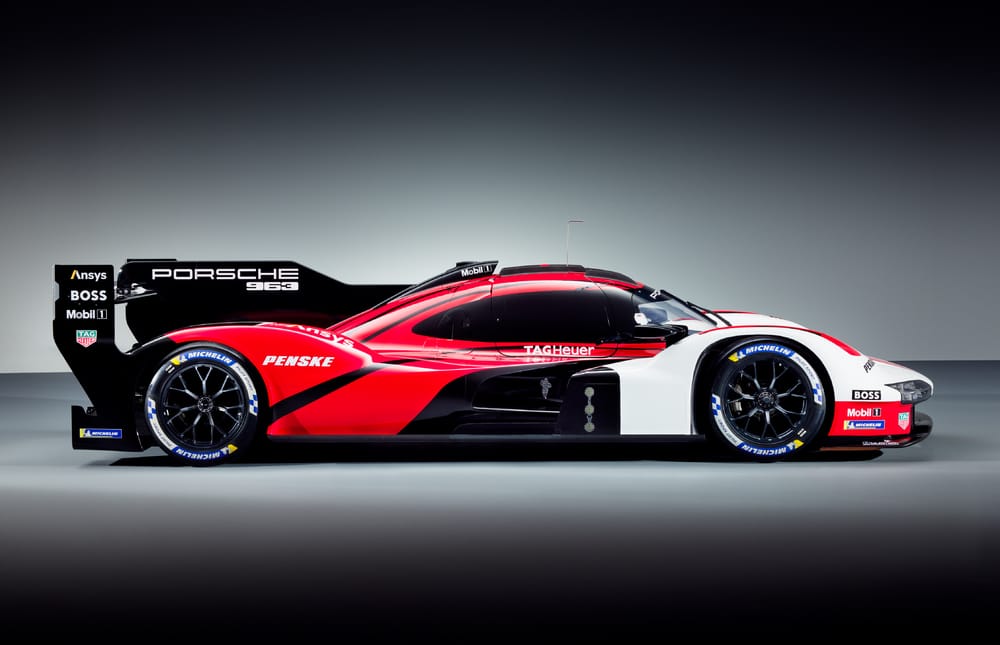
Last November, Porsche deployed the latest evo joker in the 963’s development cycle, with the 2026 package comprising a broad aerodynamic revision. Sebring is the first hard evidence that the package delivered what it needed to deliver.
But the same update also exposed a constraint.
In January, JDC-Miller MotorSports made the issue visible. Managing partner John Church said updating two customer 963s "just wasn’t in the budget for 2026". That does not prove every Porsche customer faces the same ceiling. It does prove the cost of staying current is high enough to force at least one privateer to remain on the previous specification.
Once that happens, evo jokers stop being a technical footnote.
They become part of the programme architecture.
The JDC-Miller result sharpens that point. The #5 stayed on the lead lap and remained in contention through the hotter phase of the race before losing ground later on. Team statements after the finish pointed to the same pattern: early strength, late fade, and a car that had taken enough punishment over Sebring’s surface to affect its pace. Timing data showed track temperatures falling from 106°F at hour three to 77°F by hour eleven, and the #5’s pace erosion tracked that cooling curve. That is easier to read as a narrower operating window, compounded by race damage, than as a simple execution failure.
This is where Porsche’s concentration starts to look structural.
The official Porsche line for 2026 is straightforward. The company remains in endurance racing with the Porsche 963 in IMSA and in LMGT3 in the FIA World Endurance Championship. Read narrowly, that is just a statement of scope. Read against Sebring and the JDC case, it suggests something else as well. Porsche now gets its prototype visibility from a single factory series, where a single fully integrated operation can exploit the latest 963 package without spreading the same effort across a second top-class campaign.
Sebring showed why that concentration works.
Porsche did not merely win GTP. It controlled the race at the front while customer Porsche teams locked out GTD Pro. That is not a programme shrinking out of relevance. It is a programme that arranges its expensive edge at the factory level and multiplies its presence through customer racing around it.
There is a hard logic to that.
The prototype operation carries the highest development cost and the sharpest technical risk. The customer GT structure carries volume, visibility and commercial reach. If evo joker spending is widening the gap between what a factory can keep current and what a private team can afford to mirror, then concentrating the 963’s peak effort inside one championship is not cautious.
It is efficiency.
That is the real value of Sebring as evidence.
The race did not prove every part of the case. It did not give us Porsche’s internal budget lines. It did not let us compare this exact 963 package across parallel factory programmes in IMSA and WEC. But it did move the argument out of theory.
Porsche’s IMSA concentration is no longer best read as a calendar preference.
After Sebring, it looks like the cleanest way to keep the 963 current, controllable and worth the spend.