Mercedes-AMG reads DTM’s new tyre regime first
Mercedes-AMG’s Red Bull Ring opener was not just a Race 2 win. It was the first useful read on DTM’s new tyre and BoP regime.

Signal Note: 2026 DTM Red Bull Ring season opener
DTM is not an RSR pillar. It is a measuring rig.
The 2026 Red Bull Ring opener was the first live test of a changed operating environment: a new Pirelli control tyre, tighter tyre allocation rules, and a revised Balance of Performance framework that draws on more vehicle-specific parameters.
That is what gives the weekend its value.
Not the crowd figure. Not the local winners. Not the podium photographs.
The tyre.
Mercedes-AMG gave the cleanest first answer.
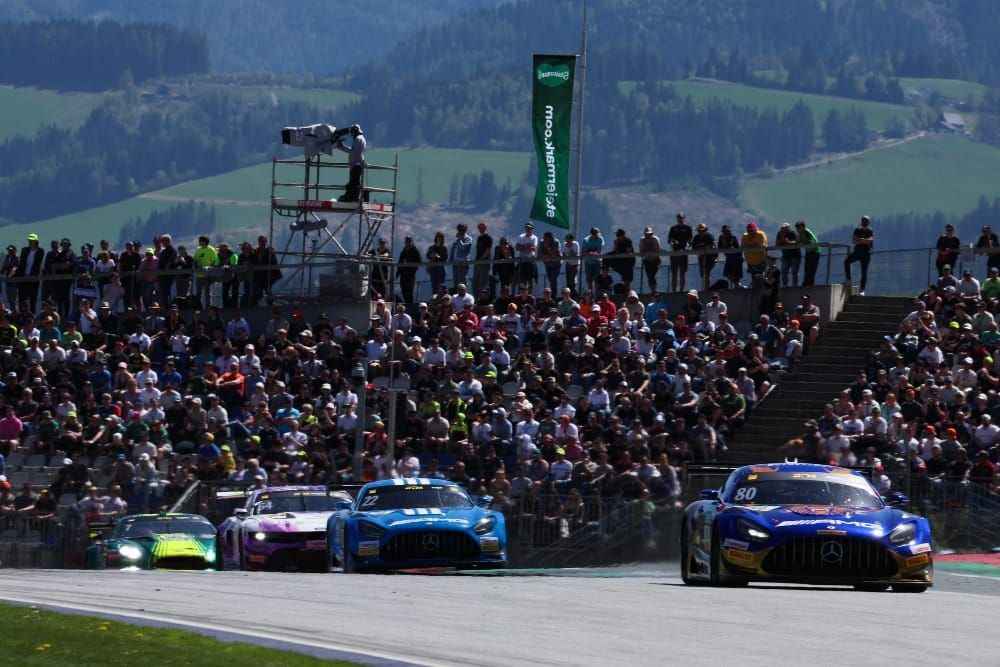
On Friday, Lucas Auer, Jules Gounon and Maro Engel put three Mercedes-AMG GT3 cars at the front of the qualifying simulation. On Saturday, Mercedes-AMG had the broader front-running footprint, even though Thomas Preining and Manthey converted the opening race. On Sunday, Engel won for Mercedes-AMG Team Ravenol, Auer finished third for Mercedes-AMG Team Landgraf, and Gounon completed the top four for Mercedes-AMG Team Mann-Filter.
That is not a title verdict. It is too early for that, and the evidence is still circuit-bound.
It is a diagnosis.
Sunday asked teams a different question from Saturday. The second mandatory tyre-change phase made timing, pit execution and repeatability more visible than the simpler Saturday format had.
Engel’s win was built there.
He gained three places at the start, moved behind pole-sitter Kelvin van der Linde, then took control through the first pit sequence. Mercedes-AMG later identified the first-stop undercut, built around a 6.9-second pit stop, as the decisive move. Once ahead, Engel kept the race clean after the second stop and finished 4.857 seconds clear.
That margin matters less than the route to it. The Sunday race had no Safety Car phase and no Full Course Yellow. Mercedes-AMG did not need a late intervention, a penalty shuffle or a compressed finish.
A clean race is often crueller evidence.
It leaves fewer hiding places.
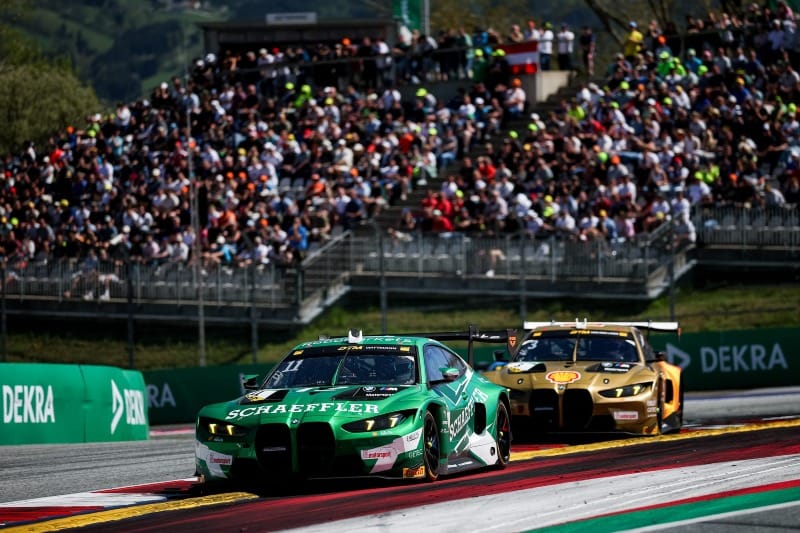
BMW did not leave Austria empty-handed. Marco Wittmann turned ninth on the grid into second for Schubert Motorsport, helped by an early stop and execution that looked like a team finding answers during the race rather than inheriting them. Van der Linde’s pole also gives the BMW M4 GT3 Evo a real Sunday signal, even if sixth place after leading limits how far that reading can go.
That is the BMW caution: one car recovered, one car faded.
Porsche’s caution is different.
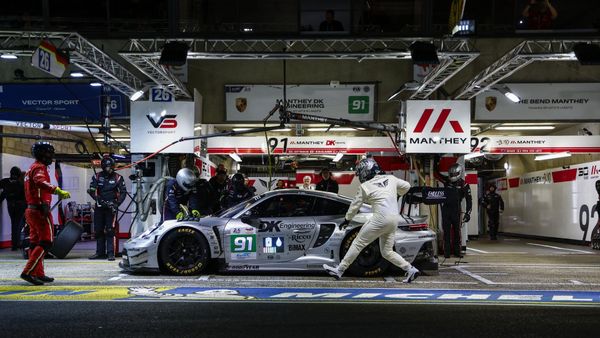
Preining’s Saturday win should not be played down. Manthey and Preining remain a known DTM quantity, and the opening race showed why. The team executed Saturday’s decisive phase well. Engel’s pit delay and Gounon’s late suspension failure also removed the cleanest Mercedes-AMG comparison.
Sunday changed the weight of that result.
With two stops in play, the Porsche picture softened sharply. Bastian Buus was the best Porsche in tenth for Land-Motorsport. Ricardo Feller and Preining finished 12th and 13th for Manthey.
That does not make the Porsche 911 GT3 R weak. It does make the Race 1 win look more like a precise operational strike than proof of weekend-wide superiority.
There is a difference.
Porsche’s own pre-season language had already warned against treating 2026 as a continuation of the old Manthey baseline. The optimised Porsche 911 GT3 R, the new DTM tyre and stronger competition meant Manthey could not simply carry last year’s authority into the new season. Red Bull Ring supports that caution. Porsche could win the first race and still leave with questions about repeatability across the Sunday format.
That is exactly the sort of contradiction DTM is useful for.
The wider frame sits with the regulations. The new carry-over tyre concept makes tyre use a season resource, not just a weekend choice. Qualifying tyre use is more tightly controlled. BoP draws on more measured vehicle parameters. The new operating environment tests how quickly teams can build a working model around a control element none of them had raced before.
Mercedes-AMG looked the furthest along after one weekend.
Jäger’s post-weekend line supports that reading, but also keeps it bounded. Mercedes-AMG’s consistency, retained driver line-up, strategy calls, and a well-developed GT3 car were all part of the result. So was tyre adaptation. The useful phrase is not that Mercedes-AMG has solved the new Pirelli tyre. It is that its car handled it well at the first attempt.
Not finished. Furthest along.
The counterweight is obvious. Red Bull Ring is one circuit, in one temperature window, on one opening weekend. Aston Martin set the fastest lap in Race 2 through Nicki Thiim, BMW took pole, and Porsche won Race 1. Auer’s own post-race caution matters too: Zandvoort is a different circuit and likely a warmer test. A serious reading has to keep all of that in the frame.
So this is not a verdict on the 2026 DTM season.
It is the first useful answer.
Mercedes-AMG arrived with the deepest repeatable response to the new tyre regime. BMW found one strong Sunday recovery without weekend-wide breadth. Porsche proved Manthey can still execute, but not yet that the 911 GT3 R has the same breadth across the revised format.
That is enough for a Signal Note.
No more than that.