Reading the Roar: maturity, not speed, will decide Daytona
What the Roar Before the 24 reveals about organisational maturity, factory intent, and customer resilience as Daytona shifts from preparation to pressure.
Why the Roar matters, and why it usually misleads
Every January, the Roar Before the 24 rolls around, and if you care about endurance racing, you’ll know the atmosphere is a bit different. Officially, it’s just a test. Unofficially, it feels like a dress rehearsal, with everyone watching a little too closely. Fans, media, even the teams themselves, treat it as a predictor, even though it rarely is. That tension has become more obvious in the second year of these prototype regulations. The cars are converging, and, if anything, the lap times matter less and less.
When the rules are fresh, it’s easy to spot who’s scrambling. Problems show up fast, you’ll see teams improvising on the fly, and there’s a real nervous energy around the paddock. By the second season, things have settled down. What really stands out, then, is how each team handles the unknowns and their attitude toward the bits they can’t control.
This is where plenty of people get tripped up. It’s tempting to treat the Roar as a preview of qualifying, or to read too much into the headline times. That’s almost always a mistake. The most telling clues aren’t about who’s quickest. They’re in what teams aren’t showing. If a team looks calm, sticks to its plan, and doesn’t seem flustered, that usually says more than any lap time at the top of the screens.
Daytona only magnifies this effect. The track squeezes lap times, so the gaps are tiny. It rewards teams that look after their cars and punishes any mistakes, but usually later rather than straight away. A team might keep a low profile all weekend and still be in a great spot. On the other hand, if a team is trying a bit too hard to get noticed at the Roar, it’s often a sign they’re still searching for answers.
If you look at this as a chance to learn, not just a show, the Roar stops being about pure speed. It’s really about which teams look comfortable. The real question isn’t who’s the fastest, but who trusts their process enough that they don’t feel the need to keep proving it.
GTP as a systems test, not a speed contest
If you pay attention to the GTP class, the difference is pretty clear now. Lap times are bunched up across all the leading names, which isn’t much of a surprise, and honestly, not especially useful these days. What really sets teams apart now is how they approach the Roar. Are they calmly working through a checklist, like they’ve done it a hundred times before? Or do they still look like they’re figuring things out as they go?
Watching the Roar sessions, what really stands out is how little drama there is up front. But don’t be fooled by the calm, there’s plenty happening behind the scenes. It feels like a lot of manufacturers have moved past just working things out and are now simply double-checking what they already know works. The run plans are steady and clear, driver changes feel planned in advance, and even the night sessions seem more about confirming what they’ve already learned than chasing surprises.
That’s the clearest sign we’re now in the second year of these regulations. It’s not about who understands the technology best anymore. It’s about which teams have grown up the most, organisationally speaking. Nearly everyone’s got the car figured out by now. What matters is who can manage the information and the chaos, especially during those long stints when things get unpredictable.
It’s important not to misread restraint. When a team keeps its lap times steady, repeats the same routine, and doesn’t chase the top of the timing sheets, it’s not necessarily hiding anything. More often, it’s a sign of confidence. If you know your limits, you don’t need to prove them to everyone else.
Of course, this doesn’t mean the Roar is risk-free. Just because a team looks calm doesn’t mean there aren’t gremlins lurking, waiting to pop up when things get tough, like in heavy traffic or when everyone’s running low on energy at the end. The main point now is different. In GTP, the Roar isn’t about discovering the car anymore. It’s about showing that the people behind the scenes are ready to trust their preparation and let the race reveal the rest.
Porsche and BMW as organisational case studies
If the Roar is now mostly a test of organisational maturity, then the way Porsche and BMW go about things over the three days is interesting precisely because it’s not dramatic.
Both manufacturers turn up at Daytona as established players, not underdogs. That brings a different kind of pressure. They’re no longer wrestling with the basics of the car or proving the programme works. Now, it’s about keeping a well-oiled system running smoothly, especially when conditions are designed to catch out any weak spots rather than reward big breakthroughs.
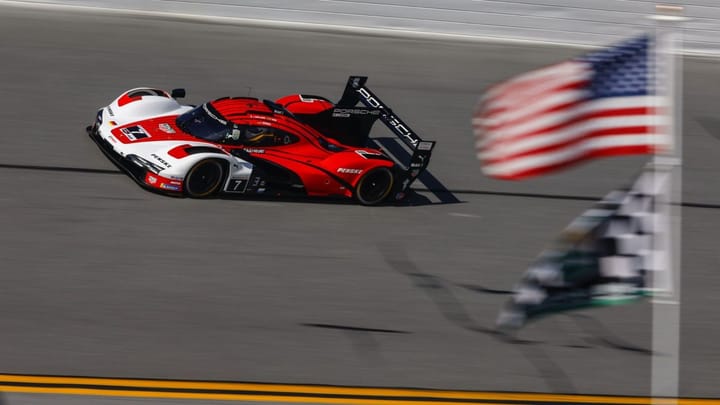
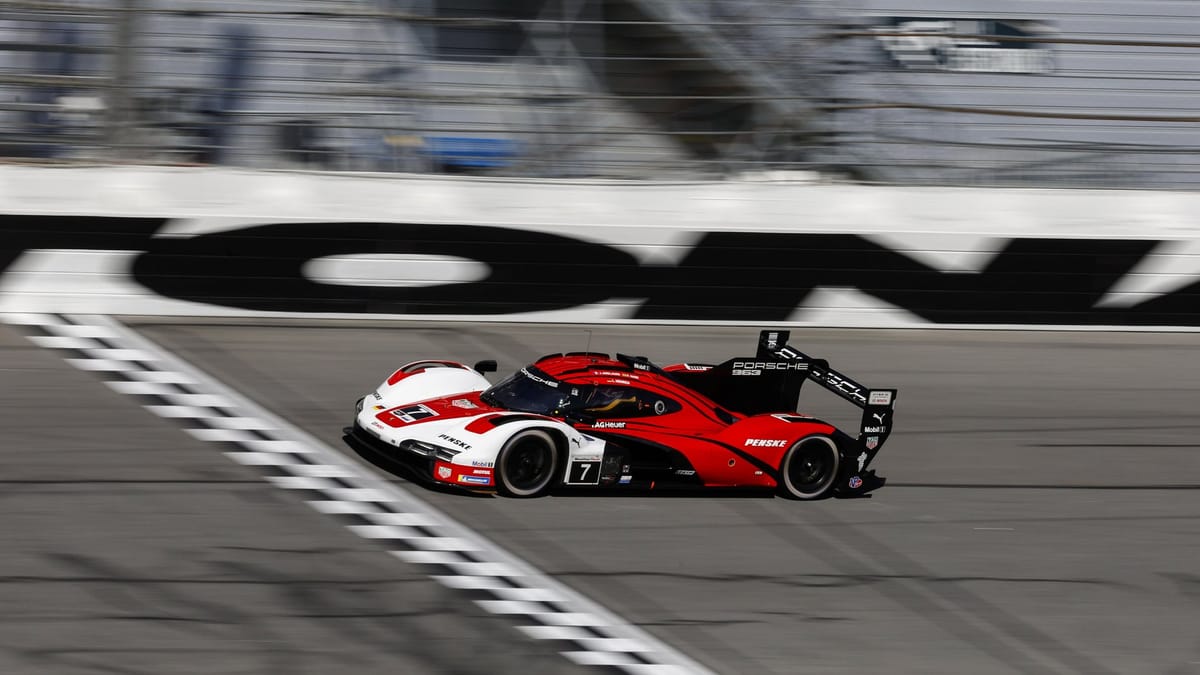
For Porsche, you can see that maturity in how little the programme seeks reassurance. Factory and customer cars are running in the same performance window, which suggests they all trust the data and each other. Driver rotation has been steady, not flashy, and night running has been more about confirming what they already know than searching for something new. There’s no rush to show off. It’s more like they’re making sure what worked elsewhere still works here.
This isn’t passive; it’s confidence that the whole system, not just a single part, will handle Daytona’s ups and downs. That lack of fuss is a sign in itself. Where new programmes often show their nerves by over-managing everything, Porsche seems happy to let good habits do the heavy lifting. In that way, the Roar is treated more like a tune-up than a dress rehearsal.
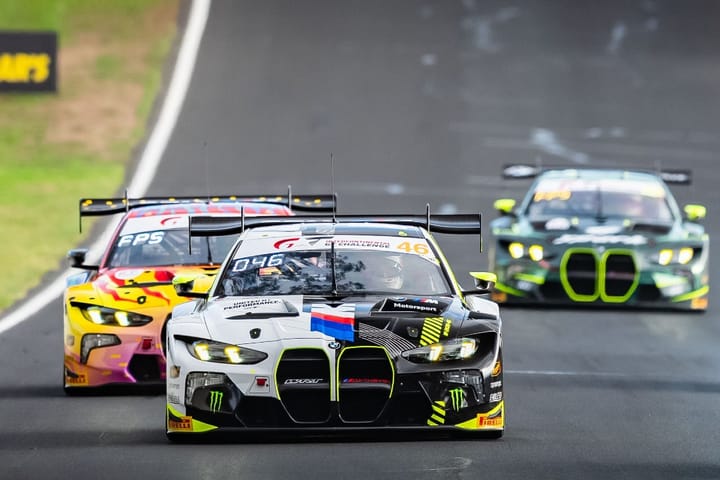
BMW’s approach is a bit different, but just as revealing. While Porsche looks like a closed loop that’s already running smoothly, BMW seems to be putting the finishing touches on how everything fits together. They’re less about keeping secrets and more about checking that everyone’s in sync, whether that’s between the factory in Europe and the crew in North America, or between what the sim says and what actually happens in traffic, or between the hardware and the way the team runs it.
That difference matters. BMW’s Roar has shown a more visible sense of purpose, especially in how sessions are used and wrapped up, without ever looking unstable. It feels like a programme moving from consolidating what it knows to being truly confident, not one that’s still looking for answers. The big change from previous seasons is that this fine-tuning now looks deliberate, not like they’re scrambling to fix things.
Looked at together, Porsche and BMW are two takes on the same advantage. One is a fully settled system, the other is just putting the final touches on getting everything working as one. In both cases, the Roar isn’t there to answer big questions. It’s a way to check that what they already know will still hold up under Daytona’s unique pressure.
This is the maturity gap the Roar now reveals. It’s not about fast versus slow cars, but about which teams treat Daytona as a confirmation run and which still need it to tell them something new.
Non-German GTP context as contrast, not equivalence
You only really understand Porsche and BMW’s approach to the Roar when you compare them with teams handling different pressures. This isn’t about artificially evening things up, but about drawing clear contrasts that actually help explain what’s going on in the field.
Cadillac’s GTP programme is still a contender, but it’s more focused on execution. Their platform is proven, and there’s no question they can turn up the pace when needed. What sets their Roar apart from the German teams isn’t raw speed, but what they choose to highlight. Hitting session peaks matters more. The hands-on approach is more obvious. Cadillac seem happy to show what they can do, rather than keep it under wraps.
That posture is not inherently inferior. In many endurance contexts, it is highly effective. However, it does suggest a different organisational priority. Where Porsche and BMW appear to be validating systems already trusted, Cadillac’s use of the Roar feels more like reinforcement, ensuring that recent changes and personnel shifts are fully assimilated.
Acura presents a subtler contrast. Its Roar was characterised by steadiness rather than assertion, and by an absence of visible stress rather than any attempt to shape perception. That composure may be read as confidence or perhaps as conservatism. What matters is that Acura’s behaviour remains distinct from the German model. The Roar does not show Acura using the test as a systems audit in the same way, nor does it indicate a need to do so.
Taken together, these contrasts reinforce the central diagnosis. The Roar is no longer dividing the GTP field by pace. It is separating programmes by how they relate to uncertainty. Some arrive needing the test to reveal the truth; others arrive confident that the truth is already known.
GTD Pro as a measure of factory intent
If GTP is where teams show how grown-up they are, then GTD Pro is all about intent. This is the class where manufacturers have to decide how much they really want to be in the fight. Margins are slimmer, the rewards are quieter, and mistakes are noticed.
GTD Pro doesn’t leave much room for half-hearted efforts. Teams either turn up with a real engineering focus or rely on reputation and their drivers to get them through. The Roar has already started to show which is which.
For Porsche, GTD Pro is just another layer of what they already do well. Information flows freely between the factory and customer teams, and the driver line-up is picked for endurance skills, not just one-lap pace. These cars are run like they matter, which isn’t always the case in this category.
BMW approaches things a bit differently, but it’s just as interesting. For them, GTD Pro is more of a test bed for ironing out the details rather than showing off dominance. They’ve been focused on getting procedures and communication right, not chasing headline pace. It looks like BMW are still working out how to turn factory plans into something that actually works for customer teams under GT rules.
Mercedes-AMG gives us a handy counterpoint. Their GT3 car is a proven machine, but even so, the Roar shows how rules and logistics can stretch any programme. Here, GTD Pro isn’t just about who’s quickest; it’s about which teams can deal with chaos and stay organised when things get tricky.
GTD Pro rewards neither prestige nor history. It rewards intent, underpinned by structure. The Roar’s early signals suggest that German manufacturers are not uniform in their response to this test.
GTD and the customer ecosystem as manufacturer truth
If GTP is about maturity and GTD Pro is about intent, then GTD is where theory meets reality. This is where a manufacturer’s grand plans get the ultimate test: out in the chaos of a packed field. Instead of careful selection, it’s all about sheer numbers. Support teams are stretched thin, and any weak spots show up fast, whether you like it or not.
In GTD, sometimes just making it to the end matters more than the actual result. Huge grids, drivers of all levels, and complicated rules make it a place where fragile systems quietly fall apart, while the strongest teams simply get on with it and soak up the chaos.
Porsche’s depth is a double-edged sword. Having lots of cars on the grid makes them tough to beat, but it also means there’s a lot of variation in how teams get the most out of them. The Roar shows Porsche’s customers are generally solid, even if they don’t all get everything right. That’s not really a criticism: it’s just how this kind of racing works. The real question is whether Porsche is happy to let that variation happen, or if they’re working behind the scenes to smooth things out.
BMW, on the other hand, has fewer cars in GTD, which makes things clearer but gives them less of a safety net. When everything clicks, the result is fantastic. But when something goes wrong, there’s not much room to recover. At Daytona, that’s a big deal.
Mercedes-AMG is playing a numbers game too, but that comes with another risk. Their platform is easy to run, but the more cars you have, the more little things can go wrong. Small mistakes don’t usually ruin a race on their own, but over 24 hours, they can add up.
GTD does not reward brand strength. It rewards customer systems that can disappear into the background while everything else is under stress. The Roar offers an early indication of which manufacturers have cultivated that resilience, and which have not.
What Daytona is likely to expose that the Roar cannot
For all its value as a test, the Roar is still a controlled environment. Sessions are short, you can try things and recover instantly, and any decisions you make can usually be undone. The Rolex 24 strips away those safety nets. What it really brings out is not preparation, but consequence.
The first big test is traffic. Daytona squeezes any theoretical advantage down to almost nothing, so teams have to rely on good communication and trust instead of just hoping for the best. If a team used the Roar to check that their systems really work, not just to make themselves feel better, those habits will come in handy when things get busy.
The second is fatigue. The Roar doesn’t really show what happens when tiny mistakes stack up over hours and hours. That’s where you see which teams are truly mature. If you rely too much on individual brilliance, things can start to unravel. Teams that make life easier for everyone tend to hold up better.
Finally, Daytona puts everyone’s self-control to the test. Safety cars shrink the gaps, officials keep a closer eye on things, and the urge to worry about how you look instead of what you’re actually doing gets stronger. In that environment, staying quiet isn’t a sign of weakness; it’s a sign of discipline.
None of this guarantees success. Daytona seldom rewards intention alone. What it does expose is organisational truth. By the final quarter of the race, the field will no longer be divided by what was learned in testing, but by what each programme was prepared to trust once testing had stopped.
That’s why the Roar matters, and why we have to read it carefully. It’s not a crystal ball, but it does give us an early hint about which teams are ready to handle the pressure when the real challenge begins.