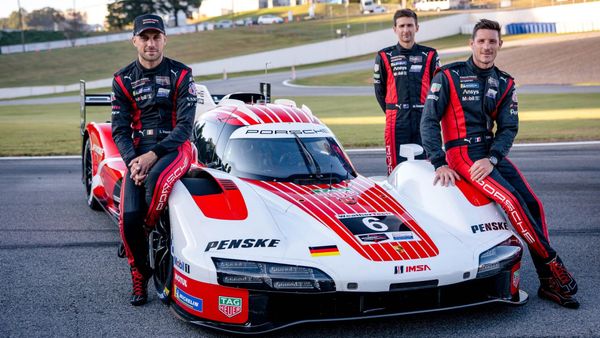
What Manthey gives Porsche
Porsche owns 51% of Manthey but still calls it a customer team. RSR examines what that unusual structure gives Porsche, and where the evidence stops.

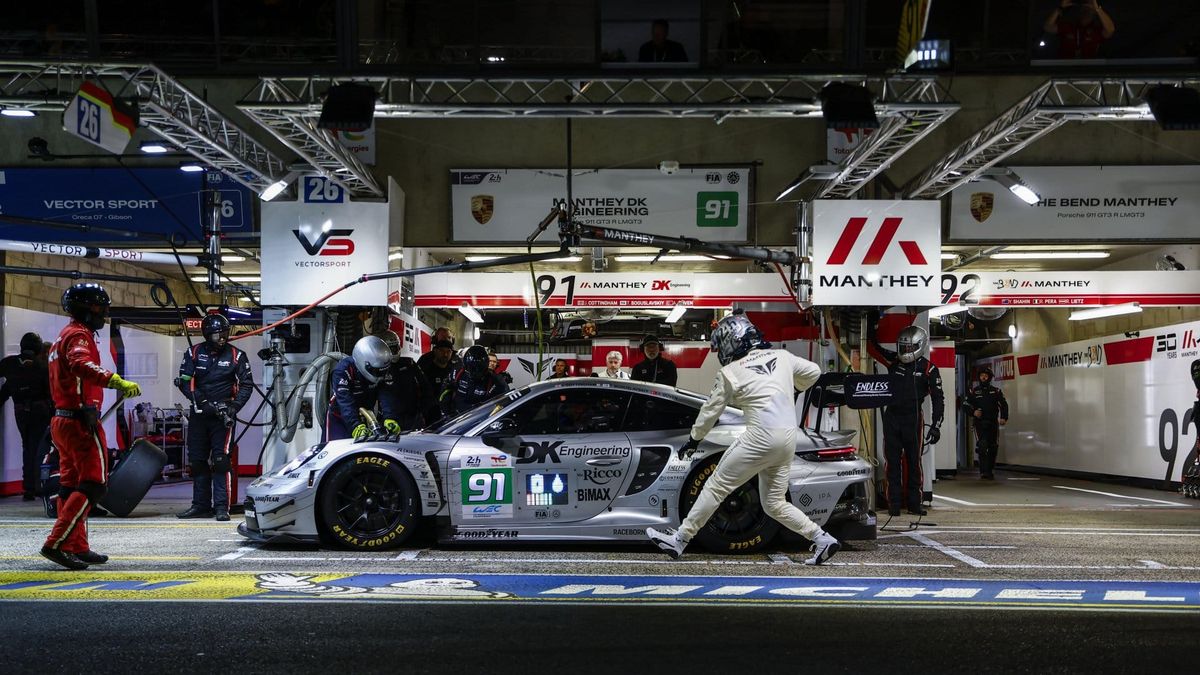
Porsche owns 51% of Manthey Racing GmbH. It also refers to Manthey as a customer team.
Those two facts sit side by side in Porsche’s own record. When Porsche chose Manthey to run its LMGT3 entries in the FIA World Endurance Championship (WEC) for 2024, it called Manthey its German subsidiary. By the 2026 24 Hours of Le Mans, Porsche was calling the same firm a customer team.
The stake had not changed. The wording points towards what makes Manthey unusual.
Porsche holds a majority stake in a specialist racing firm that remains sufficiently separate to enter and run race programmes in customer-team form. That does not prove Porsche needs Manthey.
Porsche’s own racing history makes such a claim hard to sustain. Other teams have run works Porsche programmes, and independent Porsche customers still win major GT3 races.
The stronger case is tighter. Manthey gives Porsche a specialist firm in which Porsche-specific experience, racing capability and technical services can exist beyond the life of a single race entry.
That gives Porsche a base for continuity. It does not prove how far knowledge flows between programmes, what work Manthey takes from Porsche Motorsport, or whether Porsche could match that capability elsewhere.
A customer team Porsche owns
Porsche bought its 51% stake in Manthey in 2013, the same year Manthey and Raeder Motorsport joined forces. The deal formalised a tie already built over years of Porsche racing work.
Porsche later said it had continued to expand the relationship. The clearest public account of what Porsche values in Manthey came when it chose the team for WEC LMGT3.
Thomas Laudenbach, vice president of Porsche Motorsport, pointed to Manthey’s knowledge of the Porsche 911 GT3 R, its WEC experience, the history between the two firms and Manthey’s status as a Porsche subsidiary.
This was not simply a statement about results. Porsche cited knowledge already held by the firm as part of its choice.
That does not tell us how knowledge moves inside Manthey, nor does it prove that WEC information is routinely shared with DTM or IMSA staff. It does show that Porsche valued experience already held by the team when it gave Manthey a new programme.
That is a key difference between Manthey and a team hired only for a single race entry. Manthey exists before a programme begins and remains after it ends.
The structure therefore creates a setting in which Porsche-specific staff, experience and working knowledge can survive changes in series and contracts. How much of that scope becomes real technical transfer is not clear from outside the two firms.
What the GT3 rules leave to the team
GT3 gives that relationship a clear context.
The 23 June 2026 version of Article 257A from the Fédération Internationale de l’Automobile (FIA) says a GT3 car must remain in strict conformity with the technical rules, its homologation form, its FIA data sheet, the relevant Balance of Performance chart and any further FIA GT Committee notice.
Teams cannot simply rework the base car to suit themselves. The rules still leave defined areas in which they can work.
Suspension settings can be changed through direct mechanical work while the car is stopped. Teams may use shims, bushings, or washers to change axle geometry, while bump-stop and damping-law design, and spring design, retain their defined freedom.
That is what the rule says. The next step is interpretation.
If the base car specification is fixed, the team still has to make the allowed package work. Car preparation, setup judgement, data interpretation, tyre use, driver use, strategy, pit work, and reliability can still lead to gains or losses.
A team cannot invent a different 911 GT3 R. It can make better or worse use of the one it has.
Nicolas Raeder made a similar point in a 2026 interview with Racecar Engineering. He contrasted modern GT3 limits with the greater technical freedom open during some of Manthey’s past Nürburgring programmes.
His point was that when fewer areas remain open, the work that is still allowed has to be done very well. The FIA rules set the limits; Raeder explains how Manthey views the work left inside them.
Neither proves Manthey has a unique edge in that work.
Where continuity can survive
Manthey’s scale makes the structure more telling.
Porsche says Manthey employs more than 350 people at Meuspath and runs four arms: Racing, Road Cars, Race Cars and Experience. Porsche says the Racing arm competes on its own and on behalf of Porsche Motorsport, while the Race Cars business supplies technical support, spare parts and development services to Porsche Motorsport and customers.
Manthey is also running Porsche GT3 programmes in WEC, DTM and the International Motor Sports Association (IMSA) Michelin Endurance Cup during 2026.
Those facts show breadth. They do not prove that knowledge flows freely between each race programme.
A DTM set-up lesson cannot simply be assumed to appear in an IMSA car. Different series have different rules, tyres, drivers and race demands, while staff may also be split between programmes.
The safer view is that Manthey gives Porsche a shared base in which Porsche-specific racing capability can last. The firm is not rebuilt each time Porsche assigns a new entry.
People, workshops, technical services and business experience remain. That leaves room for knowledge to stay inside the firm without forcing us to claim technical transfer that the public record does not show.
Manthey itself also offers a useful warning against overclaiming for the model. Raeder has said that staff and workshop space limit further growth in racing.
A large firm is still a finite one.
Porsche has other routes
Any case for Manthey has to survive the clearest argument against it.
Porsche can race without Manthey. CORE autosport ran Porsche’s North American works GT programme for seven seasons through 2020.
That provides clear evidence from the past that Porsche can place a top works GT role with an outside team other than Manthey.
The current customer programme supplies a second test. Lionspeed GP won the 2026 24 Hours of Spa with a Porsche 911 GT3 R, while Schumacher CLRT finished fourth.
Manthey was not the route through which Porsche won one of the key GT3 races of the season.
Those cases show one clear point: Manthey is not needed for Porsche to run a major GT programme or for a Porsche customer to win a major GT3 race.
They show less about replacement. CORE and Lionspeed do not prove that another team could match Manthey’s wider mix of racing, technical, and business roles, nor do they indicate whether Porsche would want another firm to do so.
Porsche’s broader customer network and Manthey therefore need not be rival answers to the same problem. Independent teams give Porsche several racing routes; Manthey gives it a different type of tie.
That fits Porsche’s own 2023 WEC statement, which said the series’ limited LMGT3 places could not show the full breadth of its customer-racing programme.
Manthey is not Porsche GT3 racing in miniature. Porsche has other routes and appears to value having them.
One different answer from Mercedes-AMG
Mercedes-AMG offers a useful contrast in how a manufacturer can assign different roles.
Its customer-racing programme supports independent teams, while selected Performance Teams can receive extra works support with drivers, engineers and motorsport staff.
Mercedes-AMG has also created Affalterbach Racing GmbH, a subsidiary responsible for concept and technical customer-sport work, including development of the next Mercedes-AMG GT3.
This is a contrast in where roles sit. It is not a claim that Affalterbach Racing and Manthey do the same jobs.
Mercedes-AMG separates central manufacturer technical work from the independent teams that race its cars. Porsche’s tie with Manthey puts a different set of roles in one place.
Porsche holds a 51% stake in a firm that runs race programmes, handles Porsche-related technical work, and maintains businesses beyond single-race entries.
The contrast does not tell us that one model is better. It shows that manufacturers can draw the line between in-house control and outside race operation in different places.
Manthey places that line in an unusual position.
Where Manthey ends, and Porsche begins
That closeness also creates the biggest problem when judging Manthey’s results.
It is hard to isolate Manthey from Porsche. A 51% stake may provide access, built-up knowledge, and programme opportunities not available to a typical customer.
Porsche also assigns works drivers to customer programmes, including Manthey’s WEC entries. A Manthey win therefore cannot be treated as a clean measure of Manthey alone.
The other mistake would be to assume Porsche’s stake explains everything. Manthey still has to prepare and run the cars.
A 51% stake does not make pit calls, avoid penalties or ensure reliability. The 2026 24 Hours of Le Mans showed why: one Manthey Porsche finished 13th in LMGT3 while the other retired after an accident.
The tie does not remove normal racing failure.
Public evidence also leaves larger questions open. We cannot show how many Porsche Motorsport roles Manthey performs that Porsche would otherwise carry in-house.
We can't measure how much money the tie saves Porsche, if any. We can't show how easily Porsche could transfer Manthey’s work elsewhere or how far technical and race knowledge moves between Manthey programmes.
Those limits matter because they prevent corporate closeness from serving as evidence of something we have not seen Manthey do.
RSR asked both Porsche and Manthey for comment while looking into these questions. Neither had replied by 1 September 2026.
Their lack of response is not evidence for either view. It simply leaves some parts of the tie outside the public record.
What Manthey gives Porsche
From the public evidence, Manthey’s clearest value to Porsche lies in its structure, not in being needed.
Porsche has a 51%-owned specialist firm with broad racing experience, technical capability and several Porsche-related businesses. That structure gives Porsche a base on which Porsche-specific experience and racing capability can endure beyond single-race programmes.
Porsche can then appoint that firm to selected racing roles without placing every entry inside Porsche Motorsport.
We cannot prove how much knowledge transfers between those roles. We can't prove that the structure saves Porsche money, nor can we prove Porsche would struggle to replace Manthey.
Porsche’s other racing routes show why we shouldn't try.
What the evidence does support is more exact. Manthey sits closer to Porsche than a typical independent customer, yet remains separate from a standard in-house works unit.
Porsche has kept that structure despite changes in racing programmes and still entrusts major GT3 work to it.
For Manthey, that closeness makes it harder to claim that its success belongs solely to the team. For Porsche, it gives a route that its normal customer network does not clearly match.
That is what Manthey gives Porsche: not proof of need, but a place where racing capability can stay close to the manufacturer without becoming the manufacturer itself.