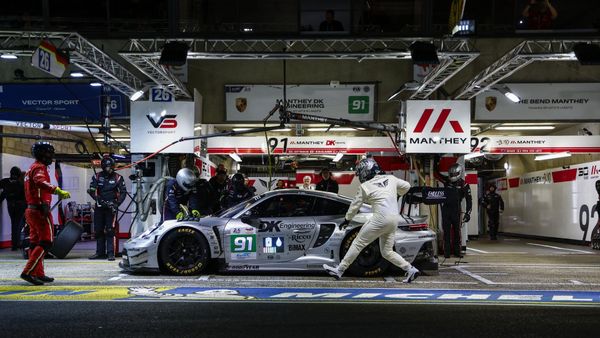
Porsche's Brands Hatch peak came with a warning
Porsche had the Brands Hatch Sprint peak, but Mercedes-AMG and BMW gave the cleaner depth readings once Race 2 stripped away the usual noise.

Brands Hatch did not produce a simple Porsche story. That would have been too easy, and less useful.
It produced a sharper Sprint measurement.
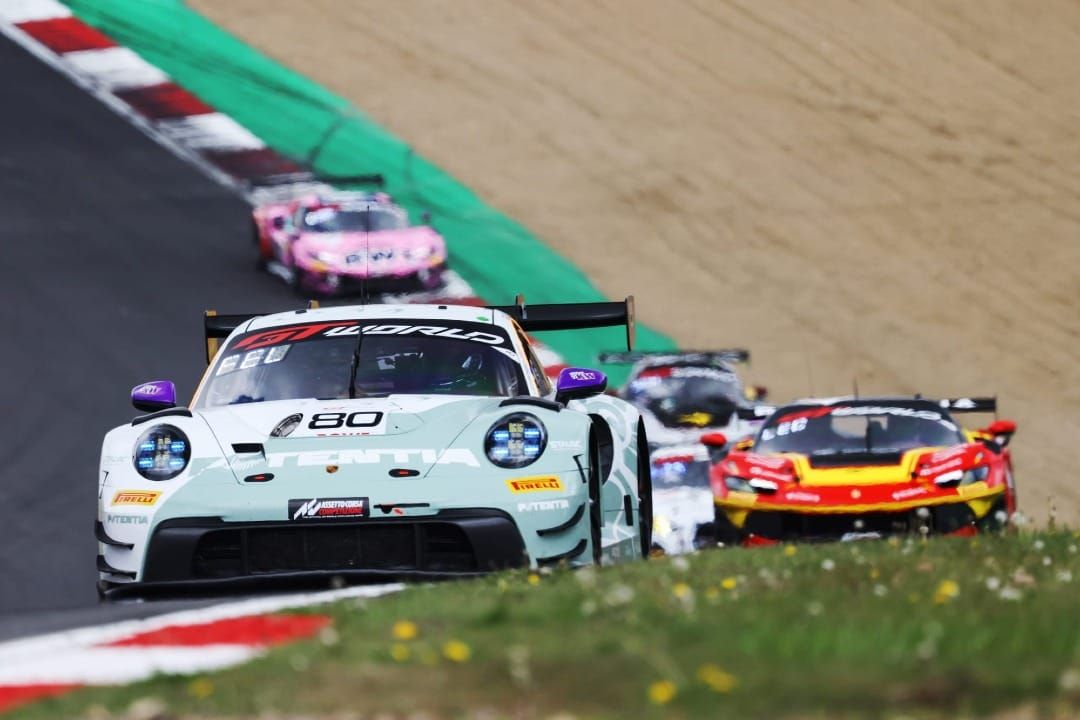
In Race 2 of the 2026 GT World Challenge Europe (GTWC) Sprint Cup at Brands Hatch, the #80 Lionspeed GP Porsche 911 GT3 R EVO converted pole into a clean win, 3.073s ahead of the #3 Mercedes-AMG Team Verstappen Racing Mercedes-AMG GT3 EVO. The race gave us the helpful version of Sprint evidence: 33 starters, 31 classified cars, dry conditions, 43 laps, no Safety Car and no Full Course Yellow.
That matters.
GTWC Sprint does not settle endurance questions. It asks smaller questions under pressure. Can a car access the tyre window quickly? Can both drivers repeat the lap shape? Can the team make the pit window clean rather than clever? Can the package keep its balance as traffic and track position start to bite?
At Brands, Porsche answered the first question best.
The #80 Lionspeed Porsche had already marked the weekend on Saturday, with Ricardo Feller and Bastian Buus putting pace into both qualifying sessions. On Sunday afternoon, Buus controlled the opening stint and Feller finished the work. The official report also made clear why Race 1 had not become the same story: the car had retired from the lead with a steering issue.
That caveat matters more than the win.
Porsche had the peak. It did not have an untroubled weekend.
The final classification deepened rather than softened that reading. Morris Schuring set the fastest lap of Race 2 in the #2 Boutsen VDS Porsche 911 GT3 R EVO with a 1:23.104 on lap 25, even though that car finished 12th after a five-second penalty for forcing another car off track. That leaves Porsche with two separate pace references, not only the winning car.
But depth belonged elsewhere.
Mercedes-AMG placed two cars on the podium. Dani Juncadella and Chris Lulham finished second in the #3 Mercedes-AMG Team Verstappen Racing entry, while Lucas Auer and Maro Engel kept third for Winward Racing despite a five-second pit stop infringement.
That penalty stops the Mercedes-AMG reading from becoming a clean execution verdict. It does not erase the more useful point. Mercedes-AMG had more front-running spread than Porsche.
BMW's story sat a step back from that.
Team WRT put four BMW M4 GT3 EVO entries from fourth to eighth, led by Valentino Rossi and Max Hesse in the #46 car. Charles Weerts and Kelvin van der Linde followed in sixth, Amaury Cordeel and Jordan Pepper seventh, and Matisse Lismont and Ignacio Montenegro eighth, with the #30 car also taking the Silver Cup win.
That is not headline pace. It is repeatability.
For WRT, that may be the more relevant early-season signal. BMW did not look like the sharpest car over a Brands Hatch lap. It looked like the manufacturer with the most repeatable result across multiple entries on the day.
Trackside on Saturday, the exit of Surtees gave that reading some shape.
Several cars looked unsettled there across practice and qualifying, running wide or asking the driver to tidy the exit as the car loaded up and tried to put power down. I would not turn that into a setup diagnosis without telemetry. But from close enough to feel, hear and smell the cars rather than watch them reduced to sectors on a screen, the spread in balance was plain enough to matter.
Brands Hatch does that to GT3 machinery.
It strips away the comfort of a flat stop-start layout. It asks whether the car can rotate, settle and drive out while the driver still has the next part of the lap arriving at speed.
That is why the Lionspeed result deserves a little more respect than a standard Sprint win, and a little less than a verdict.
Balance of Performance (BoP) remains the obvious contamination risk. So does sample size. Race 2 was clean on neutralisation, and the Technical Delegate's post-race check found the #80 Porsche, #3 Mercedes-AMG and #46 BMW compliant on BoP weight, restrictor seals, BoP height, tyres and aero.
That gives the result a firm floor. It does not make Brands Hatch a season-wide answer.
The right conclusion is narrower.
Porsche had the sharpest Brands Hatch Sprint peak. That is the article's central point. Mercedes-AMG's podium depth and WRT's BMW cluster sit behind it as monitoring threads, not verdicts. Each belongs in the notebook. None should be made bigger than the format allows.
The next test is not another hour at Brands Hatch.
It is whether the same traits survive in environments that punish a GT3 programme differently: Monza, Spa-Francorchamps, the Nürburgring and the longer GT World Challenge Europe Endurance Cup window.
If the Porsche 911 GT3 R EVO keeps producing front-running speed across more than one customer team, the Brands Hatch signal grows. If Mercedes-AMG keeps placing multiple cars in the first fight, its depth becomes the safer reading. If WRT's BMWs keep compressing the field behind the leaders, repeatability may turn into pressure.
For now, that is enough.
Brands Hatch gave Porsche the peak. It did not give Porsche the whole argument.