German muscle at the centre of the 2026 FIA World Endurance Championship
BMW carries Germany’s Hypercar case in 2026 WEC, while Porsche and Mercedes-AMG shape LMGT3 through customer racing depth.

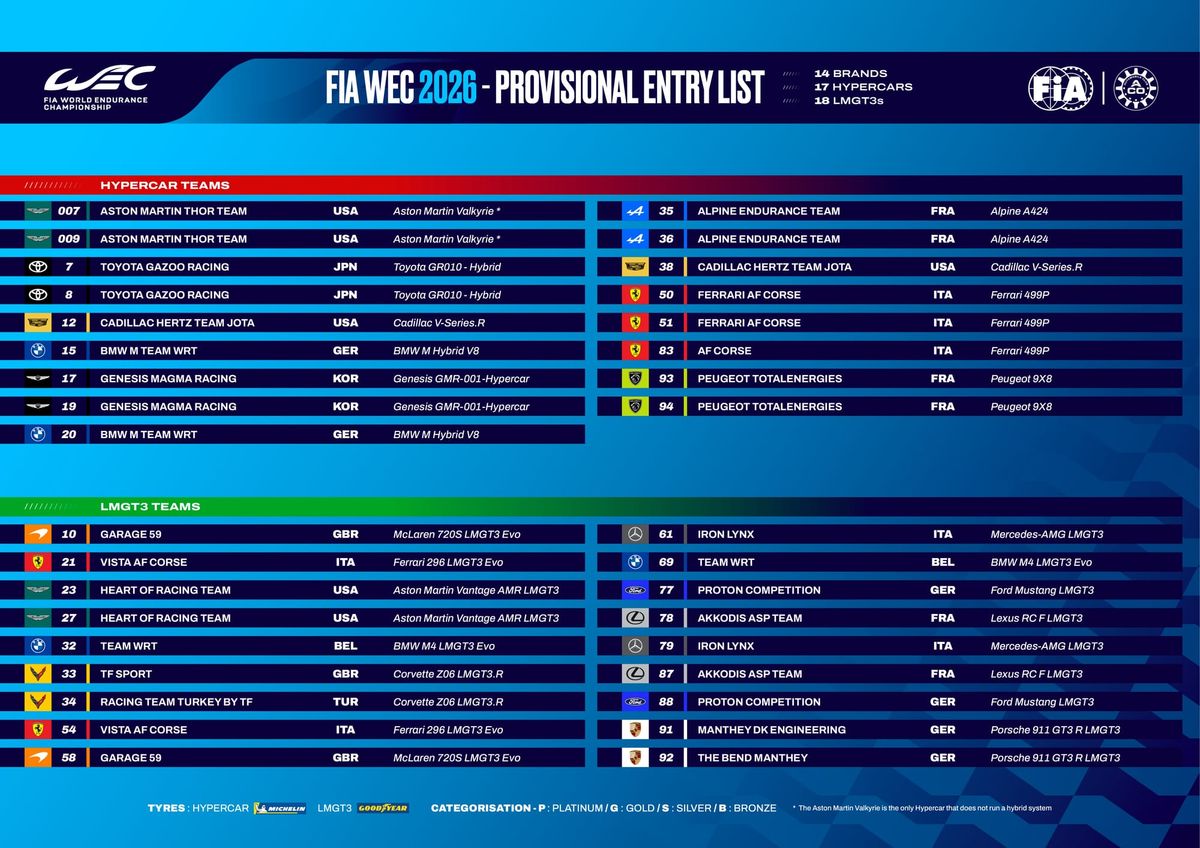
Correction, 18 May 2026: An earlier version of this article incorrectly stated that Porsche Penske Motorsport would field two Porsche 963 Hypercars in the 2026 FIA World Endurance Championship. Porsche has placed its 2026 factory prototype programme in IMSA, while its WEC presence sits in LMGT3 through customer teams. The article has been revised to reflect that distinction.
The 2026 FIA World Endurance Championship entry list still says something important about German racing power. Just not quite what it first seemed to say.
Germany’s influence across the championship remains clear, but it is no longer evenly spread across the two classes. BMW now carries the country’s works-level Hypercar case alone. Porsche and Mercedes-AMG apply their weight through LMGT3, where customer racing depth, factory guidance and operational maturity matter in a different way.
That distinction matters.
A Hypercar programme is a manufacturer’s public bid for overall authority. An LMGT3 programme is less direct, but no less revealing. It shows how a manufacturer builds customer structures, supports partner teams, fills driver pools and stays present in the races that shape endurance racing’s commercial and technical centre.
The German story in WEC is not smaller because Porsche has stepped back from factory Hypercar competition. It is more complicated.
Hypercar: BMW now carries the German works case
BMW M Team WRT enters 2026 as Germany’s only factory-backed Hypercar presence in the FIA World Endurance Championship.
That changes the weight of the programme.
The BMW M Hybrid V8 is no longer one German prototype among several. It now carries the clearest German claim on the overall WEC fight, and that makes the programme easier to judge. There is less room to hide behind the broader strength of German manufacturers when the Hypercar class asks a single question: can BMW turn structure into repeated front-running results?
BMW’s partnership with Team WRT remains central to that answer. WRT gives the programme endurance discipline, pit-lane fluency and a culture built around multi-car execution. That does not make BMW a settled benchmark. It does mean the programme has moved beyond the stage where promise alone is enough.
The driver pool also reflects a proper works effort rather than a trial. René Rast, Robin Frijns, Sheldon van der Linde, Dries Vanthoor, Raffaele Marciello and Kevin Magnussen give BMW a mix of prototype judgement, GT sharpness and long-distance racecraft.
The question is not whether BMW belongs in Hypercar. It does.
The question is whether BMW can make its strongest days repeatable across a full WEC season, and then carry that into Le Mans without the argument bending under pressure.
LMGT3: Porsche remains embedded, but differently
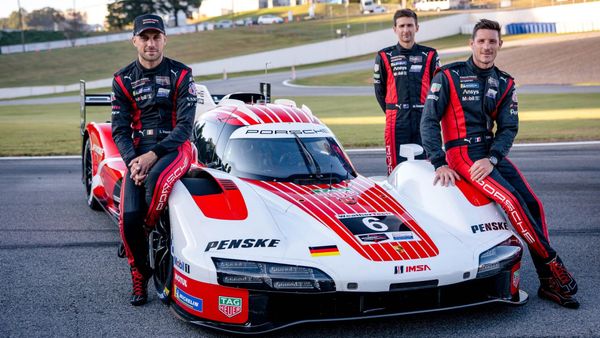
Porsche’s WEC presence now sits in LMGT3, where Manthey keeps the brand tied to the championship through the Porsche 911 GT3 R.
That does not make Porsche marginal. It does change the nature of its influence.
For years, Porsche’s endurance identity rested on the idea that it could operate at the sharp end of almost every relevant class. In 2026, that picture has narrowed. The 963 continues as a factory concern in IMSA, while WEC gives Porsche a GT platform rather than an overall one.
That is not a small distinction.
In LMGT3, Porsche still has enviable assets. Manthey brings credibility few customer teams can match. Drivers such as Richard Lietz, Ayhancan Güven, Riccardo Pera and James Cottingham keep the programme serious. The car remains part of a vast GT ecosystem that stretches from WEC to national championships and major 24-hour races.
Porsche’s strength lies in that ecosystem. It can seed grids with trained drivers, experienced engineers and customer teams that understand the brand’s methods. That has long been one of Porsche’s great advantages.
But customer depth is not the same as factory authorship.
That is the corrected reading. Porsche remains structurally important to WEC, but it no longer defines the championship’s German Hypercar presence. BMW does.
BMW’s second front in LMGT3
BMW’s WEC structure has another advantage: it appears in both classes.
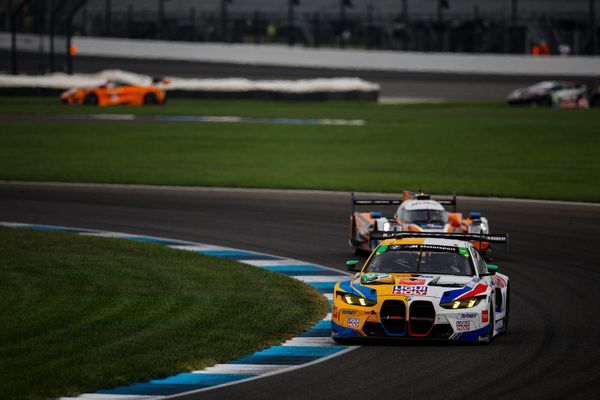
The BMW M4 GT3 Evo gives Team WRT a second line of attack in LMGT3, where the programme can connect its GT base with its Hypercar operation. That matters because modern endurance racing rewards shared habits. Pit execution, tyre reading, driver preparation and long-distance decision-making do not sit neatly inside class borders.
BMW’s LMGT3 effort also gives the manufacturer a wider evidence base. If the Hypercar programme has pace but poor race execution, the GT side can expose whether the issue is specific to the prototype or part of a wider operating pattern. If both cars execute well, the argument strengthens.
That is why BMW’s 2026 WEC presence carries more weight than raw entry numbers suggest. It is not just present in two classes. It has a common operator in Team WRT and a clear ladder between GT discipline and prototype ambition.
That can become a strength. It can also make failure harder to explain.
Mercedes-AMG enters through the GT door
Mercedes-AMG is the newest German pillar in WEC, but it arrives with a GT3 base that needs no introduction.
Its LMGT3 presence through Iron Lynx places the Mercedes-AMG GT3 inside the championship’s endurance structure and restores the brand to Le Mans through a class that fits its customer racing identity. This is not the same as a Hypercar commitment. It should not be dressed up as one.
It still matters.
Mercedes-AMG has built much of its modern GT reputation through customer strength, high car counts and front-running teams across major GT3 series. WEC gives that model a different test. LMGT3 is not just another customer arena. It sits under the Le Mans spotlight, with pro-am rules, limited entries and a calendar that exposes weak systems quickly.
That makes the Mercedes-AMG WEC programme worth watching less for novelty and more for translation.
Can a global GT3 base carry the same force in WEC’s narrower, more selective class structure? Can Iron Lynx give Mercedes-AMG the same credibility in LMGT3 that Manthey gives Porsche and WRT gives BMW?
Those are the useful questions.
German drivers still matter
The manufacturer story is not only about badges.
German and German-linked driver pools remain woven through WEC. Drivers such as André Lotterer, Pascal Wehrlein, René Rast, Sheldon van der Linde, Richard Lietz and Ayhancan Güven show how endurance racing still depends on cross-class experience.
That matters because WEC punishes narrow skill sets. Traffic management, energy use, tyre life, stint judgement and class awareness shape outcomes as much as outright speed. German programmes have often understood that better than most. They tend to value drivers who can make complex races smaller, calmer and more readable.
That does not guarantee success. It does give German manufacturers a familiar base from which to work.
What this means for 2026
The corrected picture is sharper than the original one.
BMW’s strength lies in its works Hypercar commitment and its paired LMGT3 structure with Team WRT.
Porsche’s strength lies in customer racing depth, not WEC Hypercar control.
Mercedes-AMG’s strength lies in applying a proven GT3 model to WEC’s LMGT3 format through Iron Lynx.
Together, they keep German manufacturers close to the centre of the championship. But they no longer do the same job.
That is the point. German influence in WEC remains strong, but it has split into three different forms: BMW as the works prototype challenger, Porsche as the customer racing institution, and Mercedes-AMG as the GT3 force seeking WEC proof.
The 2026 season will test all three. Not equally. Not in the same class. And not under the same burden.
That makes the German story more useful, not less.