GT3 became the centre by staying useful
GT3 became endurance racing’s centre because it remained useful to manufacturers, teams, promoters, events and drivers.

GT3 is often treated as endurance racing’s lower class.
That misses the point.
GT3 is not the top of endurance racing. It is not the fastest category. It does not carry the same weight as the overall fight at the 24 Hours of Le Mans, the Rolex 24 at Daytona, or the major prototype-led races.
That is not what “centre” means here.
GT3 is the centre because it is the most widely reused technical and commercial platform in modern GT and endurance racing.
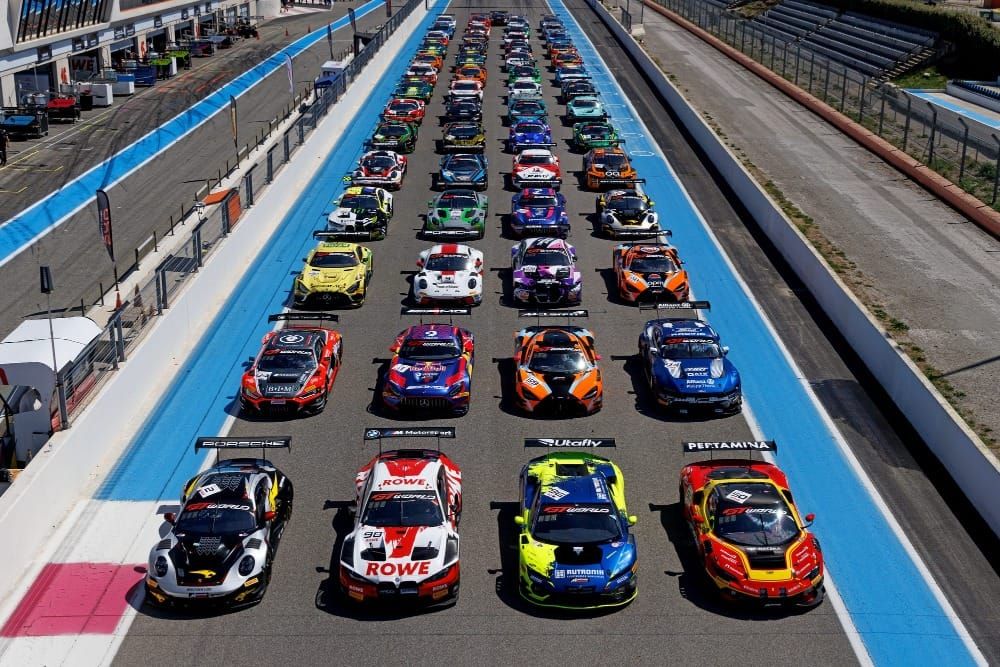
It sits inside the FIA World Endurance Championship (WEC) LMGT3. It underpins the International Motor Sports Association (IMSA) GTD and GTD Pro. It gave Deutsche Tourenwagen Masters (DTM) a usable rule set after Class One lost its base. It is the shared language of GT World Challenge Europe, the Intercontinental GT Challenge (IGTC), the 24 Hours of Spa, the Nürburgring 24 Hours and many national GT series.
That spread is the point.
GT3 did not become central because it is pure.
It is built around Balance of Performance (BoP). It contains factory influence. It depends on amateur funding in many places. At the top end, it is no longer cheap in any simple sense.
GT3 became central because it stayed useful.
Useful to manufacturers who needed a racing product. Useful to teams that needed a car with more than one place to go. Useful to promoters who needed full grids. Useful for major events that want recognisable brands without relying on a single fragile factory class.
The mistake is to judge GT3 as if it won an argument about technical purity.
It won a different argument.
It gave enough people a reason to stay.
What GT3 actually is
GT3 is not one car type in the old sense.
It is a controlled platform.
A GT3 car starts with a road-car identity, but it is not a road car with a cage and stickers. It is a purpose-built racing car based around a production model, homologated by the Fédération Internationale de l’Automobile (FIA) and managed within a performance window.
The homologation part matters.
A manufacturer cannot just turn up with something that looks like a GT3 car and ask to race. The car has to be approved. It has to match its FIA paperwork. The governing body can then manage performance through BoP.
That makes GT3 both a technical rule set and a customer-racing category.
It is a rule set because the cars need FIA homologation.
It is a customer-racing category because manufacturers build cars that teams can buy, run, and support across multiple championships.
The FIA’s Appendix J Article 257A defines the technical basis. It also gives the FIA GT Committee power to alter items such as minimum weight and air restrictors to maintain BoP.
That is not a side detail.
It is the operating model.
GT3 allows very different cars to race together.
A rear-engined Porsche 911 GT3 R can share a class with a front-engined Mercedes-AMG GT3 Evo, a front-engined BMW M4 GT3 Evo, a mid-engined Ferrari 296 GT3, a Lamborghini Huracán GT3 Evo2, a McLaren 720S GT3 Evo, an Aston Martin Vantage GT3, a Lexus RC F GT3, a Corvette Z06 GT3.R or a Ford Mustang GT3.
The cars are not the same.
GT3’s strength is that it provides the sport with a method for making them compatible.
That method has a cost. BoP can keep a field alive. It can also blur the link between engineering work and race results.
That tension sits at the centre of GT3.
It is the reason the format works.
It is also the reason people argue about it.
The problem GT3 solved
Endurance racing has a habit of making good ideas too expensive.
Manufacturers arrive. Rules open up. Cars become more specialised. Costs rise. The grid narrows. Then one brand leaves, and the whole structure starts to look fragile.
GT racing has seen that pattern before.
GTE gave Le Mans and WEC a serious manufacturer GT class, but it became too narrow and too expensive to remain the global answer. IMSA’s GTLM class faced the same pressure in North America. DTM had its own version of the problem when Class One lost enough manufacturer support for the series to need a different base.
GT3 was not more advanced than those formats.
It was more usable.
That is why it spread.
WEC replaced GTE with Le Mans Grand Touring 3 (LMGT3) from 2024. LMGT3 uses GT3-based cars, with WEC-specific rules around entries, driver composition and technical monitoring.
IMSA’s Grand Touring Daytona (GTD) and Grand Touring Daytona Pro (GTD Pro) classes also use FIA GT3-standard cars. The difference between GTD and GTD Pro is not a different car. It is mainly the driver model: GTD Pro allows all-professional line-ups, while GTD keeps the amateur driver structure at its centre.
DTM moved to GT3-based cars in 2021 after the Class One format lost the manufacturer depth needed to continue.
GT World Challenge Europe and IGTC already ran on GT3 logic. The 24 Hours of Spa became the clearest expression of it: a major endurance race where the whole story is told through GT3 cars.
This is the evidence behind the claim that GT3 became the centre.
Not the top.
Not the most prestigious.
The centre: the shared platform that series, teams, manufacturers and events keep reusing.
The bargain that made GT3 central
GT3 became central because it created a bargain with several sides.
Manufacturers get a racing product.
Teams get a reusable asset.
Promoters get entries.
Events get brands.
Drivers get seats.
None of those things is enough alone. Together, they explain the format.
For manufacturers, GT3 turns motorsport into a product line. Porsche, BMW and Mercedes-AMG do not build GT3 cars only to win one championship. They build cars that can be sold, serviced, updated and raced across the world.
That changes the logic.
A Hypercar or Grand Touring Prototype (GTP) programme is a factory project. A GT3 car is also a customer product. It has to be fast, but it also has to be usable. It has to survive amateur drivers, long races, different tyre rules, different BoP systems and different team budgets.
That is why modern GT3 updates often focus on drivability, tyre wear, brake wear, and service access as much as peak lap time.
For customer teams, the bargain is just as clear.
A GT3 car can form the base of a business. The same car type can run in several championships, with different driver mixes and different commercial models. One weekend, it might sit in a Pro-Am endurance race. Another season, it might anchor a national GT programme. In the right hands, it can reach Spa, Daytona, the Nürburgring or Le Mans.
Race teams do not survive on romance.
They survive on entries, parts, drivers, budgets and calendars.
GT3 gives them more places to sell the same core skill.
For promoters, the benefit is grid depth. A series with several GT3 manufacturers can lose one brand and keep racing. A field built around one narrow technical idea cannot always say the same.
For major events, GT3 gives breadth. The prototypes might carry the overall fight at Le Mans or Daytona, but GT3 brings more manufacturers, more teams, more storylines and more cars that spectators recognise.
That is the bargain.
It is not perfect.
It lasts because each side gets enough.
Porsche uses GT3 as continuity
For The Rennsport Report, GT3 is not a side subject.
It is the base layer of German manufacturer racing.
Porsche shows why.
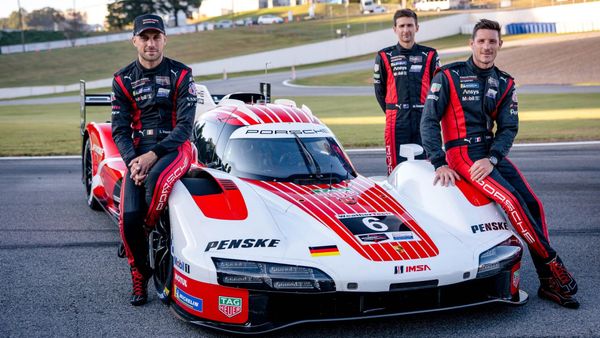
The Porsche 963 has gone from the WEC Hypercar field for 2026, but Porsche remains at Le Mans through Manthey and the Porsche 911 GT3 R in LMGT3.
That does not replace the missing prototype fight.
A GT3 entry at Le Mans is not the same as chasing the overall win. Porsche’s Le Mans identity was built at the front of the race. LMGT3 keeps Porsche present, but it does not answer the absence of the 963.
That distinction matters.
It also shows GT3’s value.
A board can cut or redirect a top-class programme. The GT3 network still keeps the badge on the grid. Customer teams, partner teams, and semi-factory structures keep racing, even where a pure factory effort may no longer exist.
For Porsche, GT3 is continuity.
Not equivalence.
Continuity.
The Porsche 911 GT3 R gives Porsche a way to remain visible across Le Mans, Spa, the Nürburgring, IMSA, GT World Challenge, and national racing, even as its prototype choices change.
That is not a small role.
It is the insurance layer beneath the bigger programme decisions.
BMW uses GT3 as reach
BMW’s GT3 role is different.
The BMW M Hybrid V8 gives BMW a top-class prototype route in WEC and IMSA. The BMW M4 GT3 Evo sits underneath that as the wider customer-racing layer.
That makes BMW the clearest example of GT3 as reach.
The prototype programme carries the top-class claim. It tells the market BMW wants to compete for overall wins in the main endurance arenas. The GT3 programme does a different job. It spreads the brand through more teams, more drivers, more markets and more events.
BMW’s official customer-racing material for the M4 GT3 Evo stresses the parts of a GT3 car that matter to buyers: drivability, tyre behaviour, brake wear, reliability and support.
That language is not incidental.
It shows what GT3 asks a manufacturer to build.
Not just the fastest possible racing car.
A car that customers can use.
For BMW, GT3 is the lower layer beneath the prototype programme. It gives the brand scale, where the BMW M Hybrid V8 gives it status.
The two programmes are not substitutes.
They are different forms of presence.
Mercedes-AMG uses GT3 as its main endurance platform
Mercedes-AMG shows the third version.
Mercedes-AMG does not have a current Hypercar or GTP programme. That makes the Mercedes-AMG GT3 Evo carry more of the brand’s endurance-racing identity on its own.
This is where GT3 matters most for AMG.
The car gives Mercedes-AMG a serious presence at Spa, the Nürburgring, Daytona, GT World Challenge, IMSA, and other GT3-based series, without the company needing a prototype programme.
That is not a weakness in the GT3 argument.
It is proof of the model.
GT3 lets a manufacturer build a global endurance presence below the overall prototype fight. In AMG’s case, that presence is not secondary to a current Hypercar project. It is the core of the programme.
That makes Mercedes-AMG the cleanest example of GT3 as an identity.
Porsche uses GT3 as continuity.
BMW uses GT3 as reach.
Mercedes-AMG uses GT3 as its main endurance platform.
Together, they show why GT3 matters to RSR.
The class is not a lower-tier distraction from the German manufacturer story.
It is where much of that story lives.
GT3 made customer racing more professional
There is a trap here.
Calling GT3 a customer-racing platform can make it sound simple.
It is not.
At the sharp end, modern GT3 racing is highly professional. The best teams use factory drivers, paid engineers, simulation work, manufacturer support and detailed data analysis. A Bronze-rated driver might still be central to the budget, but that does not make the operation small.
This is one of GT3’s contradictions.
The category works because customers can buy and run the cars. Yet the races that define the category are often shaped by manufacturer-backed teams operating at a very high level.
That does not make GT3 fake.
It means “customer racing” needs careful wording.
There is a difference between a car that customers can buy and a class free of factory influence. GT3 is the first. It is not always the second.
This is why the amateur driver remains so important.
In many GT3 structures, especially Pro-Am and WEC LMGT3, the Bronze or Silver driver is not decorative. That driver helps fund the car, shape the entry and justify the class’s place in the wider grid. The professional drivers, engineers and manufacturers then build performance around that funding model.
It is a strange mix.
It is also the mix that keeps the system alive.
BoP is the price of variety
GT3 could not work without BoP.
It also cannot escape the arguments BoP creates.
That is the central compromise.
If GT3 allowed open development, the richest manufacturers and teams would move away from the field. If the rules froze everything too tightly, manufacturers would lose interest because the cars would stop feeling like their own products.
BoP is the bridge between those two risks.
It lets different cars compete: Porsche, BMW, Mercedes-AMG, Ferrari, Lamborghini, McLaren, Aston Martin, Ford, Lexus, Corvette and others. It gives promoters the manufacturer spread they need. It gives teams confidence that they will not buy a car rendered useless by the wrong engine layout or body shape.
But BoP also asks manufacturers to accept that their advantage may be trimmed.
That is not a small thing.
A company spends money to improve a car. Then the rule system may add weight, reduce power, alter stint energy or change another parameter to bring it back into line. The better the field, the harder that judgement becomes.
This is why GT3’s success cannot be separated from trust.
Manufacturers have to trust the process enough to keep building cars.
Teams have to trust it enough to keep buying them.
Drivers have to trust that execution still matters.
Fans have to believe the race has not become a spreadsheet wearing bodywork.
That last line is harsh, but the risk is real.
BoP gives GT3 its scale. It can also weaken the engineering story that makes manufacturers care.
The cost story is not simple
GT3 is cheaper than prototype racing.
That statement is true, but incomplete.
The car is cheaper to buy than a Hypercar or a GTP programme is to build and run. A customer team can buy a GT3 car, run it in several places and build a business around it. That is the model.
The programme around the car is where costs grow.
A national GT3 season, a GT World Challenge Europe campaign, a WEC LMGT3 entry and a Nürburgring 24 Hours programme are not the same financial thing. Travel, staff, spares, testing, simulation, factory support, driver fees, and freight can quickly change the number.
Research identifies credible specialist reporting of seven-figure annual budgets for WEC LMGT3 programmes and high personnel counts per car, but those figures should be treated as estimates rather than audited financial facts.
The broad point is safer and stronger.
GT3 cars remain cheaper and more reusable than top-class prototypes.
Top-level GT3 programmes are no longer simple or cheap.
Both things can be true.
This matters because GT3’s centre depends on the customer model.
If the car stays within reach but the programme does not, the class has a problem.
The top end of GT3 already looks very different from the original idea of private teams running customer cars with modest factory help. Some entries are customer teams in name but sit very close to works operations in practice. Some programmes depend on both amateur funding and factory resources.
That tension does not break GT3 today.
It is the thing to watch.
A format can remain useful while it is imperfect.
It cannot remain useful if too many of the people funding it decide the bargain no longer works.
Why GT3 survived
GT3’s rise can look like triumph.
It is more accurate to call it survival through use.
The format did not beat GTE, GTLM or Class One by being more noble. It outlasted them because it could be used by more people in more places.
A GT3 car has to be fast enough, strong enough, saleable enough, driveable enough and supportable enough. It has to work for a factory driver and a Bronze driver. It has to run in sprint races and 24-hour races. It has to be understood by engineers in several championships. It has to be attractive to teams that need a return on the money tied up in the car.
The result is not pure engineering freedom.
It is something more stable.
When GTE became too narrow, GT3 was there.
When IMSA needed a unified GT base, GT3 was there.
When DTM needed a ruleset with enough cars and manufacturers to keep going, GT3 was there.
When Le Mans needed a GT class that connected to the rest of the sport, GT3 was there.
That is how a class becomes central.
Not by being the fastest.
By being available when other ideas run out of room.
What could move the centre again?
GT3 will stay central only as long as it keeps working for enough people at once.
The falsifiers are clear.
If costs rise far enough that customer teams and Bronze drivers can no longer fund the sharp end, the model weakens.
If BoP loses trust, manufacturers will question why they should build better cars only to have the advantage taken away.
If factory support becomes so heavy that customers cannot compete without hidden works backing, the customer-racing claim loses force.
If road-car strategy changes so much that manufacturers no longer see value in GT3 products, the supply of cars will shrink.
If another platform gives teams, manufacturers and promoters a better bargain, the centre will move.
GT3 is not central by right.
It is central by use.
It became the centre because it solved enough problems at once.
Sources
FIA Appendix J, Article 257A, Technical Regulations for Grand Touring Cars
FIA WEC, 2026 Sporting Regulations, LMGT3 provisions
24 Hours of Le Mans official LMGT3 explainer
IMSA, “Class Warfare: GTD PRO, GTD Cars Race Together Yet Separately”
SRO Motorsports Group, “Spectacular season as GT World Challenge powered by AWS reveals capacity grids featuring 10 manufacturers”
DTM official history, 2021 season regulation change
Autosport, coverage of DTM’s switch to GT3 regulations
BMW M Motorsport, BMW M4 GT3 Evo customer racing material
Porsche Motorsport, Porsche 911 GT3 R customer racing material
Mercedes-AMG Customer Racing, Mercedes-AMG GT3 customer racing material
RSR research by the Editor