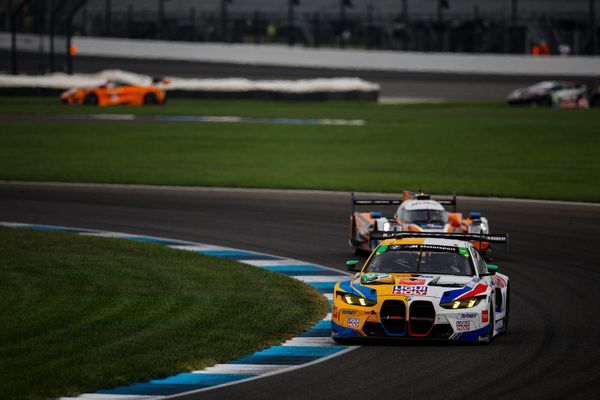
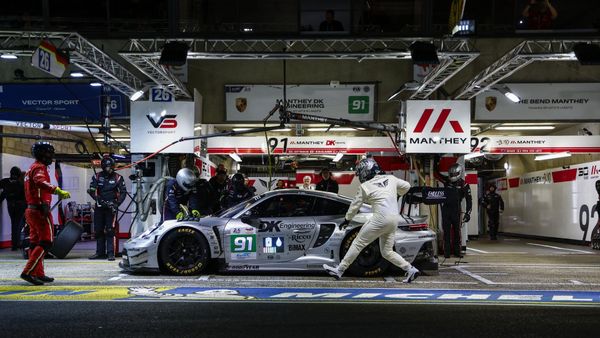
BoP is governance, not an excuse
Balance of Performance does not erase competition. It governs it, which means results need to be read with discipline rather than blamed.

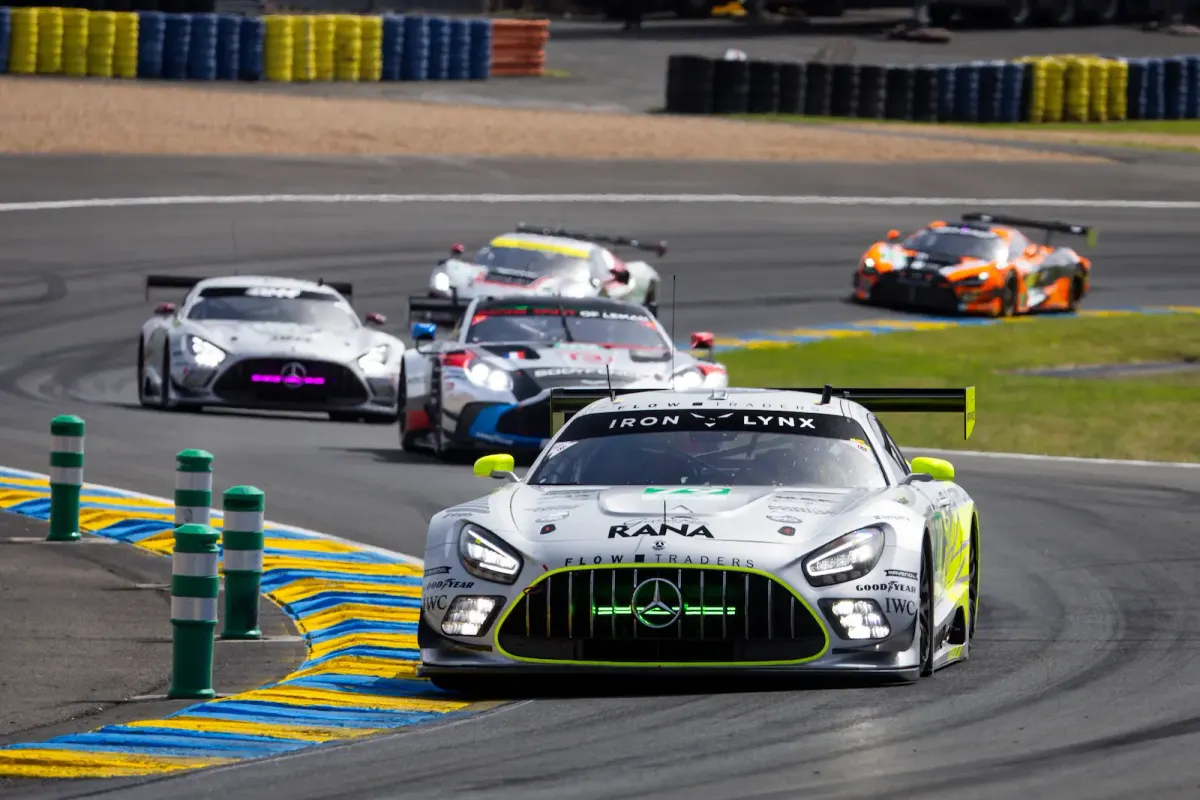
Balance of Performance gets read two ways, and both are lazy.
The first reading is conspiracy. Somebody in a series office decided who wins this year, and every result is theatre. The second is a comfort blanket. My car lost because of BoP; my car won despite it. BoP explains everything, which means it explains nothing, and we can all stop thinking.
I don't accept either. I made the basic case in the GT3 piece: BoP is the price of variety, the mechanism that lets fundamentally different cars share a grid and a customer market without one engineering philosophy ending the category. I'm not going to re-argue that here. This piece is about what the price buys, who collects it, and how you should read a race once you accept that the field itself is a managed object.
Because that is the real shift. Once a category depends on BoP, performance is no longer raw engineering output. It is engineering output filtered through a governing system. That changes how we read victories, failures, manufacturer claims and manufacturer complaints. It should change how you read this site, and this article is the standard I intend to be held to.
The floor is homologation
BoP does not create the car. The rulebook does that first.
GT3 eligibility begins with FIA homologation. The current technical regulations, Appendix J, Article 257A, approved by the World Motor Sport Council on 23 June 2026, make Group GT3 homologation the condition of entry, and the FIA publishes the list of approved cars. That list runs from the BMW M4 GT3 and the 992-generation Porsche 911 GT3 R to newer arrivals like the Ford Mustang GT3 and Lamborghini's Temerario. The chassis, aero package, safety structure and homologation form define the car before anyone adds a kilogram.
WEC's LMGT3 class adds its own layer on top: cars must comply with Article 257A, hold an FIA/ACO-validated homologation form, and meet the WEC's own LMGT3 technical regulations. Same car, additional governance.
So BoP is applied after the car has entered a regulated space. It is not a substitute for the rulebook. It is what happens when several already-constrained concepts have to race each other credibly.
Several levers, not one switch
In WEC, the mechanism is laid out, and it warrants close reading. Article 16 of the LMGT3 technical regulations gives the FIA and ACO the job of maintaining competitive equivalency, assessed on observed performance data, the scrutineering data logger, and official timing. The adjustment tools include: weight, power, energy per stint, refuelling time, aerodynamic configuration, and any other adjustments deemed appropriate.
That list is the heart of the subject. Weight changes tyre load and braking demand. Power changes acceleration. But energy per stint and refuelling time are not lap-time levers at all; they are race-shape levers. A car can be balanced to lose time in the pit lane rather than on the road, which matters enormously the next time someone shows you a stint chart as proof of anything.
On the SRO side, I'm staying closer to the ground, and deliberately so: I build hard rule layers only on wording I've closed against originals. What the verified record shows is the process operating. SRO runs annual GT3 testing at Paul Ricard with independent, SRO-nominated professional drivers to establish balancing parameters. And IMSA and SRO have announced a joint BoP test at Daytona this December, putting the eligible GT3 field through a shared programme before 2027, quiet evidence that the major GT3 ecosystems, which currently balance the same customer car under different philosophies, are converging.
Not every kilogram is BoP
Here is a distinction worth keeping, because compressing it away produces most of the bad takes.
WEC committee decision DO6 defines driver compensation ballast for LMGT3: a reference crew weight of 82kg, with the compensated minimum car weight calculated as BoP weight plus driver compensation. That is performance management, but it is not baseline BoP. It corrects for who is in the car, not for what the car is.
Stack up the layers actually in play: baseline BoP, driver compensation, event-specific decisions like D13's amended Le Mans ballast, stint-energy limits, refuelling controls, and "the car was BoP'd" collapses several distinct systems into one grievance. It would be remiss to compress all of that into one word. A better reading asks which control changed, why, and whether it touches the conclusion being drawn.
The trust problem is real, and partly self-inflicted
Now the part where both lazy readings find their ammunition, and where the governing bodies keep handing it to them.
For 2026, the WEC stopped publishing its BoP figures. I have looked for the written primary statement announcing that change—a bulletin, a regulation note, a published briefing document —and I cannot find one on any official FIA, WEC, or ACO channel. The official repository puts the policy into practice: the 2026 noticeboard contains committee decisions but zero published BoP tables. This produces an asymmetry worth stating plainly.
Enforcement is public: penalties, decisions, compliance findings all appear on the record, while the reference being enforced against does not. Any question about whether a car sat where it should now gets answered against a baseline the public cannot read. What exists is journalists' reporting of a media briefing, with Bruno Famin defending what he called a black-box approach. Let me be precise about the claim: the change itself is real and well-attested.
The absence of a written public rationale is the finding. The transparency policy of the world's premier endurance championship currently rests, in public terms, on second-hand accounts of a meeting. That absence is not a footnote to the trust problem. It is the trust problem, demonstrated.
The pattern repeats at the document level. Committee decision D07 governs LMGT3 compliance through control diagrams: power checks, stint energy, speed under FCY, and VSC, hosted on the FIA's file system and marked in the document itself as password-protected, available on request, internal to authorised users, not for publication, and modifiable if required.
None of this proves that there is a bad system. It proves a closed one, and I want to be precise about which closure I object to. Hiding the tables is defensible; the homologation data is commercially sensitive, and, honestly, almost nobody outside the technical audience ever reads it. But that's exactly the problem with what happened instead. The people the tables serve are the interpretive layer of this sport, the analysts and technically literate fans through whom everyone else's understanding travels. The 2026 change blinded them, with nothing published in its place: no written rationale, no methodology note, no decision framework.
Obscure the numbers if the engineering case demands it. Publish the reasoning. The FIA and ACO did neither in writing, and a governance system with no legible record makes every claim about manufacturer hierarchy less falsifiable, which is the direction this sport can least afford to travel.
Porsche's complaint about WEC rulemaking, which I judged partly valid when I wrote up the withdrawal, lived in exactly this gap: not the data, but the process's legibility.
What survives the filter
So the field is managed. Does that make results meaningless? No, it makes some evidence worthless and other evidence more valuable, and the whole discipline is knowing which is which.
Contaminated at the source: headline pace comparisons between different cars, single-lap deltas across manufacturers, and any argument shaped like "car X was faster, therefore programme X is better." Relative pace is precisely the thing being adjusted. A one-lap peak can be flattered. A full race is harder to fake.
What survives: execution. Pit loss against the field. Error rate across a distance. Reliability. Stint-to-stint consistency within one car. Traffic management at hour 17. Strategic discipline under pressure. Repeatability across events and circuit types. No balancing table hands those out. When I argued that Porsche did not win Spa by counting cars, this was the method in practice: pit-lane start, 15th at six hours, the climb, checkpoints no BoP document can manufacture. It cuts the same way for everyone: BMW's season is better judged on WRT's operational record than on any qualifying gap, and Mercedes-AMG's GT3 depth means nothing at the sharp end unless it converts, which is an execution question, not a balance question.
The failure mode to watch in manufacturer press releases, in paddock briefings, in this publication (if I get sloppy), is BoP invoked as a conclusion. "We were BoP'd" is not an analysis. It is the start of a question: balanced how, on which lever, with what visible effect on race shape, and does the operational evidence support the grievance once the adjusted pace is stripped out?
The rule
BoP is part of the evidence field, not a conclusion by itself.
When a team wins, ask what evidence remains after the filter is applied. When a manufacturer complains, ask whether the complaint explains the result or merely describes the operating conditions. When an organiser hides data, ask what that does to trust rather than assuming it proves guilt.
BoP shapes the race. It does not race the car. Hold me to that the next time I write about anyone's hierarchy.
AI tools were used to support the preparation, editing or review of this article. All facts were verified against primary documents and checked against named sources, and final judgement, interpretation and publication responsibility remain with JP Hackett, Editor, The Rennsport Report.