Porsche was right about the rules. Leaving Le Mans is harder to defend
Porsche’s 2026 Le Mans Hypercar absence is a rules, value and leverage story. The 963 still had performance. The problem was what WEC made that worth.

The 2026 24 Hours of Le Mans entry list carries one quiet fact that should not feel normal.
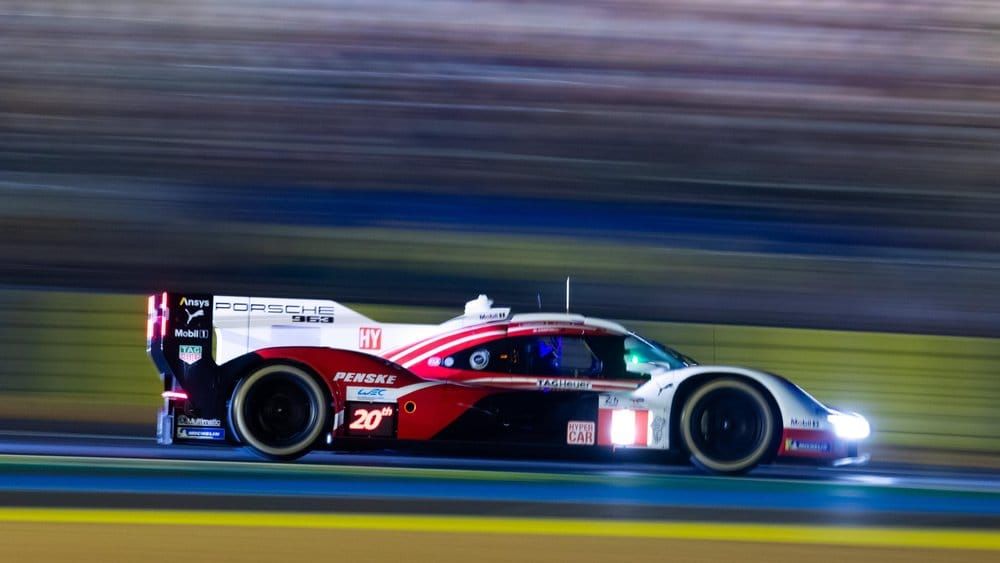
There is no Porsche 963 in Hypercar.
No Porsche Penske Motorsport.
No Proton Competition customer 963.
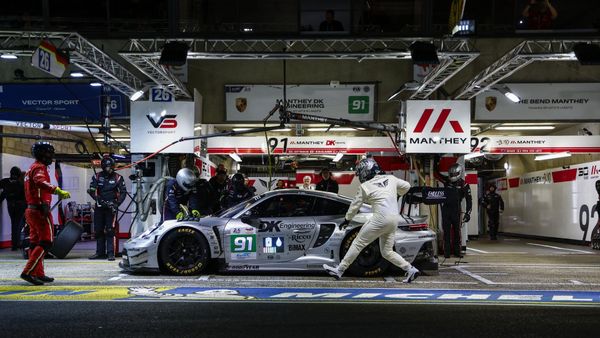
Porsche is still at Le Mans. That distinction matters. Manthey DK Engineering and The Bend Manthey are entered in LMGT3 with the Porsche 911 GT3 R. The crest remains on the grid, and Manthey remains one of the strongest Porsche racing structures anywhere.
But LMGT3 does not answer this absence.
Porsche’s Le Mans identity is defined by the fight for the overall win. Not by visibility. Not by class participation. By the part of the race that built the record through cars such as the 917, 936, 956, 962, WSC-95, 911 GT1 and 919 Hybrid.
That is the part Porsche has left.
The question is not whether Porsche still has a Le Mans presence. It does.
The question is whether Porsche was right to remove the 963 from the one race that still defines its prototype history.
My answer is narrow.
Porsche was right to identify the rule problem. It is far less clear that leaving Le Mans was the right way to answer it.
This was not a failed car
The easy reading is that Porsche left because the 963 no longer worked in the FIA World Endurance Championship (WEC).
That is too simple.
The car had clear value. It won the 2024 WEC drivers’ title. It remains alive in the International Motor Sports Association (IMSA) competition. At Le Mans in 2025, the No 6 Porsche Penske 963 finished second, 14.084 seconds behind the winning Ferrari after 24 hours.
That result matters more than any soft claim about sporting value.
A car that finishes 14 seconds short of an overall Le Mans win has not run out of road.
The problem sat around the car.
Porsche chose the Le Mans Daytona h (LMDh) route. That route was meant to make top-class endurance racing sustainable. A manufacturer could use a licensed chassis base, a shared hybrid system, and its own engine and bodywork, then race the same broad platform in WEC and IMSA.
That was the appeal.
It was the cost-controlled answer to the old LMP1 spiral. It gave Porsche a way back to Le Mans without having to rebuild the 919 Hybrid era.
It also placed Porsche at the centre of the tension in modern Hypercar racing.
The class does not contain one technical idea. It contains two.
Le Mans Hypercar (LMH) allows bespoke manufacturer cars such as Ferrari’s 499P and Toyota’s Hypercar. LMDh sits beside it as the controlled route, used by Porsche, BMW, Cadillac, Alpine and now Genesis.
The job of Balance of Performance (BoP) is to make those concepts race together.
That sounds like adjustment. In practice, it is governance.
The BoP complaint was measurable
Porsche’s complaint should not be treated as special pleading.
Motorsport.com’s 2025 BoP analysis put the paradox clearly: the Porsche 963 was assessed as the fastest LMDh car before Balance of Performance changes, yet carried the least favourable below-250kph power-to-weight position among LMDh cars across the season.
That is the rules story.
Not because it proves bias.
Not because it proves the FIA or Automobile Club de l’Ouest (ACO) wanted Porsche beaten.
It proves something more useful: Porsche had evidence that the better it made the LMDh concept work, the more the rule system could erase the benefit.
The detail matters. Porsche began Qatar and Imola with the second-worst power-to-weight ratio in the field, behind Toyota. Before Spa, despite weak results, the 963’s position deteriorated again. At Le Mans, the No 6 car still dragged itself into the fight and fell short by only 14.084 seconds.
That combination is hard to dismiss.
A weak car does not do that.
A strong car boxed into an unstable performance window might.
This is why the phrase “BoP is governance” earns its place. Balance of Performance does not simply add weight or trim power. It determines how much of a manufacturer’s engineering advantage can withstand the championship’s need for convergence.
That is a difficult bargain for any manufacturer.
For Porsche, it became harder to defend.
The financial case was real, but not complete
Porsche’s business pressure was not invented for motorsport cover.
The company faced a harder car market, weaker demand in China, tariff pressure, and the cost of changing its electric-vehicle plan. A WEC Hypercar programme costs serious money, and running full factory operations on both sides of the Atlantic was a large commitment.
A board can defend cutting that.
That still does not settle whether it was the right cut.
The annual cost of Porsche’s factory WEC Hypercar programme has not been publicly disclosed. Estimates in the research pack place the range around €60m to €100m per year, and that must stay labelled as an estimate.
Even at the top of that range, the savings sit beside much larger Porsche financial pressures. It helps. It does not explain the whole problem.
That is why the wording matters.
The WEC exit was financially defensible.
It was not self-evidently proportionate.
It removed a visible cost, but it also removed Porsche from the Le Mans fight at the point when its rules complaint had its strongest evidence.
Penske tells us where the decision sat
Roger Penske gives the decision its clearest witness.
He was not a distant observer. He ran the programme with Porsche. He wanted the missing victory. His Le Mans ambition was part of the 963 story from the start.
Asked after Porsche’s withdrawal what it meant for that ambition, Penske said: ‘We’ve been there [Le Mans], have had good success there, and obviously we all wanted to go, but I think it was a business decision that was not for me to make.’
That line matters because it separates the sporting programme from the corporate call.
The people trying to win Le Mans wanted to go back.
The decision sat above them.
That does not make Porsche wrong by itself. Motorsport programmes answer to boards, not romance. But it sharpens the question the article has to ask.
If the car still had enough performance to finish second at Le Mans, if Penske still wanted to go, and if Porsche’s frustration centred on the rule environment, then the exit looks less like a sporting conclusion and more like a business decision made inside a rule system Porsche no longer trusted.
That is the strongest fair reading.
It is also why the decision remains open to criticism.
What Porsche loses by leaving
The cost of withdrawal is not only two missing cars.
It is leverage.
Porsche had the strongest LMDh argument in the room. It had the Le Mans record. It had the 2024 WEC drivers’ title. It had the IMSA programme. It had the 2025 BoP evidence. It had a car that could lose Le Mans by 14 seconds and still look trapped by the rule framework that was meant to make the class fair.
Now that argument passes to others.
BMW, Cadillac, Alpine and Genesis can still defend the LMDh route inside WEC. They matter. Cadillac now has Hertz Team JOTA as its factory operator in WEC. BMW has Team WRT. Alpine remains committed. Genesis arrives with clear ambition and Porsche-derived experience in its driver pool.
But none of them is Porsche at Le Mans.
That is not sentiment. It is political weight.
Ferrari and Toyota remain the strongest LMH reference points. They do not need to make Porsche’s argument for it. Aston Martin adds another distinct technical problem with the Valkyrie. The rule conversation goes on.
Porsche is no longer inside it as a Le Mans Hypercar entrant.
That is the concrete cost.
The manufacturer that could best expose the weakness of LMDh inside WEC has chosen to argue from outside the championship.
IMSA keeps the car alive. It does not answer Le Mans
The IMSA counter-argument deserves respect.
For Porsche, North America matters. IMSA has strong value. The 963 remains a top-class weapon there. Porsche Penske remains a serious factory operation, and the LMDh platform makes clearer sense in a championship built around that concept.
Focusing on IMSA is not a retreat from prototype racing.
But it is a retreat from Le Mans.
Those are not the same sentence.
IMSA keeps the 963 alive. It does not keep Porsche in the race that defines its prototype story more than any other.
The same applies to GT3.
The 911 GT3 R keeps Porsche at Le Mans. Manthey gives Porsche a credible chance in LMGT3. For almost any other manufacturer, that would be enough to call the presence strong.
For Porsche, it does not answer the absence at the front.
That is not a dismissal of GT3. It is a measure of Porsche’s own history.
A brand with Porsche’s Le Mans record does not carry that burden through class participation alone.
The echo is real. The cause is different
Porsche has left WEC before.
The 919 Hybrid programme ended after three straight Le Mans wins from 2015 to 2017. That decision sits in a different frame: Volkswagen Group pressure after Dieselgate, the cost of LMP1, and the shift towards Formula E.
The echo matters.
The cause is different.
The 2025 decision came with another kind of pressure: a cost-controlled car, a split-rule Hypercar class, a BoP model Porsche no longer trusted, and a corporate board that no longer saw enough value in funding two top-class prototype programmes.
That distinction protects the argument from lazy history.
This is not Dieselgate repeating itself. It is a different warning.
Prototype programmes do not end only when the cars fail. They end when the rules, costs and corporate value stop lining up.
The judgement
Porsche may yet be vindicated.
If the next rules cycle creates a cleaner route back to Le Mans, if Porsche returns with a stronger programme, and if the current LMH/LMDh structure proves too unstable to justify staying, the 2025 decision will look more patient than it feels today.
That is the falsifier.
It is not the judgement now.
The judgement now is narrower.
Porsche was right to identify the rule problem. The BoP evidence supports that frustration. The 963’s Le Mans performance supports the car. Penske’s own words show the sporting desire to return.
That leaves the harder part.
Porsche had the strongest argument for LMDh at Le Mans, and chose to leave the place where that argument mattered most.
That may be good business.
It is much harder to call it the right racing answer.
Sources
ACO, 2026 24 Hours of Le Mans Provisional Entry List V3
Motorsport.com, “WEC 2025 BoP analysis: Porsche”
RACER, “Was Porsche’s Hypercar exit just a brief interlude?”
Reuters, 2025 24 Hours of Le Mans race report
RSR working research packet by JP Hackett
This article was drafted with AI assistance using JP’s research, official entry-list data and specialist reporting. Final editorial judgement, source approval and publication responsibility remain with JP Hackett - Editor, The Rennsport Report.