RSR Intelligence · Issue 010
Mercedes-AMG has Nürburgring proof, BMW carries Germany’s WEC Hypercar burden, and Porsche’s influence now runs through GT depth.

,Issue 010 · Thursday 21 May 2026
BMW carries Germany’s Hypercar burden. Mercedes-AMG now owns the cleanest GT3 proof. Porsche remains central, but no longer in the way it once did.
The German endurance story has split.
That is the line I would hold after Spa and the Nürburgring. Not because one weekend has rewritten the order. It has not. But because the last fortnight has made the burdens clearer.
BMW now carries Germany’s works-level case in the FIA World Endurance Championship (WEC) Hypercar class. Mercedes-AMG has turned Nürburgring presence into front-end proof. Porsche still has scale, depth and Manthey, but its WEC role now sits in Le Mans Grand Touring Three (LMGT3) rather than Hypercar.
That matters before the 24 Hours of Le Mans.
Issue 009 asked whether the German manufacturers had moved beyond promise. Spa and the Nürburgring gave us answers, but not clean ones. BMW proved it can win the WEC race it is given. Mercedes-AMG proved it can build more than one winning route at the Nürburgring. Porsche proved, again, that customer depth remains one of its great assets.
The harder point sits underneath.
Customer depth, factory authorship and overall championship burden are no longer the same thing.
Mercedes-AMG’s Nürburgring win was a deep result
The shallow version of the Nürburgring story writes itself.
Max Verstappen came. The crowd grew. The #3 Mercedes-AMG looked ready to win. Then it broke, and the #80 car finished the job.
That version is not wrong. It is just not enough.
The more useful reading starts with redundancy. Mercedes-AMG Team RAVENOL won the 54th ADAC RAVENOL 24h Nürburgring with the #80 Mercedes-AMG GT3 shared by Maro Engel, Luca Stolz, Fabian Schiller and Maxime Martin. The car had started 25th after Engel’s qualifying accident. It still won.
That alone says plenty about race execution. A car that starts 25th at the Nürburgring and reaches the front has not merely survived. It has worked through traffic, weather, risk and lost track position without spending the race trying to recover its own weekend.
But the sister car is what gives the result its weight.
The #3 Mercedes-AMG GT3, run under the Verstappen banner and shared by Verstappen, Lucas Auer, Jules Gounon and Daniel Juncadella, looked like a winning car until a driveshaft failure took it out of the fight for victory with less than four hours remaining. That failure could have turned the Mercedes-AMG story into another Nürburgring near-miss.
It did not.
The #80 was already there.
That is why this was not just a victory. It was proof of front-end depth. Mercedes-AMG had two plausible winning strategies in the same race, under the same weather, against the same traffic, and within the same operating window. One broke. The other won.
That distinction matters because the broader Mercedes-AMG picture was not uniformly strong. The result does not prove that every AMG customer entry now sits above Porsche and BMW. It proves something narrower and more useful: the Winward-run sharp end was deep enough to absorb the loss of its apparent lead car.
That is harder to dismiss.
The Nürburgring has always punished single-strand programmes. A manufacturer can arrive with one fast car, one perfect crew, one clean qualifying run, and still leave with nothing. The Eifel usually finds the weak point. This time, it found one in the #3 car’s driveline. Mercedes-AMG still had another route.
That is the benchmark Mercedes-AMG set.
Not hype. Not a Verstappen story. Not a crowd figure dressed up as sporting proof.
A two-car winning structure.
BMW’s Spa result is real, but still not final
BMW M Team WRT gave BMW the WEC result it needed at Spa.
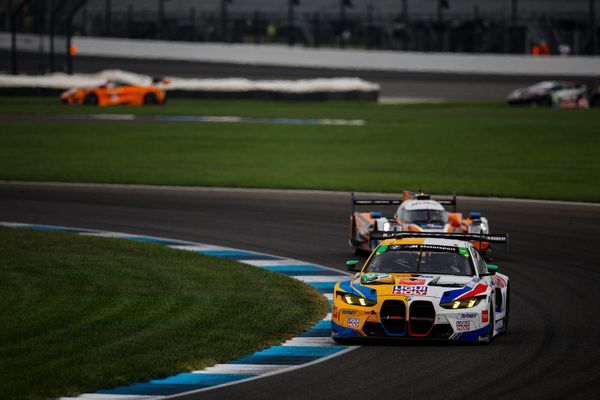
The #20 BMW M Hybrid V8 of Robin Frijns, René Rast and Sheldon van der Linde won the TotalEnergies 6 Hours of Spa-Francorchamps from the #15 sister car shared by Kevin Magnussen, Raffaele Marciello and Dries Vanthoor. The #20 finished 1.969 seconds ahead of the #15. The #50 Ferrari AF Corse car finished third, 2.622 seconds off the winner.
That is not a soft result.
BMW started tenth and 11th in Hypercar. It used strategy, clean-air pace and a well-timed neutralisation to turn a compromised grid position into a one-two. WRT did what WRT tends to do when a race opens a door. It read the race state early, committed to the call, and left the drivers with something they could execute.
Spa changed BMW’s standing.
It did not settle Hypercar.
The gaps at the finish tell you why. The top five were covered by just over six seconds after six hours. Ferrari remained close. Toyota remained close enough to matter. Aston Martin had its best WEC Hypercar result, finishing fourth with the #007. Genesis scored points on only its second start.
That does not weaken BMW’s win. It protects the interpretation from getting lazy.
BMW won Spa because it executed the race Spa became. That is a serious thing. It is not the same as proving that BMW owns the class.
The Nürburgring then put a useful brake on the broader BMW reading.
The #99 ROWE Racing BMW M4 GT3 Evo finished fourth after Dan Harper was spun on the opening lap. The #81 Schubert Motorsport BMW M3 Touring 24H finished fifth overall and won SP-X. The #77 Schubert BMW finished ninth. Those are strong results in a race with 161 starters and unstable conditions.
But they did not make BMW the Nürburgring reference point.
The defending #1 ROWE BMW retired with a fuel supply problem after running towards the podium fight. Mercedes-AMG controlled the race at the front. Porsche had depth without the top-line answer. BMW sat between those two readings: credible, resilient, but not dominant.
That is why BMW’s Le Mans burden is so interesting.
It now carries Germany’s clearest overall WEC case. Porsche is not in WEC Hypercar. Mercedes-AMG has no Hypercar programme. BMW does.
Spa gives BMW momentum. Nürburgring stops us from turning that momentum into a coronation.
Le Mans will ask a colder question. Can BMW carry a six-hour execution signal across 24 hours, with the German Hypercar story resting almost entirely on Munich and WRT?
That is the test.
Porsche still has depth. It no longer has the same centre
Porsche is the easiest part of this issue to get wrong.
It would be wrong to say Porsche has faded from the German endurance story. It would be just as wrong to pretend nothing has changed.
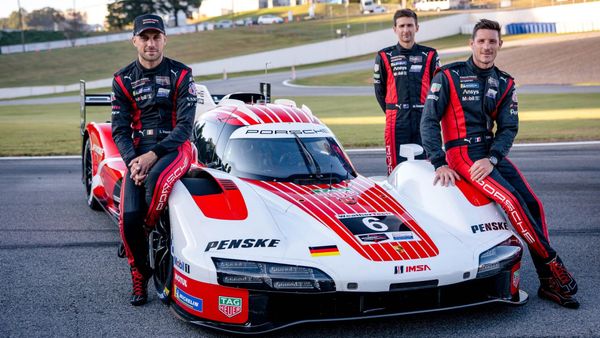
Porsche Motorsport has placed its 2026 factory prototype effort in IMSA with the Porsche 963. Its WEC presence now sits in LMGT3 with Manthey and the Porsche 911 GT3 R.
That is not a footnote. It changes how Porsche should be judged.
In WEC, Manthey remains the sharp point. The team returns as the sole Porsche squad in the championship with two LMGT3 entries. The #91 Manthey DK Engineering car brings Timur Boguslavskiy, James Cottingham and Ayhancan Güven. The #92 The Bend Manthey car is driven by Yasser Shahin, Riccardo Pera and Richard Lietz.
That is a serious class structure. Manthey has won six of the first 16 LMGT3 races since the category entered WEC, including Le Mans class wins in 2024 and 2025. Any manufacturer that wants to win LMGT3 still has to pass through Manthey’s world.
But LMGT3 authority is not Hypercar authority.
Porsche’s Nürburgring weekend showed the same tension in a different setting. Porsche arrived with 60 cars, 10 models and 218 drivers. Three Porsche 911 GT3 R customer cars finished inside the top 10 overall. The #24 Lionspeed GP car of Laurin Heinrich, Laurens Vanthoor and Ricardo Feller finished sixth. The #54 Dinamic GT car finished eighth. The #48 Black Falcon car won Pro-Am and finished tenth overall.
That is depth. Proper depth.
It is also not control of the race.
The #911 Manthey Grello car of Kévin Estre, Güven and Thomas Preining looked like Porsche’s best top-line answer. It started eighth, moved into the leading group and took the lead before the two-hour mark. Then it hit oil just before the four-hour mark and retired.
That accident should not be written as a Porsche failure. Oil on the Nürburgring is not a strategy error. It is the kind of blunt, unfair variable that makes the race what it is.
The published RSR Signal Note framed Porsche as leaving the top-line fight without a front-running answer. That is the safer reading. The Grello retirement explains part of the result, but it does not fully answer why Porsche failed to shape the final overall fight.
This is the corrected Porsche reading for Issue 010.
Porsche still has the deepest GT structure in this story. It still has Manthey. It still has drivers, customer teams, Cup classes, GT3 reach and class-winning muscle. But it no longer carries the German WEC Hypercar centre, and at the Nürburgring, it did not carry the overall result either.
Presence remains.
Authorship is less secure.
Mercedes-AMG now has to translate its proof
The Nürburgring gives Mercedes-AMG a clean GT3 result. Le Mans will ask whether that proof travels.
That does not mean the two races measure the same thing. They do not. The Nürburgring rewards survival through traffic, weather, local knowledge and Nordschleife-specific operating discipline. Le Mans LMGT3 sits inside a different structure: a world championship field, pro-am rules, tighter class management and a race where the GT cars live under the traffic shadow of Hypercar and Le Mans Prototype 2 (LMP2).
A Nürburgring win does not make Mercedes-AMG an LMGT3 favourite by itself.
It does make the question harder to ignore.
Iron Lynx runs the Mercedes-AMG LMGT3 programme in WEC with the #61 car for Martin Berry, Rui Andrade and Martin, and the #79 car for Johannes Zelger, Matteo Cressoni and Lin Hodenius. A third Mercedes-AMG, entered by Team Qatar by Iron Lynx, joins Le Mans with Abdulla Al-Khelaifi, Julian Hanses and Giuliano Alesi.
That gives Mercedes-AMG a platform at Le Mans. It does not yet give it the same class authority Porsche has built with Manthey.
This is where the Nürburgring result becomes useful but limited. Martin now arrives at Le Mans as part of the winning Nürburgring crew and the #61 Iron Lynx WEC line-up. That is a neat continuity thread. But the larger issue is not one driver. It is whether Mercedes-AMG’s GT3 model, so strong in customer racing, can hold shape inside WEC’s narrower LMGT3 structure.
At the Nürburgring, the proof came through Winward at the sharp end. At Le Mans, the proof has to come through Iron Lynx and Team Qatar by Iron Lynx.
That is translation risk.
Mercedes-AMG has earned the right to have that risk taken seriously. It has not removed it.
Le Mans asks three different German questions
The 94th 24 Hours of Le Mans will not ask BMW, Porsche and Mercedes-AMG the same question.
That is the point.
The final entry list gives the race 62 cars: 18 Hypercars, 19 LMP2 cars and 25 LMGT3 cars. The event runs from 11-14 June, with the race itself on 13-14 June.
BMW’s question is the largest. Can BMW M Team WRT turn Spa into 24-hour Hypercar authority? The Automobile Club de l’Ouest’s own pre-Le Mans framing has BMW leading the Hypercar manufacturers’ standings on 59 points, seven ahead of Toyota. That gives BMW momentum and pressure in the same breath.
Porsche’s question is narrower, but no less sharp. Can Manthey keep Porsche at the head of LMGT3 when the brand no longer has a WEC Hypercar factory car above it? The #92 The Bend Manthey Porsche leads the FIA Endurance LMGT3 Teams Trophy on 30 points, but Garage 59’s #10 McLaren sits only four points behind.
Mercedes-AMG’s question is newer. Can its Nürburgring GT3 proof become WEC LMGT3 force? Iron Lynx has two season-long cars and a third Mercedes-AMG at Le Mans. The structure exists. The question is whether the programme can express the same kind of control that Winward produced in the Eifel.
These are not equal burdens.
BMW carries the overall German case.
Porsche carries the class-control case.
Mercedes-AMG carries the translation case.
That is why Issue 010 should not treat Le Mans as a generic preview. It is still too early for that. The better job is to define the questions before the race week noise starts to soften them.
The counter-reading
There is a fair objection to this issue’s central line.
It may be too tidy.
BMW’s Spa win came in a race shaped by safety cars, strategy and a very tight closing order. Mercedes-AMG’s Nürburgring win came through one highly effective Winward-run structure rather than a field-wide AMG sweep. Porsche’s Grello car retired after hitting oil, which tells us little about how it would have handled the final 20 hours.
That counter-reading matters.
It stops this newsletter from becoming a hierarchy table. BMW is not Germany’s settled Hypercar benchmark in the absolute sense. Mercedes-AMG has not proved that every GT3 customer division is ahead of Porsche and BMW. Porsche has not lost its GT authority because one lead car found oil at the wrong part of the wrong circuit.
The better reading is more restrained.
The last fortnight clarified burdens, not verdicts.
BMW has the clearest WEC Hypercar burden because Porsche has left that factory lane, and Mercedes-AMG does not occupy it. Mercedes-AMG has the cleanest recent GT3 proof because it won the Nürburgring with two front-running cars in the same operating structure. Porsche still has the widest GT depth, but its route to influence now runs through customer strength, class authority and IMSA, not WEC Hypercar control.
That is enough.
It is also falsifiable.
If BMW disappears from the Le Mans overall fight, Spa becomes a peak rather than a pattern. If Manthey controls LMGT3 at Le Mans again, Porsche’s class-centred model looks less like retreat and more like a narrower form of force. If Mercedes-AMG cannot convert Nürburgring form into LMGT3 pressure, the Winward result stays Nordschleife-specific rather than manufacturer-wide.
Good. That is where this issue should leave the reader.
With questions that can be tested.
What to watch next
BMW at Le Mans. Spa gave BMW the proof it needed. Le Mans will decide whether that proof stretches across a full day.
Porsche’s Le Mans LMGT3 defence. Manthey now carries Porsche’s WEC weight. That makes the #91 and #92 cars central to the brand’s June reading.
Mercedes-AMG’s Iron Lynx translation. Nürburgring showed front-end GT3 depth. Le Mans will show whether Mercedes-AMG can express that strength inside WEC’s LMGT3 frame.
BMW’s split signal. Spa strengthened BMW’s Hypercar case. Nürburgring made the GT3 picture less complete. That tension is useful, and it should not be ironed out too soon.
Closing note
The old shorthand would have made this a Porsche, BMW and Mercedes-AMG issue in roughly equal parts.
It is not that simple now.
BMW carries the German overall burden in WEC. Porsche carries the deepest GT architecture, but without WEC Hypercar authorship. Mercedes-AMG carries the newest proof, with the hard work still to come outside the Nürburgring.
That is not a ranking. It is a map of pressure.
And pressure is what tells us where to look next.
AI-assisted research and editorial support were used in the preparation of this issue. Final editorial judgement remains with The Rennsport Report editorial team.