RSR Intelligence · Issue 016
Three GT3 case studies test how Porsche, BMW and Mercedes-AMG preserve competitive value when penalties, disruption and programme uncertainty remove a clean result.

Issue 016 · Saturday 15 August 2026
How Porsche, BMW and Mercedes-AMG preserve GT3 value
Three GT3 case studies show what survives when penalties, disrupted races and uncertain programme routes remove a clean result.
A GT3 question, not a ranking
RSR now specialises in Porsche, BMW and Mercedes-AMG across global GT3 racing. That tighter frame turns three recent weekends into one useful question: what remains when a GT3 programme loses the result its pace made possible?
Road America did not provide a clean performance hierarchy. Nine full-course cautions repeatedly reset the field. A red flag at Magny-Cours erased gaps and moved the pit window. The seventh round of the Nürburgring Langstrecken-Serie (NLS7) supplied another test under a different tyre, class and Balance of Performance regime. Balance of Performance (BoP) is the rule system used to bring cars with different performance characteristics into a comparable performance range.
Combining those results into a single measure of car pace would still be an analysis by collage.
These are three GT3 case studies, not a manufacturer league table or a complete inventory of the Porsche, BMW and Mercedes-AMG customer networks. The evidence was selected because each weekend made loss, recovery and conversion unusually legible. That choice creates its own bias.
An operating route means a separately run team or entry group with its own sporting decision chain, capable of producing a result when another operation falters. It does not imply complete engineering independence, equal factory support or common ownership. Winward Racing, Team WRT, Paul Miller Racing, ROWE Racing, AO Racing and Manthey do not have equivalent relationships with their manufacturers.
Competitive value has a narrow meaning here. It is not the fastest lap or best result a car can produce once. It is the position a GT3 programme can still preserve when reliability, compliance, team operations, strategy or race shape takes part of that performance away.
Mercedes-AMG: Winward converts, breadth remains unproven
The clearest Mercedes-AMG evidence belongs to Winward Racing.
At NLS7, the #80 Mercedes-AMG GT3 took pole in 7:51.506, set the fastest race lap in 7:55.363 and won the final official classification by 39.480 seconds. Neither the qualifying nor race penalty list named the car. Pace created the opportunity. Winward preserved it.
Road America showed the same conversion through another Winward entry. The #57 won the International Motor Sports Association Grand Touring Daytona class (IMSA GTD) without a penalty in the reviewed race-control record. The revised provisional standings place Russell Ward and Philip Ellis 24 points behind Roman De Angelis, with Winward the same distance behind Heart of Racing. The victory did not settle the championship. It restored a credible route to it.
That remains Winward's evidence first. The #80 was the only Mercedes-AMG in the top professional SP9 Pro class at NLS7. Two other Mercedes-AMGs were not classified, while another finished in the professional-amateur SP9 class. One clean win cannot establish fleet superiority.
The official global GT World Challenge manufacturer standings provide a wider view. Mercedes-AMG leads Porsche by 766 points to 737 after 27 of 46 events, with points from several teams. The margin is narrow and the season incomplete. The table shows competitive breadth beyond Winward, but not how engineering support, personnel or decision authority are distributed between those teams.
That distinction matters while the established Mercedes-AMG GT3 continues its transition to a delayed successor. The present car still produces valuable results. The next strategic test is whether non-Winward teams can repeatedly convert them. Until that happens, broad competitiveness and broad operating depth remain separate claims.
BMW: competence, compliance and continuity
BMW’s clearest high-value GT3 route in this sample is Team WRT.
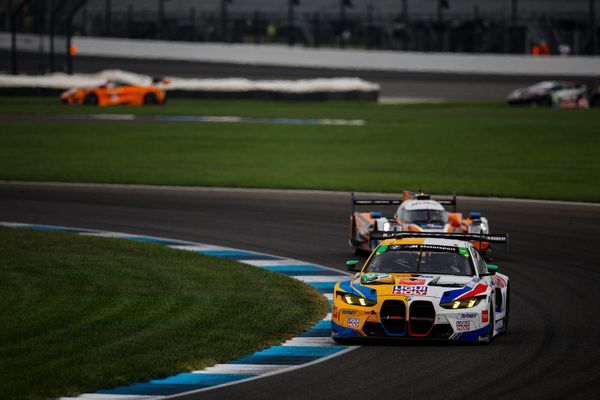
At Magny-Cours, the #32 Team WRT BMW exceeded the permitted boost by 10 millibars several times in the second qualifying session. The stewards deleted every lap after WRT’s representative admitted a mistake in establishing atmospheric pressure. This was a calibration and compliance error with a direct sporting consequence, not proof of component unreliability.
The same weekend supplied contrary evidence. WRT’s #30 Silver Cup BMW, entered in a driver-category class, finished second overall after the red flag changed the race shape and a rapid pit stop improved its position. The stoppage created the opportunity. WRT still had to recognise and convert it.
That result shows same-team recovery, not independent manufacturer redundancy. Both cars sat inside WRT’s operating structure. One entry converted after another lost pole, but BMW did not gain a second external team route from the result.
Paul Miller Racing adds a separate continuity question. Its #1 BMW M4 GT3 hit the tyre barriers at Road America, incurred a pit-speed penalty, required extensive repairs, and finished 11th in Grand Touring Daytona Pro (GTD Pro). The revised provisional standings still place the team first on 2,142 points, 15 ahead of the #4 Corvette and 21 ahead of AO Racing’s #77 Porsche.
The team’s 2027 class, manufacturer and programme shape remain open. That is uncertainty, not evidence of a split from BMW. If Paul Miller Racing continues with a materially similar BMW route, the continuity concern weakens. If it does not, BMW will need to replace a championship-leading North American GTD Pro operation. Neither outcome can be assumed now.
This is not BMW’s complete GT3 structure. ROWE Racing remains another significant European route in the active house view, but it is outside this evidence window. The narrower concern is that the clearest high-value outcomes selected here still cluster around WRT and Paul Miller Racing. WRT’s competence is real. So is the cost when one operator carries too much of the visible conversion burden.
Porsche: depth needs more than entries
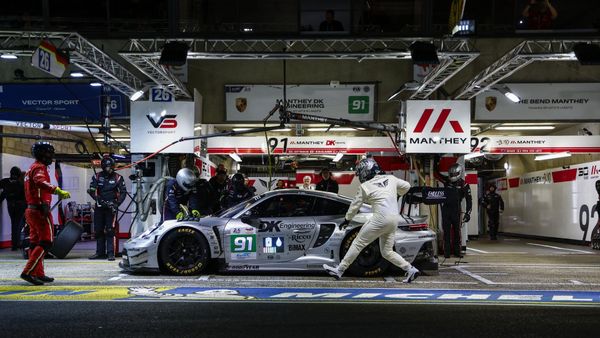
Porsche’s GT3 evidence at Road America came through AO Racing and Manthey. They cannot be treated as equivalent customer teams. Manthey’s closer relationship with Porsche and access to support require it to be assessed separately from a more conventional customer operation.
AO supplied the clean conversion. The #77 Porsche 911 GT3 R finished second in GTD Pro and carried no penalty in the reviewed race-control record. Pace, pit work and sporting discipline survived together.
Manthey supplied the losses. The #911 had usable speed but finished ninth in GTD Pro after tyre-related, blocking, and controlled-power-train problems and penalties. The #912 finished 16th in GTD after two incident-responsibility penalties.
Road America did not erase Manthey’s earlier GTD victory at Watkins Glen. That result blocks a general verdict against the team. It also sharpens the current question. Manthey has shown that it can convert. The next test is whether both IMSA entries can do so with fewer operational and sporting losses.
AO’s second place stopped Manthey’s weekend from becoming the only Porsche GT3 result. That is useful redundancy, but two operations do not prove the depth of Porsche’s full customer network. The wider programme includes other teams across World Endurance Championship LMGT3 and Intercontinental GT Challenge competition. Those routes are not part of this sample and cannot be counted as supporting evidence merely because they exist.
The Road America evidence advances the customer-depth reading by showing a mechanism rather than a headcount. One separately operated Porsche route preserved value when another lost it. It does not prove equal support, uniform competence or a healthier customer operation than Manthey.
What the GT3 evidence establishes
The strongest objection remains selection. Mercedes-AMG’s global standings cover a wider series set than its two Winward examples. BMW’s case combines two entries from one WRT operation with a separate North American programme question. Porsche’s case contains only AO and Manthey. There is no denominator that turns those observations into a fair manufacturer ranking.
Race shape adds another limit. Road America’s nine cautions changed recovery opportunities. Magny-Cours rewarded teams that responded well to a red flag, but the stoppage also created the chance. NLS7 used another BoP table, tyre and class structure. A cross-series pace hierarchy should be rejected.
The operating-route reading survives because it asks a smaller question. It separates pace from compliance, sporting loss, strategy, programme continuity and luck, then records which GT3 operation still produced value.
Three provisional conclusions remain.
Mercedes-AMG has one proven high-value Winward route and wider results that now need a non-Winward conversion test. BMW’s WRT evidence shows strong execution and avoidable compliance loss inside the same operator, while Paul Miller Racing makes future route continuity material. Porsche’s AO and Manthey evidence supports customer redundancy without proving uniform depth across the network.
Each conclusion can fail. Repeated clean conversion by several Mercedes-AMG teams would broaden that case beyond Winward. Independent major-event conversion by ROWE Racing or another BMW operation, paired with a materially similar continuation by Paul Miller Racing, would reduce the BMW concentration concern. Repeatable two-car Manthey execution, or weak results from other Porsche customers, would change the Porsche reading in opposite directions.
The longer arc is specific. Mercedes-AMG must carry a mature GT3 through its delayed successor transition without making Winward indispensable. BMW must show that WRT’s competence sits inside a programme with enough high-value alternatives, while resolving what follows Paul Miller Racing’s current contract. Porsche must prove that customer depth remains useful across teams with unequal relationships and support.
The best GT3 programmes do not avoid every loss. They keep one team’s loss from becoming the whole programme’s result.
These events do not identify the best GT3 car or manufacturer. They identify the programme questions that deserve the next clean test.
AI disclosure: AI tools were used to support research synthesis, editing or review of this newsletter. All factual claims were checked against named sources, and final judgement, interpretation and publication responsibility remain with JP Hackett, Editor, The Rennsport Report.
Read more
- GT3 became the centre by staying useful, which is why it became the shared platform for modern endurance racing.
- BoP is governance, not an excuse, on why performance windows must remain separate from execution.
- Porsche did not win Spa by counting cars, on the difference between entry volume and useful programme depth.
- Mercedes-AMG set the Nürburgring benchmark on the earlier Nürburgring operating baseline.