RSR Intelligence · Issue 014
BMW won in WEC, Mercedes-AMG won in IMSA, and Porsche recovered in both. The teams look stronger, but the manufacturer order remains unsettled.

Issue 014 · Thursday 16 July 2026
Stronger programmes, no settled order
BMW, Porsche, and Mercedes-AMG can each point to something real from the latest sequence.
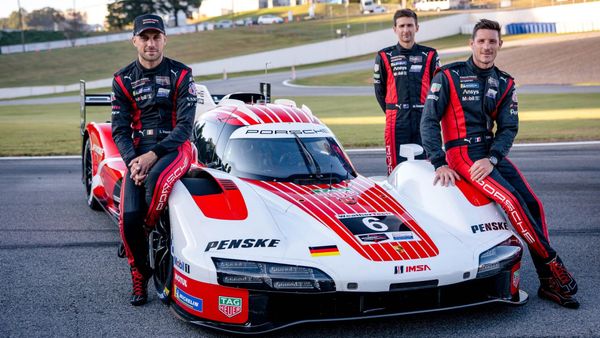
BMW M Team WRT6 Hours of São Paulo in the FIA World Endurance Championship (WEC)FIA World Endurance Championship (WEC) 6 Hours of São Paulo. Manthey recovered both of its Porsche 911 GT3 R LMGT3 entries to the top four in class. Winward Racing returned Mercedes-AMG to the top of the International Motor Sports Association (IMSA) Grand Touring Daytona category at Canadian Tire Motorsport Park. Mercedes-AMG also recorded the 1,000th overall victory of its customer-racing programme.
None of those facts creates a clean German-manufacturer order.
The evidence is becoming clearer at the team level and less stable at the badge level. WRT, Manthey, Winward and Paul Miller Racing are showing what mature operating organisations can extract from a competitive package. Their results do not prove that every car carrying the same badge can reach the same level.
That distinction is now the useful one.
The route still matters
Issue 013 established that the route mattered. Porsche converted at Spa through non-Manthey teams, while Manthey supplied a separate IMSA answer at Watkins Glen.
The São Paulo Signal Note applied the same discipline to BMW. The #15 BMW strengthened WRT’s repeatability case, but the #20’s different weekend prevented a claim of two-car control.
Issue 014 does not need to make either argument again. The new question is what these divided results say when BMW, Porsche and Mercedes-AMG are placed side by side.
The answer is that the operating structures are becoming more convincing than the competitive hierarchy. Each manufacturer has at least one team capable of converting a narrow opportunity. None has shown that the advantage travels evenly across its wider programme.
Programme credibility is not manufacturer control
Balance of Performance gives teams a managed window rather than an open technical contest. Circuit character, weight, power, energy allocation, tyre behaviour and traffic all affect the size of that window.
The team still has to use it.
Recent results show where that work becomes visible. WRT kept the #15 BMW M Hybrid V8 close enough to profit when the leading Cadillac Hertz Team JOTA entries lost time in the pits at São Paulo. Vasser Sullivan Racing shortened the first fuel fill for its #14 Lexus RC F GT3 and gained the track position that led to the GTD Pro victory at CTMP. Winward moved forward through its pit work before Philip Ellis took the GTD lead at a restart.
The strongest counter-reading is that car suitability and balancing parameters created those outcomes, leaving the teams to complete an expected conversion. Neil Verhagen gave that case direct support before CTMP M4 GT3 EVOs and the circuit’s limited heavy-braking zones.
He then put the #1 Paul Miller Racing BMW on pole. It finished third.
That result does not disprove the importance of circuit fit. Contact from an LMP2 car delayed the BMW, and the race cannot isolate every performance variable. It does show why suitability alone is an incomplete explanation. The GTD Pro winner started sixth. Winward won the other GT class from fourth. The Saturday order did not survive the teams’ fuel, pit and restart decisions.
The same restraint applies to São Paulo. BMW won, but WRT did not produce equal performance across both cars. Porsche placed both Manthey entries inside the LMGT3 top four, but neither challenged for the victory. Mercedes-AMG won GTD at CTMP, while its WEC LMGT3 programme still needs a complete race result.
The programmes are gaining credibility because their best organisations keep finding ways to contend. The order remains unsettled because those results are not yet uniform, portable or independent of race-specific conditions.
BMW’s evidence is strong where its organisations are strongest
The #15 BMW won at São Paulo by 2.254 seconds after 242 laps. The #20 recovered from 16th on the grid to sixth on the road before a five-second penalty left it eighth in the final classification.
That result belongs first to WRT. Across Spa, Le Mans and São Paulo, the team has produced a front-running route with either BMW. It has not yet produced the same level with both cars at the same event.
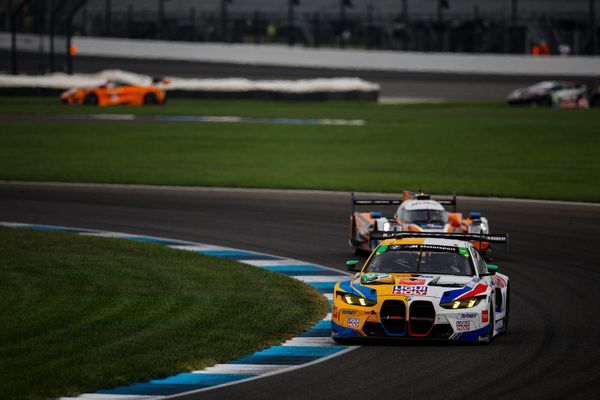
CTMP adds a second BMW operating group without resolving the manufacturer question. Paul Miller Racing converted pole into a third-place finish in GTD Pro, while Turner Motorsport finished third in GTD. The results show two credible North American routes, but BMW did not win its class in either.
BMW’s current strength is therefore clustered rather than uniform. WRT has repeatable Hypercar execution. Paul Miller Racing has a sustained IMSA championship route. Turner adds supporting customer depth. Treating those strands as proof of manufacturer-wide control would ask the evidence to do too much.
Porsche keeps recovering without owning the race
The final São Paulo LMGT3 classification placed the #92 The Bend Manthey Porsche third and the #91 Manthey DK Engineering Porsche fourth after they started seventh and eleventh.
Manthey says the cars followed different plans. The #91 stopped after 24 laps to create an early tyre advantage. The #92 concentrated its Silver- and Platinum-rated drivers into single stints. The team also acknowledged a pit-stop repositioning loss, a favourably timed Full Course Yellow and an element of luck.
The two-car response matters more than the podium alone. Manthey recovered two compromised starting positions through different strategies and placed both cars together at the finish. That is useful evidence of preparation, driver deployment and strategic range.
It is not evidence of Porsche pace control. The #92 has built its WEC season through repeated podiums rather than victories, and the São Paulo recovery still relied partly on neutralisation timing and late professional-driver progress.
AO Racing secured a second Porsche recovery at CTMP, moving from seventh on the GTD Pro grid to second in the race. Porsche therefore retains more than one credible customer-team route across WEC and IMSA.
The pattern is recovery and repeatability, not command.
Mercedes-AMG’s milestone explains the structure behind Winward
Winward won GTD at CTMP through pit execution and Ellis’s restart. The result ended a difficult run and gave the team its second class victory of the IMSA season.
Mercedes-AMG’s 1,000th customer-racing victory gives that result a longer frame. The manufacturer says 497 drivers have won with its cars at 135 circuits across 34 countries since the programme began in 2010. The current Mercedes-AMG GT3 accounts for 612 of those victories.
The HTP Motorsport and Winward lineage has recorded 48 wins. It also delivered the programme’s 100th overall victory at Spa in 2013. CTMP was therefore not a new team finding a single favourable result. It was another conversion by one of Mercedes-AMG’s longest-running operating partners.
The four-digit total still requires discipline. It combines series, eras and field strengths, provides no denominator for starts or entries and does not separate factory-supported programmes from independent customer efforts. It measures reach and longevity more cleanly than current competitive quality.
That is enough for Issue 014.
Mercedes-AMG has built a customer structure capable of producing durable team relationships and repeated winning routes. The milestone does not settle the present GT3 order, the WEC LMGT3 question or the competitiveness of the next car.
Parked deliberately
BMW’s wider customer-racing round-up: BMW’s 14 July bulletin records further podiums and class results across GT World Challenge Asia, ADAC GT Masters, Italian GT, British GT and Nürburgring support competition. The volume shows reach but does not change the current BMW baseline.
Wright Motorsports’ 2027 manufacturer evaluation: Specialist reporting says Wright is assessing manufacturers for its flagship IMSA programme while potentially retaining Porsche activity elsewhere. No change or cause has been confirmed. Keep this in the customer-racing viability evidence base.
Mercedes-AMG’s São Paulo LMGT3 fastest lap: The #61 Iron Lynx Mercedes-AMG finished sixth and recorded the fastest race lap in the class. The fastest lap without race conversion does not answer the programme’s open WEC question.
Reading the next event
Misano World Circuit Marco Simoncelli hosts two GT World Challenge Europe Sprint Cup races from 17 to 19 July.
Misano can test this issue’s reading through three narrow variables: qualifying-window access, two-driver repeatability and pit-window execution.
The useful question is not which badge wins one race. It is whether Porsche, BMW or Mercedes-AMG can produce the same operating quality across both driver pairings and both races.
A sprint weekend can expose preparation, tyre access and short-sequence execution. It cannot settle the conclusion of an endurance programme on its own. Any signal that does not survive later comparison in GT World Challenge Endurance, IMSA or WEC should remain parked.
AI disclosure: AI tools were used to support the preparation, editing or review of this newsletter. All factual claims were checked against identified sources, and final judgement, interpretation and publication responsibility remain with JP Hackett, Editor, The Rennsport Report.
Read more
- RSR Intelligence · Issue 013, which established the post-Spa and post-Watkins Glen route map.
- BMW answered Interlagos. The two-car question remains, containing the full São Paulo Hypercar assessment.
- BoP is governance, not an excuse, which sets the method for separating observable operation from the managed performance window.
- GT3 became the centre by staying useful, explaining why customer teams and reusable manufacturer structures matter beyond a single result.