Nürburgring 24 Hour
What the Nürburgring series delay settles for teams
ADAC Nordrhein’s series delay clarifies part of teams’ 2027 planning. The Qualifiers’ points status and the longer-term organising structure remain open.

Nürburgring 24 Hour
ADAC Nordrhein’s series delay clarifies part of teams’ 2027 planning. The Qualifiers’ points status and the longer-term organising structure remain open.
Explainer
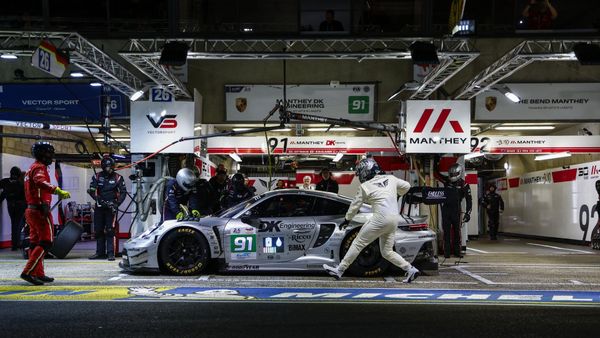
Porsche owns 51% of Manthey but still calls it a customer team. RSR examines what that unusual structure gives Porsche, and where the evidence stops.
RSR Intelligence
Comtoyou won from pole at the Nürburgring. Winward crossed the line in sixth, was classified fourth and clinched the title. The gap between those outcomes explains endurance value.
RSR Intelligence
Three GT3 case studies test how Porsche, BMW and Mercedes-AMG preserve competitive value when penalties, disruption and programme uncertainty remove a clean result.
RSR Intelligence
BMW won in WEC, Mercedes-AMG won in IMSA, and Porsche recovered in both. The teams look stronger, but the manufacturer order remains unsettled.
RSR Intelligence
Porsche converted at Spa, Manthey answered at Watkins Glen, Mercedes-AMG split its Pro case, and BMW showed depth without control.
Analysis
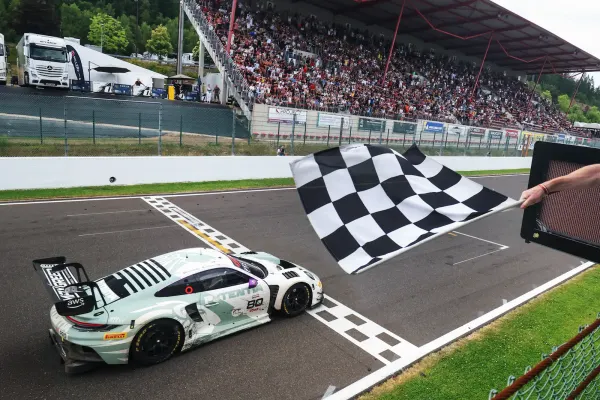
Porsche had 15 cars at Spa, but the evidence sits with three Pro entries. The #80 Lionspeed GP Porsche started from the pit lane, climbed from 15th at six hours to fifth at 12 hours and then won the race. That is more useful than the scale story.
RSR Intelligence
BMW moved from promise to pressure, Porsche lost its fallback route, and Mercedes-AMG still needs Spa to answer the GT3 question.
Explainer
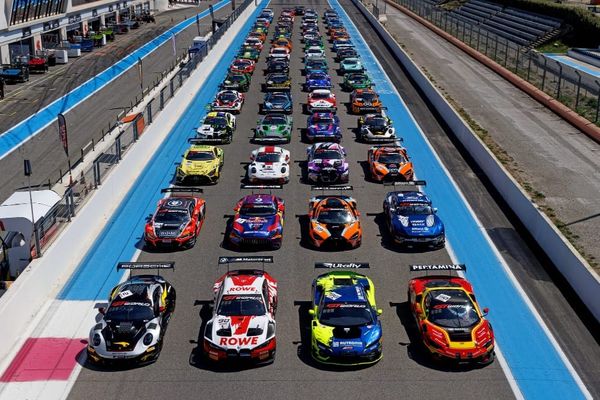
GT3 became endurance racing’s centre because it remained useful to manufacturers, teams, promoters, events and drivers.
RSR Intelligence
Mercedes-AMG has Nürburgring proof, BMW carries Germany’s WEC Hypercar burden, and Porsche’s influence now runs through GT depth.

Analysis
Mercedes-AMG’s Nürburgring win showed sharp-end depth, while BMW’s own reading points to damage limitation rather than parity.

Analysis
The Nürburgring 24 Hours lets BMW, Porsche, Mercedes-AMG and Volkswagen prove different kinds of credibility on the same road.